Corporate art is no longer just a finishing touch for office walls. For many organizations, it has become part of a broader strategy tied to workplace experience, brand perception, employee engagement, and long-term operational planning. In corporate offices, healthcare systems, universities, financial institutions, and other multi-location environments, art can shape how people feel, how they collaborate, and how an organization presents itself to the world.
When managed intentionally, corporate art supports much more than aesthetics. It can reinforce company values, improve the atmosphere of the workplace, create memorable client experiences, and contribute to a more thoughtful and human-centered environment. It can also become a complex operational asset that requires documentation, inventory management, location tracking, reporting, and coordinated oversight across many stakeholders.
For organizations with large, distributed collections, the challenge is not only choosing the right artwork. It is also building a program that can scale, remain visible, and continue to deliver value over time. That is why more companies are moving beyond spreadsheets and disconnected processes toward a more centralized, strategic approach.
In This Guide:
- Corporate Art as a Strategic Asset
- Art, Well-being and Employee Engagement
- Art as a Driver of Creativity and Innovation
- Art as a Storyteller of Corporate Culture
- Using Art to Elevate Brand Identity and Perception
- Designing a Strategic Corporate Art Program
- Proving the ROI of Corporate Art
- Managing and Evolving the Corporate Collection
- The Future of Corporate Art in the Workplace
- How Onward Supports the Strategic Role of Corporate Art
Corporate Art as a Strategic Asset
Corporate art has evolved significantly over time. In the past, many organizations acquired artwork primarily to fill space, create visual polish, or signal prestige. Today, leading companies increasingly view corporate art as a strategic asset that contributes to business goals, workplace identity, and organizational culture.
The difference between decorative art and a strategic corporate collection is intention. Decorative art may simply make a space look complete. A strategic collection, by contrast, is assembled and managed with purpose. It reflects the organization’s mission, supports the experience of employees and visitors, aligns with architectural and workplace goals, and can adapt as the business grows or changes.
This shift matters because the modern workplace is expected to do more than function efficiently. It is also expected to communicate values, support wellness, foster engagement, and create a distinct sense of place. Art can help achieve all of those goals. In a university, it may reinforce institutional heritage and community connection. For healthcare environment, it may help create a calmer and more reassuring atmosphere. In a financial institution, it may contribute to a sense of stability, sophistication, and trust.
A well-managed corporate art program also creates long-term value beyond the visual experience. It becomes part of the organization’s operational ecosystem. Works need to be documented, tracked across locations, maintained, loaned, reported on, and reviewed as spaces evolve. This is where strategy and operations come together.
When companies begin to see corporate art as an asset rather than an accessory, they make better decisions about acquisition, governance, visibility, and long-term stewardship. That perspective allows the collection to contribute not only to the environment, but also to the broader business.
Art, Well-being and Employee Engagement
Art can play a meaningful role in shaping how employees experience the workplace each day. While office design often focuses on layout, furniture, lighting, and technology, the visual environment also has a strong influence on mood, comfort, and emotional connection to space. Corporate art helps transform workplaces from purely functional settings into environments that feel more thoughtful, welcoming, and human.
When employees spend time in spaces enriched by art, the atmosphere often feels less sterile and more engaging. Artwork can introduce warmth, color, and personality into offices, meeting areas, corridors, and shared spaces. In healthcare systems, art can soften clinical environments and support a more calming experience for staff, patients, and visitors. In universities and institutional settings, it can create a stronger sense of identity and belonging across campuses and facilities.
This matters because employee engagement is influenced by more than compensation and job structure. The environment itself affects how people feel at work. Spaces that feel considered and inspiring can contribute to higher workplace satisfaction and stronger emotional connection to the organization. Art can also signal that leadership values quality, experience, and employee well-being, which can influence morale in subtle but important ways.
Corporate art also supports wellness-oriented office design. As organizations place more emphasis on mental well-being, sensory balance, and restorative workplace experiences, art becomes part of a broader strategy to create environments that reduce stress and support focus. It helps shift the office from a purely transactional setting into one that feels more humane and intentional.
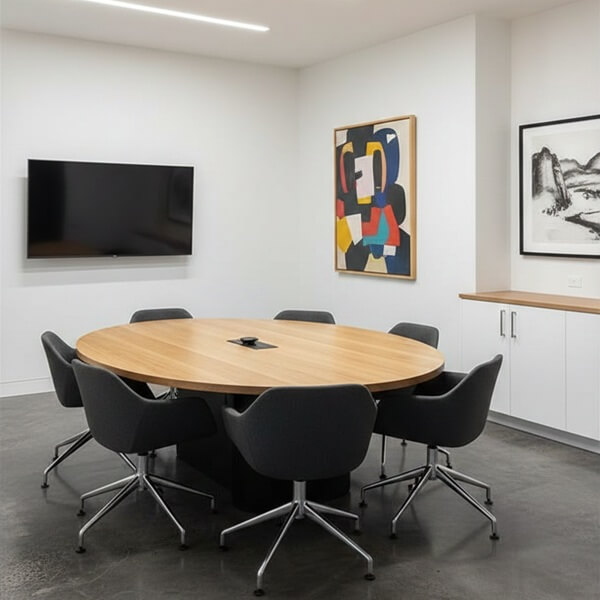
When art is curated with care and aligned with the character of the workplace, it can improve daily experience in ways that are difficult to measure line by line, but easy to feel. That emotional effect is one reason companies continue to invest in corporate art as part of a more engaged workplace culture.
Art as a Driver of Creativity and Innovation
The spaces where people work influence how they think. Corporate art contributes to the visual and emotional texture of the workplace, and that can affect creativity, curiosity, and openness to new ideas. In organizations where innovation matters, the surrounding environment is not a minor detail. It becomes part of the conditions that either support or limit fresh thinking.
Art introduces complexity, interpretation, and perspective into a space. Unlike purely functional design elements, it invites reflection and conversation. A thoughtfully curated collection can encourage employees to pause, notice, and engage with something beyond immediate tasks and deadlines. That shift in attention can be valuable, especially in knowledge-driven industries where insight often depends on seeing connections in new ways.
Creative environments do not need to be chaotic or overly styled to support innovation. Often, what matters is that they feel stimulating and alive. Art can help achieve that by making workplaces feel less generic and more intellectually engaging. In a design firm, a technology company, a university setting, or a strategy-focused corporate office, artwork can reinforce a culture that values imagination, inquiry, and original thinking.
Corporate art can also act as a social catalyst. People comment on it, interpret it differently, and use it as a starting point for conversation. In shared spaces, it can spark discussion across teams that might not otherwise interact. That matters because collaboration often grows from informal human connection, not only structured meetings.
For organizations that depend on problem-solving and idea generation, the workplace should support more than concentration alone. It should also support inspiration. Art helps create that broader mental environment. It signals that the organization values reflection, culture, and creative possibility, which can strengthen a workplace ethos built around innovation.
Art as a Storyteller of Corporate Culture
Corporate art can communicate who an organization is without relying on slogans or formal statements. A curated collection tells a story through visual choices, themes, artists, materials, and placement. That story can reinforce mission, values, regional identity, and institutional character in ways that feel immediate and memorable.
When artwork aligns with the organization’s broader purpose, it becomes a subtle but effective form of cultural communication. A company focused on sustainability may prioritize artists and materials that reflect environmental awareness. A university may use art to honor local history, academic values, or community partnerships. A healthcare system may curate work that emphasizes empathy, healing, and human dignity. In each case, art contributes to a lived expression of culture rather than a purely verbal one.
This storytelling function is especially valuable in distributed organizations. Employees, visitors, and clients may encounter the brand across multiple offices, campuses, or facilities. Corporate art can help create continuity while still allowing room for local relevance. A collection can reflect shared organizational values across all sites while also incorporating regional artists, local narratives, or community-specific themes.
Art can also support inclusion and representation. Organizations that want their spaces to reflect a wider range of voices can use curatorial decisions to demonstrate that commitment in visible ways. That may involve highlighting diverse artists, reflecting local communities, or building collections that better represent the organization’s evolving identity.
This works hand in hand with corporate art consultant, and the two are difficult to separate.
Any organisation serious about this should also be thinking about Art Leasing.
At the intersection of these issues sits office art ideas.
The same principle applies to business art, though the details differ.
Looking at this from a different angle, corporate art collections offers useful context.
The knock-on effect touches corporate art collections directly.
While this handles one side of the equation, art financing addresses the other.
For government entities and facilities, art collection management must balance public accountability with long-term preservation goals.
Because corporate culture is experienced as much as it is described, the physical environment matters. Artwork can make values visible. It can reinforce what the organization stands for and what it wants people to feel when they enter its spaces. Done well, corporate art becomes part of the everyday storytelling of the workplace and helps turn abstract culture into something tangible.
Using Art to Elevate Brand Identity and Perception
Corporate art influences how an organization is perceived from the moment someone walks through the door. In reception areas, executive suites, conference rooms, waiting areas, and other client-facing spaces, artwork helps shape first impressions and signal what kind of organization people are encountering. That is why companies often use corporate art not only to enrich interiors, but also to elevate brand identity and perception.
A carefully curated collection can support premium positioning. It can communicate sophistication, attention to detail, cultural awareness, and confidence. In a financial institution, artwork may reinforce trust, stability, and refinement. In a healthcare setting, it may communicate care, reassurance, and sensitivity to the human experience. While in a university or campus environment, it may reflect intellectual depth, creativity, and institutional character.
Art also creates memorable experiences. Visitors may not remember every detail of a meeting room, but they often remember how a space felt. A distinctive collection can leave a lasting impression and make the organization stand out in ways that generic interiors do not. This can be especially important in sectors where space design contributes directly to reputation, such as hospitality, healthcare, professional services, and corporate headquarters.
Brand identity is not only expressed through logos, messaging, and digital experiences. It is also communicated through environments. Corporate art helps bridge the gap between brand strategy and physical space. It adds depth and personality to the workplace while reinforcing the tone the organization wants to project.
For distributed collections, consistency matters too. When multiple locations share a thoughtful curatorial approach, the organization can create a recognizable experience across offices and facilities while adapting to local context. That combination of consistency and relevance strengthens brand perception over time and makes art part of a broader strategy for how the organization is seen.
Designing a Strategic Corporate Art Program
A successful corporate art program starts with clear goals. Before acquiring artwork or expanding a collection, organizations need to define what they want art to accomplish. Some may want to strengthen workplace identity, improve employee experience, support wellness-focused design, or elevate client-facing environments. Others may be focused on regional representation, cultural storytelling, or long-term collection stewardship across multiple locations.
Once goals are clear, collection strategy becomes easier to shape. Organizations can make more intentional decisions about acquisition priorities, curatorial themes, budgets, site-specific needs, and governance. This also helps stakeholders align around what success looks like. Facilities teams, executives, workplace strategists, consultants, designers, and collection managers may all play different roles, but they need a shared framework for decision-making.
Budgeting and acquisition planning should also reflect the long-term nature of the program. Costs may include not only purchases, but also framing, shipping, installation, storage, maintenance, documentation, condition tracking, insurance support, and system oversight. Without planning, a collection can grow faster than the organization’s ability to manage it well.
Governance is equally important. A strategic program needs standards for acquisitions, approvals, movement, deaccessioning, documentation, and reporting. This creates consistency across locations and reduces the risk of fragmented decision-making.
Here is a simple view of how strategic goals connect to business value:
| Strategic goal | How corporate art supports it | Business benefit |
| Improve employee experience | Creates more engaging and human-centered environments | Higher workplace satisfaction and stronger culture |
| Strengthen brand perception | Enhances reception areas, meeting spaces, and executive environments | More memorable client and visitor experience |
| Reflect organizational values | Aligns collection themes with mission, diversity, or community goals | Clearer cultural storytelling |
| Support distributed workplaces | Creates continuity across offices, campuses, or facilities | Stronger multi-location identity |
| Build operational visibility | Requires documentation, location tracking, and reporting | Better oversight and reduced administrative risk |
| Protect long-term collection value | Encourages governance, maintenance, and coordinated stewardship | More sustainable asset management |
The strongest corporate art programs are designed with both cultural intention and operational discipline. That balance is what allows them to grow successfully over time.
Proving the ROI of Corporate Art
The return on investment of corporate art is not always captured through a single metric, but that does not mean it is vague or unimportant. The value of a corporate art program often appears across multiple dimensions, including employee experience, brand perception, public positioning, and long-term collection stewardship.
One area of return is workplace satisfaction. Art contributes to an environment that feels more welcoming, thoughtful, and engaging. While it may not be the only factor affecting retention or morale, it can support broader workplace strategies aimed at improving employee experience. In competitive hiring markets, the quality of the environment can influence how people perceive the organization and whether they feel proud to work there.
Another form of ROI comes through client and visitor experience. In reception areas, conference spaces, and executive settings, art helps shape perception. It can reinforce professionalism, taste, confidence, and cultural awareness. For organizations that rely on trust and relationship-building, such as financial institutions, healthcare networks, or advisory firms, this experience can have real reputational value.
Corporate art can also contribute to public relations and institutional positioning. Collections may support partnerships, exhibitions, community engagement, or narratives tied to innovation, regional identity, or cultural investment. This expands the value of art beyond internal space design and into broader brand storytelling.
There is also an operational and asset dimension to ROI. As collections grow, so does the importance of proper documentation, maintenance, reporting, and visibility. Artwork that is not tracked well can create inefficiency, risk, and lost value. Artwork that is managed strategically is easier to protect, assess, move, and maintain over time.
In other words, the ROI of corporate art includes both measurable and intangible returns. It lives in employee experience, brand impact, organizational identity, and the ability to manage the collection as a long-term asset rather than an unmanaged expense.
Managing and Evolving the Corporate Collection
A corporate art collection only delivers long-term value if it is managed well. As soon as a collection expands across offices, campuses, storage areas, healthcare facilities, or client-facing environments, the operational side becomes just as important as the curatorial side. This is where many organizations begin to outgrow spreadsheets and ad hoc processes.
Successful collection management depends on accurate inventory management and documentation. Each artwork should have a reliable record that includes artist information, title, dimensions, provenance, location, images, supporting files, and relevant notes. Documentation may also include condition reports, invoices, certificates, installation details, maintenance history, and loan records. When that information is scattered across folders, inboxes, and individual team members, visibility quickly breaks down.
Location tracking is equally important for distributed collections. Organizations need to know what is on display, what is in storage, what is on loan, what has moved, and what requires attention. Without centralized oversight, even simple questions can become difficult to answer. This creates risk not only for collection managers, but also for facilities teams, executives, and consultants responsible for planning and reporting.
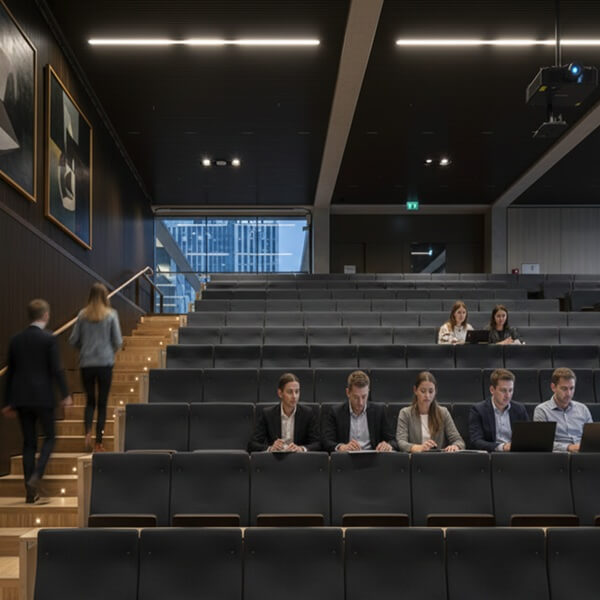
Operational workflows also continue long after acquisition. Artworks may be installed, relocated, stored, loaned, conserved, reframed, or rotated as workplaces change. These activities require coordination across departments and locations. A collection that is visually impressive but operationally opaque will become harder to sustain over time.
That is why centralized systems matter. They make it easier to manage logistics, track documentation, support reporting, and coordinate across stakeholders. For large organizations, this operational foundation is what allows the collection to evolve without becoming disorganized. Good management protects not only the artwork itself, but also the strategic value the collection brings to the organization.
The Future of Corporate Art in the Workplace
The future of corporate art is closely tied to the future of the workplace. As organizations rethink how spaces are used, how teams interact, and what environments should communicate, art is becoming more integrated into broader workplace strategy. It is no longer limited to static display. Increasingly, it is part of a more flexible, experience-driven, and operationally informed approach to space.
One important trend is the rise of flexible workplaces and rotating collections. As offices evolve to support hybrid work and shared environments, organizations may use art to refresh spaces, reinforce culture, and create renewed engagement over time. Rotations can also help distribute collection value more evenly across sites rather than concentrating it in a small number of executive areas.
Wellness and human-centered design will likely continue to shape corporate art strategy. Companies are paying more attention to how environments affect stress, focus, belonging, and emotional well-being. In this context, art becomes part of a larger effort to create workplaces that feel supportive and meaningful, not only efficient.
Technology will also play a larger role. As collections become more distributed and complex, organizations need stronger inventory management, location tracking, documentation workflows, analytics, and reporting. Data-driven oversight makes it easier to understand what is in the collection, where it is located, how it is being used, and what needs attention. This operational visibility becomes essential as programs scale.
Sustainability is another growing factor. Organizations may increasingly consider local sourcing, longer-term stewardship, thoughtful rotation strategies, and collection decisions that align with environmental and social values. Corporate art programs will likely be expected to support not only design and branding goals, but also broader institutional commitments.
The future of corporate art is more strategic, more integrated, and more operationally sophisticated. Organizations that recognize this shift will be better positioned to build collections that remain relevant and manageable over time.
How Onward Supports the Strategic Role of Corporate Art
For organizations managing large, distributed corporate art collections, strategy only works when operations are clear. Onward supports that reality by giving teams a centralized way to manage artwork information, documentation, location data, and collection workflows across multiple offices, campuses, and facilities.
Unlike systems built for museum complexity, Onward is designed specifically for organizations that need operational visibility without unnecessary friction. It helps teams move beyond fragmented spreadsheets and disconnected records into a simpler, more collaborative approach. That makes it especially useful for companies, healthcare systems, universities, financial institutions, and other institutions managing art across multiple stakeholders and locations.
With tools for inventory management, teams can keep artwork records organized in one place and maintain a stronger view of the collection as it grows. With location management, they can track artworks across offices, storage areas, and facilities more reliably. This is critical for distributed collections where visibility can quickly become difficult without a centralized system.
Onward also supports operational coordination through documentation storage, task workflows, and secure sharing. Teams can keep records, images, and related files tied to each artwork, making it easier to manage collection knowledge over time. Reporting capabilities and analytics and reporting features help organizations improve oversight, understand collection activity, and support executive decision-making with clearer data.
For organizations managing loans, installations, movement, or changing workplace needs, centralized workflows create stronger consistency and collaboration. Consultants, facilities teams, collection managers, and leadership all benefit when the collection is easier to see and manage.
Corporate art delivers the greatest value when it is treated as both a cultural asset and an operational one. Onward helps organizations support that strategic role by making large-scale corporate art management more visible, organized, and practical across distributed environments.
Final Thoughts
The purpose of corporate art is not simply to decorate a space. At its best, corporate art supports workplace culture, strengthens brand identity, improves employee experience, and contributes to a more meaningful and memorable environment. It also requires strategy, governance, and operational discipline to deliver that value consistently over time.
For organizations with distributed collections, the question is no longer whether art matters. The question is how to manage it in a way that supports long-term business goals, cultural relevance, and day-to-day visibility.
Viewing corporate art as a strategic business asset helps organizations make better decisions about acquisition, stewardship, and workplace design. It also creates a stronger foundation for managing the collection as it evolves across offices, campuses, and facilities.
In commercial real estate, art has moved decisively beyond decoration — it is now a strategic tool used to differentiate properties and support premium market positioning.
If your organization is ready to improve visibility and organization across a large-scale collection, request a guided tour of Onward to see how it supports distributed corporate art operations with centralized inventory management, location tracking, analytics, reporting, and documentation workflows.