Table of Contents
- The Modern Role of Art in the Workplace
- How Art Enhances the Employee Experience
- How Art Enhances Brand Identity and Client Perception
- Creating a Corporate Art Strategy
- Measuring the ROI of Business Art
- Aligning Art with Larger Corporate Priorities
- Conclusion
- How Onward Supports Corporate Art Valuation
“Why should we invest in art? How does a painting on the wall contribute to the bottom line?”
It’s a question leadership often asks, isn’t it? In today’s corporate landscape, every expenditure is scrutinized, every budget item expected to demonstrate value and a clear return on investment. As a corporate art manager or advocate for aesthetic and cultural integration, you understand the profound, often subtle, impact that a thoughtfully curated environment can have. But articulating that impact in terms that resonate with C-suites and finance committees requires a strategic perspective – one that moves beyond personal taste and speaks directly to business objectives.
This isn’t about mere decoration. This is about the strategic role and value of integrating considered “Business art” into the modern workplace. Forward-thinking organizations are recognizing that the visual environment is not just a backdrop, but an active participant in shaping culture, enhancing employee experience, and strengthening brand identity. This article delves deep into the strategic benefits of art in the workplace, positioning it not as an expense, but as a tangible and intangible asset that drives positive outcomes.
The Modern Role of Art in the Workplace
Workplace art has transformed from simple wall décor into a strategic business asset. Companies now understand that the visual environment shapes how employees feel, collaborate, and perform — and how visitors perceive the brand.
What “Business Art” Really Means
Business art is not mass-produced decoration. It’s a curated collection aligned with company values, goals, and culture. This can include paintings, photography, sculpture, digital works, installations, or rotating exhibitions. What matters is intention — art selected with purpose creates meaning and impact across the workplace.
Art as an Active Asset, Not Passive Décor
Modern businesses treat art like any other strategic tool. When used intentionally, art influences mood, supports focus, and encourages creative thinking. It shapes how people experience a space — and ultimately how they perform within it.
Why Art Matters More Than Ever
As offices shift toward experience-driven design, art helps create environments that inspire, support authenticity, and attract talent. It differentiates space, communicates company values, and provides emotional resonance in an increasingly competitive landscape.
How Art Enhances the Employee Experience
A well-designed workspace directly influences employee well-being, creativity, and satisfaction. Art amplifies these effects, making workplaces more inspiring and supportive.
Boosting Productivity and Creativity
Research shows that varied visual environments stimulate cognitive function and reduce mental fatigue. Art provides mental “micro-breaks” that support problem-solving and focus.
- Abstract works spark fresh thinking.
- Calming or representational pieces support concentration.
- Rotating collections encourage new perspectives.
Companies like Google and Adobe use bold corporate art programs to fuel creative culture — demonstrating how visual variety helps people think differently.
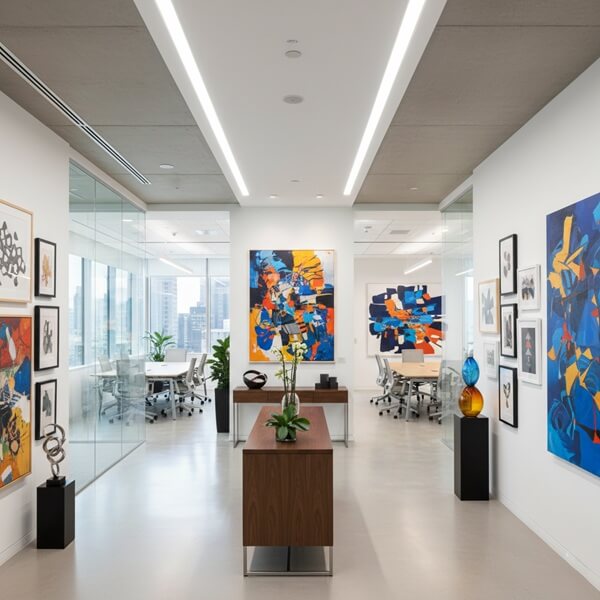
Supporting Well-Being and Reducing Stress
Art has proven psychological benefits, from lowering cortisol levels to improving mood. Strategically placed artwork creates calming zones that help employees recharge. Integrating art into wellness programs — such as guided art walks or interactive installations — reinforces a company’s commitment to mental health.
Fostering Culture and Connection
Art sparks conversation and shared experiences. It becomes a connective tissue that strengthens workplace community. Companies often use art to express core values, celebrate diversity, or highlight cultural narratives. A thoughtfully diverse collection signals inclusion and helps employees feel represented and valued.
How Art Enhances Brand Identity and Client Perception
Art doesn’t just shape internal culture — it communicates who you are to the outside world.
Building a Memorable Brand Experience
Art visually reinforces a brand’s personality. Whether bold and innovative or refined and traditional, artwork helps companies tell their story. Commissioned works, local artists, or pieces tied to the company’s mission create compelling touchpoints that visitors remember.
Making Strong First Impressions
Reception areas and meeting rooms shape a client’s perception within seconds. Art communicates professionalism, creativity, and care. It differentiates your organization from competitors and signals stability, vision, and long-term commitment.
Creating a Corporate Art Strategy
Successful corporate art programs require far more than occasional or ad-hoc purchases. To deliver real value, they must follow a strategic framework that connects directly to company goals, workplace culture, and long-term business outcomes. When art is selected and managed with purpose, it becomes a meaningful part of the work environment rather than a decorative afterthought.
Clarifying Goals and Building Support
A strong art strategy begins with clear, shared objectives. Whether the aim is to improve employee well-being, strengthen the brand, support DEI commitments, or enhance workspace design, clarity guides every decision that follows. Collaboration across teams—HR, Marketing, Facilities, and Leadership—ensures the art program supports multiple organizational priorities. This cross-functional alignment also builds the internal support needed to sustain and grow the program over time.
Curating and Acquiring the Right Work
Curators should select pieces that reflect company values and the emotional tone they want the workplace to convey. Companies may purchase, lease, commission, or collaborate with art organizations to build a meaningful collection. For teams beginning the acquisition process, understanding pricing is essential—this guide on getting a reliable art quote helps organizations navigate costs confidently. A diverse range of artists, styles, and mediums enriches the collection and supports inclusion goals.
Installation, Management, and Activation
Proper installation, lighting, and conservation ensure artworks maintain their impact over time. Rotating pieces keeps spaces fresh and engaging, while programs like artist talks, internal highlights, or guided tours deepen employee connection. For organizations building a long-term approach, this resource on art management provides expert guidance on optimizing workflows and maximizing the value of the collection.
Measuring the ROI of Business Art
Demonstrating value is key to maintaining leadership support for any art program. Measuring ROI involves both quantitative and qualitative data that reflect how the art contributes to employee experience, brand perception, and overall workplace culture.
Quantitative and Qualitative Metrics
Organizations typically monitor shifts in employee satisfaction, well-being, creativity, and engagement to understand how the visual environment is influencing daily work. Visitor impressions and changes in brand perception can also indicate the program’s effectiveness. Alongside these numbers, qualitative insights—such as anecdotes, survey comments, and before-and-after assessments—paint a clear picture of how the art is shaping behavior, mood, and workplace identity. Together, these insights form a strong case for continued investment.
Communicating Value to Leadership
To secure long-term commitment, the art program must be positioned as a strategic investment rather than a discretionary spend. Presenting evidence of improvements in employee sentiment, enhanced client experience, and stronger brand expression helps demonstrate meaningful ROI. Case studies, employee testimonials, and industry comparisons further reinforce the argument and highlight how the art contributes to broader organizational goals.
Aligning Art with Larger Corporate Priorities
Art becomes even more impactful when it supports the company’s wider cultural and operational initiatives. When aligned strategically, the art program becomes a visible extension of organizational values and commitments.
Supporting ESG, DEI, and CSR Goals
Corporate art can reflect environmental themes, showcase diverse artists, highlight underrepresented voices, and build meaningful community partnerships. It also serves as a tool for cultural education within the workplace. When these values are expressed visually and consistently, the art program becomes a natural and compelling part of the company’s ESG, DEI, and CSR strategies.
Enhancing Workplace Design Initiatives
As companies redesign offices to support collaboration, well-being, and flexibility, art enhances these design goals. Carefully selected pieces help define different zones, influence the emotional tone of spaces, and elevate the overall employee experience. Art complements architecture, interior design, and workplace strategy, creating environments that feel intentional, inspiring, and aligned with organizational culture.
Conclusion
Workplace art is a strategic asset that enriches company culture, strengthens brand identity, improves employee well-being, and creates memorable experiences for clients and visitors. When guided by clear objectives and managed with care, business art becomes an investment in people, place, and long-term organizational success. Chosen well, Office Art does real work for a space.
How Onward Supports Corporate Art Valuation
Onward is a modern platform designed to streamline how organizations manage their corporate art collections. Inspired by the clean, efficient approach highlighted on Artonward.com and the insights shared on the Onward Blog, the platform makes it easy to organize, track, and elevate art across any workplace.
With Onward, companies can:
- Document and centralize artwork with clear records and visual catalogs
- Track locations, conditions, and history to simplify daily management
- Coordinate rotations, installations, and conservation in one integrated system
- Collaborate seamlessly across teams, consultants, and leadership
- Access reporting and insights to support budgeting and strategic planning
Built to be simple to start, easy to master, and effortless to love, Onward offers a user-friendly experience that brings structure and clarity to art programs of any size.
The commercial real estate sector has embraced corporate art as a proven driver of property value, with well-curated spaces consistently commanding higher rents. That distinction raises the question of what is commercial art for business collections.
Hotels and hospitality venues have long understood that thoughtfully chosen art enhances the guest experience, improves reviews, and builds the emotional connection that drives return visits.
Onward is currently welcoming early adopters. If your organization is ready to finally get its art collection documented, organized, and optimized with confidence, reach out to Onward to begin.