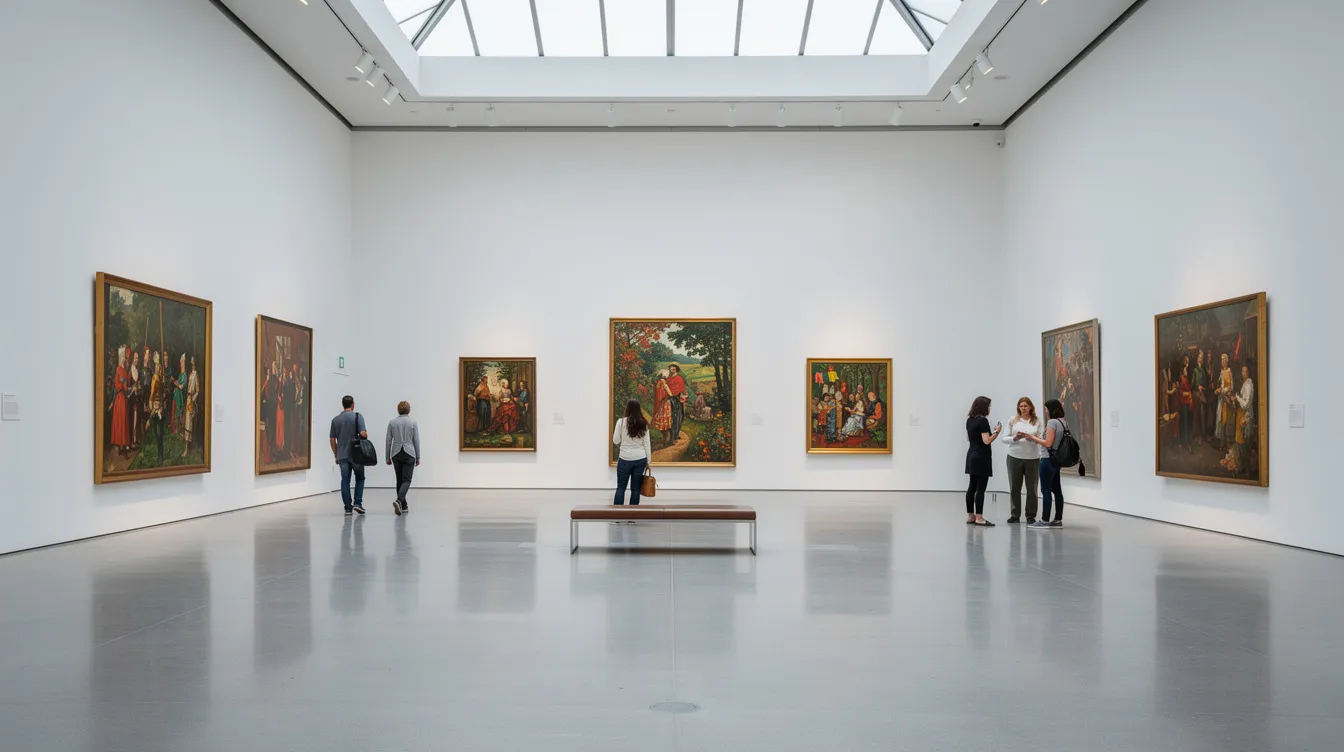
If you’ve ever walked through a museum and wondered who chose which artworks hang on the walls, in what order, and why, you’ve been experiencing the work of an art curator. Curators are the professionals who shape how you encounter art, whether in a major institution, a corporate lobby, or a virtual gallery. This guide breaks down what curators actually do, the skills required, the different environments they work in, and what the career path looks like in practice.
Quick Navigation
- What Is an Art Curator? (Quick Definition)
- The Origins and Evolution of Art Curators
- The Core Responsibilities of an Art Curator
- Types of Art Curators and Work Environments
- Skills and Education: How to Become an Art Curator
- Curators, Collections, and Technology
- Curatorial Career Paths and Future Trends
- How Onward Supports Art Curators in Practice
- Getting Started and Next Steps
What Is an Art Curator? (Quick Definition)
An art curator is a professional who cares for, selects, and interprets artworks, organizing them so the public can understand and experience them in meaningful ways. Curators act as storytellers and researchers within cultural institutions, providing context and insight for artworks that might otherwise remain disconnected from their audiences. They conduct research and preserve art history while shaping the narratives that define how communities engage with visual culture.
The role of the curator spans many forms of settings. A museum curator oversees permanent collections and develops long-term exhibition strategies. An independent curator works on a project basis, often collaborating with multiple venues, biennials, and cultural organizations. Corporate and private collection curators manage artworks dispersed across offices, campuses, and storage facilities. Regardless of setting, the core function remains the same: stewardship of objects and storytelling through art.
In the 21st century, curators also engage with the art market, digital documentation, image rights, and collection management platforms. Tools like Onward have become part of the modern curator’s workflow, helping you track inventory, provenance, insurance, and location data across large or distributed collections. Whether you’re managing collections for a Fortune 500 company or a university gallery, the curator’s role now blends scholarship with operational precision.
The Origins and Evolution of Art Curators
The word “curator” comes from the Latin curare, meaning “to care for.” In its earliest usage, it referred to custodians responsible for maintaining royal or ecclesiastical collections. The cabinets of curiosities (Wunderkammern) of the 16th and 17th centuries blended art, natural specimens, and artifacts into private displays, but these were transitional forms, not yet the curated exhibitions we recognize today. A brief history of the role reveals a steady expansion from caretaker to cultural leader.
During the 18th and 19th centuries, art museums became public institutions. The Louvre opened to the public in 1793, and the British Museum was founded in 1753. Staff were appointed to organize, conserve, catalog, and display national collections. These early museum professionals worked primarily as scholars and custodians, focused on preservation and classification rather than public interpretation. Curators have evolved from caretakers to cultural storytellers over the course of these centuries, gradually taking on the responsibility of shaping how audiences understand art.
The 20th century accelerated this transformation. Figures like Alfred H. Barr Jr. at MoMA pioneered conceptual exhibition formats for modern art, moving beyond chronological displays toward thematic, narrative-driven presentations. The role of curators expanded to include public engagement, education, and art criticism. By the 1980s, curators became global influencers in the art market. The proliferation of international events like the Venice Biennale and the São Paulo Biennial created demand for freelance curators who could work across borders and institutions. Alternative spaces and artist-run galleries further diversified curatorial practice. Curatorial studies programs have emerged since the 1990s to train curators for this more complex landscape, and digitization has added yet another layer: curators now manage online archives, digital rights, and multimedia content alongside physical collections.
The Core Responsibilities of an Art Curator
Contemporary curators often juggle multiple responsibilities across disciplines. Whether you work in large museums, art galleries, or corporate settings, curators work as researchers, collection managers, educators, and project leads. The scope shifts depending on institutional size: in larger institutions, there is room for specialization; in smaller institutions, you handle nearly everything yourself.
Here are the primary duty areas that define curatorial work:
- Collecting and acquisitions – Curators acquire new artworks for collections, sourcing pieces from artists, dealers, and art fairs that align with the institution’s mission and budget. This involves negotiation, market knowledge, and strategic thinking about long-term collection goals.
- Research and documentation – Curators conduct research to verify the authenticity and historical significance of artworks. This includes provenance documentation, materials analysis, and publishing articles or catalog essays that contribute to scholarship. Knowledge of art history, critical theory, and visual analysis is essential here.
- Exhibitions – Curators design and organize exhibitions, selecting artwork and arranging displays to create coherent narratives. They develop concepts, collaborate on exhibition design, and manage the logistics of organizing exhibitions, from loan agreements to installation. Curators organize exhibitions that tell stories and create cultural conversations.
- Public programs and engagement – The role extends well beyond the gallery space. Curators engage the public through lectures and workshops, write wall texts and interpretive materials, and develop educational programming. Public interpretation includes writing wall labels and gallery guides to connect with audiences. Curators shape public perception through exhibition narratives and help make art accessible and foster understanding among community members.
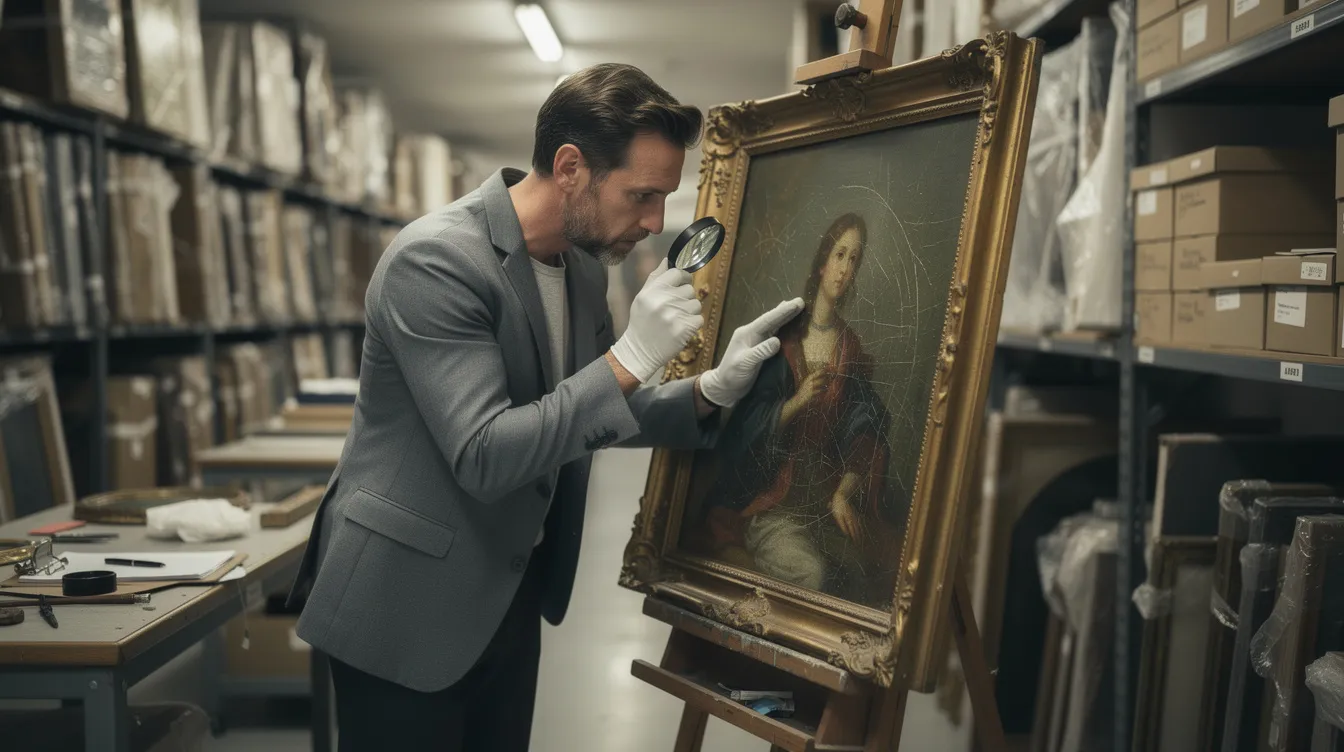
- Conservation and care – Curators oversee the conservation and safe handling of artworks, coordinating with conservators on restoration priorities and condition reporting.
- Administration – Grant writing, budget oversight, insurance management, loan agreements, and shipping logistics all fall under the curator’s purview. Curators coordinate closely with museum staff, registrars, legal teams, and operations departments.
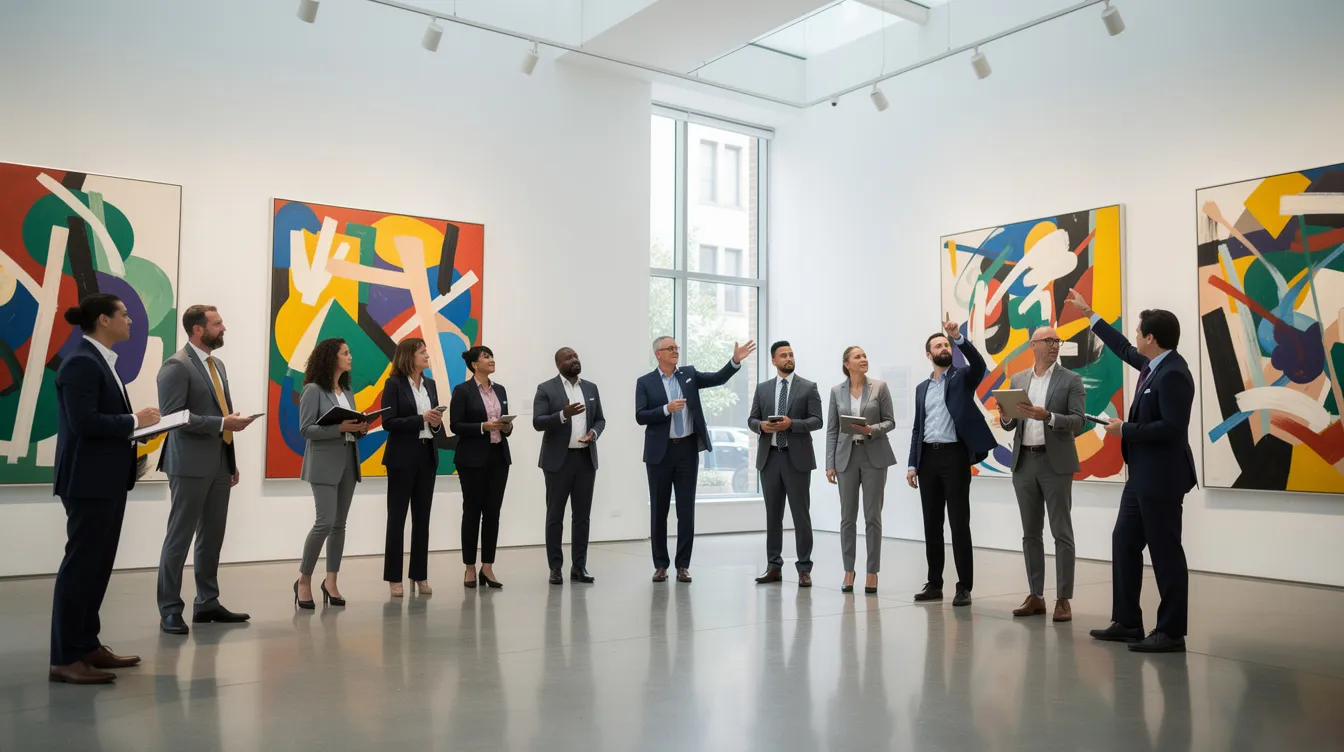
Curators build collections that reflect cultural impact and diversity. In corporate and university settings, curators also manage dispersed holdings across multiple buildings and stakeholders, often aligning art with brand identity, donor relations, and workplace culture. Curators engage in public outreach by giving lectures and conducting tours, making curatorial work as much about communication as it is about scholarship.
Types of Art Curators and Work Environments
Curator roles vary widely by institution type, scale, and focus. Whether you’re drawn to art history research, contemporary art experimentation, or corporate collection strategy, the curatorial landscape offers distinct paths.
Museum curators manage large permanent collections and develop long-term exhibitions. In large museums, such curators typically specialize by medium, period, or geography – European painting, photography, modern art, or sculpture, for example. Their work involves deep research, conservation policies, and managing teams. A figure like Femke Diercks, Head of Decorative Arts at the Rijksmuseum, illustrates how museum work blends scholarship with exhibition planning and public programming across many forms of output.
Exhibition curators focus on temporary shows: conceiving a theme, selecting works from other institutions, shaping the narrative arc, and collaborating with designers on exhibition design. Curating exhibitions of this kind often requires extensive knowledge of loan logistics, packing and shipping, and cross-institutional coordination. These curators create immersive experiences that engage audiences and invite new ways of seeing.
Independent curators work on a contract basis for various venues, including biennials, arts nonprofits, pop-up galleries, and alternative spaces. Freelance curators have more flexibility but also more risk; they must build a reputation, secure funding, and maintain a strong professional network. Many focus on contemporary art and experimental formats, often choosing styles that challenge conventions.
Gallery curators focus on commercial exhibitions and promoting artists. In the art world, they serve as intermediaries between the art scene and collectors, helping artists gain visibility and recognition in the art scene. Curators advocate for emerging artists in a competitive market, promote artists and their work through exhibition programming and market positioning.
Community and university curators manage campus galleries, public art commissions, and local cultural centers. Their work often involves teaching, outreach, and cross-disciplinary projects that connect art with other fields. Cultural institutions at this scale rely on curators to serve both educational and public-facing functions.
Corporate and private collection curators are responsible for managing collections across offices, lobbies, and storage facilities. Their work involves art inventory management, valuation tracking, insurance coordination, and aligning art with workplace culture. Digital curators now also manage virtual exhibitions, online archives, and digital documentation, often overlapping with roles in content management and metadata standardization.
Skills and Education: How to Become an Art Curator
Modern curatorial careers combine formal education in art history or curatorial studies with practical museum or gallery experience. The path is competitive, and the expectations have expanded significantly over the past two decades.
A bachelor’s degree in art history is essential for nearly all curatorial positions. Many curators hold a master’s degree or higher, particularly those in research-heavy roles at large museums. A PhD is sometimes required for senior curatorial roles or positions requiring deep specialization. Museum studies and curatorial studies programs, which have grown since the early 2000s, cover exhibition design, museology, ethics, and collection management. Many programs also address digital documentation, rights management, and public engagement strategies. Curatorial studies programs often include practical training, including internships and exhibition projects that simulate real-world responsibilities.
Core knowledge areas include a broad art history survey spanning ancient through contemporary art, visual analysis, critical theory, and familiarity with current trends in the art market and the broader art world. You should also develop extensive knowledge of non-Western art traditions to support cultural diversity in exhibitions and collections.
Here is a summary of essential practical skills for aspiring curators:
- Deep understanding of art history and visual literacy
- Research and documentation (provenance, condition, attribution)
- Project management and budget oversight
- Exhibition design and narrative construction
- Public communication: writing catalog essays, wall texts, and interpretive materials; public speaking
- Digital competence: collection databases, image rights, cloud-based documentation, virtual exhibition tools
- Negotiation and legal literacy: loans, insurance, contracts
- Collaboration across departments and with industry professionals
Internships provide vital hands-on experience for aspiring curators. Many begin as curatorial assistants, registrars, or collections assistants, cycling through roles to build professional experience. Networking is crucial for securing curatorial positions – attending art fairs, joining professional associations, and building relationships with museum professionals open doors that formal credentials alone cannot.
Curators, Collections, and Technology
Art curation now relies heavily on digital tools to manage complex collections, especially in organizations with distributed artworks across multiple cities, campuses, or office buildings. If you’ve been managing collections with spreadsheets or shared drives, you know the risk: lost records, outdated condition reports, and no single source of truth.
Curators collaborate with registrars, conservators, and operations teams to track artwork locations, loan agreements, insurance policies, and condition reports. Tasks like provenance documentation, cataloging metadata, image management, and reporting for boards or funders benefit enormously from centralized software. Without it, critical information lives in disconnected files, and gaps emerge during moves, renovations, or loans.
Onward is an enterprise-grade, cloud-based platform built for curators and collection managers who need to centralize inventory and documentation for large or multi-site collections. It supports workflows that matter to both museum curator and corporate curator contexts: location and condition monitoring, art loan tracking (outgoing loans, internal moves, temporary installations), virtual exhibitions, and secure cloud storage for high-resolution images and documents.
Data and analytics from tools like Onward help curators make informed decisions about acquisitions, deaccessions, conservation priorities, and audience engagement. Dashboards surface total insured value, collection composition by period or medium, works currently in storage versus on display, and overdue conservation tasks. These collection analytics replace guesswork with evidence, particularly for art evaluation and risk management.
For independent curator roles, familiarity with collection systems and digital exhibition tools can be a competitive advantage when working with cultural organizations. Even if you aren’t managing an entire inventory, understanding how institutions track and document their holdings adds credibility and efficiency to your curatorial work.
Curatorial Career Paths and Future Trends
Curatorial careers are diverse, ranging from traditional museum roles to hybrid careers combining research, digital projects, consulting, and public practice. The career path you follow depends on your interests, institutional goals, and willingness to adapt.
Early-career pathways typically begin with curatorial internships, assistant curator roles, or project-based work with art galleries, artist-run spaces, or community organizations. These positions build your professional experience and expose you to the realities of museum work, from grant writing to installation logistics.
In large museums, progression generally follows a clear trajectory: assistant curator, associate curator, curator, senior curator, and potentially chief curator or director of exhibitions. With each step, you take on increasing responsibility over collections, teams, and budgets. Many programs at the institutional level now emphasize cross-departmental collaboration and public programs alongside traditional research.
Alternative paths are equally viable. You might work as an independent curator focused on contemporary art, a curator of learning and public practice, or a corporate or university collection curator. Some curators also serve as authors, critics, or consultants, blending curatorial practice with publishing articles and art criticism. Curators promote artists through social media and public speaking, extending their influence beyond the gallery walls. Curators also promote artists via social media and public speaking as a major part of rethinking curating in the digital age.
Current trends in the field include globalized art networks, greater emphasis on equity and representation, community-engaged curation, and the rise of virtual and hybrid exhibitions. There are growing expectations that curators understand data, digital access, and sustainability alongside traditional art history expertise. The vested interests of cultural institutions increasingly align with demonstrable impact: visitor metrics, collection utilization, financial reporting, and risk management.
Tools like Onward are part of this future skill set. Using technology to maintain, interpret, and share collections more effectively is no longer optional – it’s a baseline expectation for anyone pursuing curatorial positions in corporate, educational, or healthcare settings.
How Onward Supports Art Curators in Practice
If your organization manages corporate art, you’ve likely faced the challenge of tracking hundreds of works across sites with limited staff support. Curators in corporations, universities, and healthcare systems often inherit collections without centralized records, consistent condition documentation, or clear provenance trails. This is exactly where Onward fits.
Onward helps you centralize your art inventory, including artwork details, locations, provenance, conservation history, and insurance information. Every piece receives a unique ID, and its full documentation – invoices, certificates of authenticity, donor and artist contracts – lives in one secure, cloud-based system. No more digging through file cabinets or emailing colleagues to locate a condition report.
Integrated art loan tracking covers outgoing loans to museums, internal moves between buildings, and temporary installations. Each transaction is documented and reportable, giving you a clear audit trail. Secure cloud storage for high-resolution images, condition reports, contracts, and certificates allows curators and museum staff to access information from anywhere, on any device.
Collection analytics dashboards surface actionable insights: total insured value, collection composition by period or medium, works not currently on display, and upcoming conservation tasks. These features inform curatorial decisions about what to acquire, what to deaccession, and where to focus resources.
Consider this scenario: you’re preparing a new exhibition for your company’s headquarters. Using Onward, you search the collection by medium and date range, verify provenance records for each shortlisted work, check the most recent condition reports, and export an object list for your installer – all within a single platform. What used to take days of cross-referencing spreadsheets now takes an afternoon.
Ready to bring clarity and control to your art collection? Learn more about Onward, request a demo, or get started today.