What Is Commercial Art? (Definition, History, Careers & Modern Uses)
If your organization manages a corporate art collection, you’ve likely encountered commercial art in many forms—from vintage advertising posters in your lobby to branded photography in conference rooms. Understanding what commercial art is, where it came from, and how it fits into your broader collection helps you make smarter decisions about acquisitions, display, and long-term stewardship.
Quick Answer: What Is Commercial Art?
Commercial art is visual art created primarily to sell, promote, or explain products, services, events, or brands. It appears across advertising, marketing, packaging, branding, and digital media, and is almost always commissioned by a client with a specific goal—whether that’s increasing sales, building brand recognition, or driving consumer action.
Here’s what distinguishes commercial art from fine art:
- Intent: Commercial art serves business objectives. Fine art is created mainly for personal or cultural expression.
- Context: Commercial art appears in everyday environments—billboards, websites, cereal boxes, magazines. Fine art typically hangs in galleries and museums.
- Commission structure: Commercial artists work to client briefs. Fine artists pursue their own creative vision.
Common outputs include logos, posters, billboards, website graphics, social media ads, packaging, brochures, print advertisements, and product photography.
From our perspective at Onward, commercial art is also a significant part of what you manage when you oversee a corporate or institutional collection. Branded installations, campaign artwork, and historical advertising pieces all require careful cataloging, tracking, and preservation.
Definition and Core Characteristics of Commercial Art
Commercial art—sometimes called advertising art—encompasses any visual work created to support commerce. This includes selling, promoting, explaining, or positioning a product, service, or organization. Unlike fine artists who pursue personal expression, commercial artists work within defined parameters set by clients and stakeholders.
Key characteristics that define commercial art:
- Purpose-driven: Every piece ties to a concrete commercial objective—boost awareness, change perception, drive a purchase, or support a specific campaign.
- Collaborative process: Commercial artists typically work to a client brief alongside marketers, copywriters, art directors, and brand managers rather than creating in isolation.
- Mass reproduction: Commercial art is usually intended for wide distribution—print runs, digital campaigns, television spots, out-of-home billboards—not unique one-off objects.
- Diverse media: Appears across magazines, newspapers, transit ads, in-store displays, websites, apps, streaming platforms, and out-of-home placements.
- Modern tools: Today’s commercial artists use digital tools like Adobe Creative Cloud, Figma, 3D software, photography equipment, and illustration tablets—a far cry from earlier eras of hand-drawn illustration and paste-up.
Organizations using Onward often catalog these works as part of their visual assets, tracking artist details, rights, usage history, campaigns, and locations across multiple sites.
Historical Background: How Commercial Art Evolved
Commercial art developed alongside mass production, urbanization, and consumer culture. Its roots trace back to shop signs, illustrated broadsides, and posters in 18th and 19th century Europe and the United States—early examples of visual imagery designed to influence consumers and sell products.
The Industrial Revolution proved transformative. As factories churned out mass-produced goods, businesses needed eye-catching packaging, advertisements, and product labels to differentiate themselves in crowded markets. This created unprecedented demand for artists with both artistic skills and the ability to convey a visual message that would resonate with a target demographic.

Key technological milestones shaped the field:
- Lithography and chromolithography (1800s): Enabled colorful posters and packaging, particularly in France from the 1860s–1890s. Henri de Toulouse-Lautrec’s posters for Paris cabarets like the Moulin Rouge became iconic examples of commercial illustration with artistic flair.
- Offset printing (early 20th century): Made large print runs economical, fueling the 1930s–1950s “Golden Age of Illustration.” J.C. Leyendecker’s Arrow Collar ads and Norman Rockwell’s Saturday Evening Post covers exemplified this era.
- Television (mid-20th century): Created new formats for commercial art in motion graphics, computer graphics, and title design.
- Desktop publishing, web, and social media (late 20th–21st century): Expanded outlets for commercial art globally, enabling instant, targeted digital dissemination.
Postwar consumer culture and the Pop Art movement further blurred lines between advertising imagery and fine art. Andy Warhol’s Campbell’s Soup Cans (1962) deliberately elevated commercial imagery—soup cans, soda bottles, celebrity portraits—into gallery-worthy subjects, proving that commercial purposes and artistic merit weren’t mutually exclusive.
Seasoned collectors understand that art logistics: shipping, handling & storing fine art deserves the same attention.
A question worth asking is how Art vision changes the calculus here.
Modern organizations often treat historic advertising posters, brand campaigns, and packaging art as cultural assets worth preserving. These pieces can be cataloged in systems like Onward for research, loans, and exhibitions.
Commercial Art vs. Fine Art
The distinction between commercial art and fine art hinges primarily on intent and context, not artistic quality. Many famous artists—including Van Gogh’s contemporaries and later figures like Warhol—moved fluidly between both worlds.
| Aspect | Commercial Art | Fine Art |
|---|---|---|
| Purpose | Serve a client’s commercial objective (sell, promote, inform) | Express an artist’s personal vision or cultural ideas |
| Audience/Context | Everyday environments—billboards, websites, packaging, offices | Galleries, museums, curated collections |
| Authorship | Often team-produced; individual creators may go uncredited | Strongly associated with named artists whose authorship drives value |
| Lifespan | Originally temporary (campaigns, seasonal packaging), though some become collectible | Intended as enduring cultural objects from the outset |
Artists who successfully navigated both realms include Toulouse-Lautrec, Leyendecker, Norman Rockwell, and Andy Warhol—all created commercial work before or alongside their gallery careers.
For corporate collections, this distinction matters practically. Many organizations display a mix of historical commercial art (vintage posters, campaign photography) and commissioned fine art. Onward lets you categorize works by function and purpose, ensuring clear documentation regardless of whether a piece started life as an advertisement or a painting.
Major Types and Examples of Commercial Art
Commercial art spans multiple disciplines and formats, all oriented around communication and persuasion. Here are the major categories:
- Advertising illustration: Hand-drawn or digital images for print and digital ads. Classic examples include the Coca-Cola Santa illustrations from the 1930s that shaped modern Christmas cards imagery and holiday marketing.
- Graphic design and branding: Logos, visual identity systems, typography, and layouts. The evolution of the IBM logo or Apple’s bitten apple demonstrates how graphic designers create enduring brand recognition.
- Packaging design: Product labels, bottle designs, boxes, and in-store display graphics. Campbell’s soup labels remain visually appealing examples of how packaging can become cultural artifacts.
- Editorial and promotional design: Magazine covers, event posters, brochures, and direct mail. Travel posters for national rail lines and airlines from the 1930s–1960s exemplify this category.
- Digital and social media graphics: Web banners, social ads, email headers, app store imagery, and YouTube thumbnails—where many commercial artists work today.
- Environmental and retail graphics: Signage, wayfinding, wall graphics, exhibition displays, and branded office installations that immerse viewers in brand narratives.
From a management perspective, many of these objects—especially posters, limited-edition prints, and original photography—become part of long-term corporate collections. They can be tracked in Onward by medium, campaign, and location.

Commercial Art, Consumerism & Popular Culture
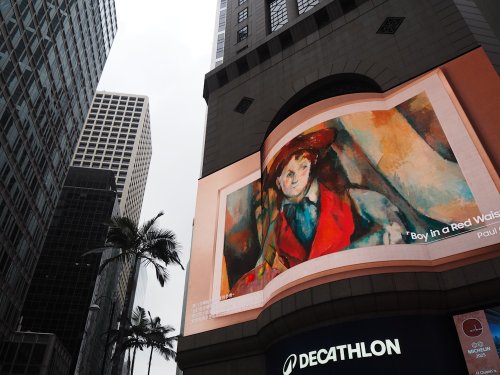
Commercial art both shapes and reflects consumer culture, deploying recognizable imagery, celebrities, and trends to influence purchasing decisions and build brand loyalty across mass media.
- Audience targeting: Every commercial artwork is built with a specific target demographic in mind—age, income, interests, region. Color theory, imagery choices, and messaging all guide consumer choices.
- Mass media reach: From early posters to television spots to today’s digital platforms, commercial art reaches millions quickly, shaping tastes and expectations through repetition.
- Iconic imagery: Repeated use of logos, mascots, and visual motifs builds instant brand recall. The Michelin Man has promoted tire durability since 1898; Nike’s Swoosh became a cultural symbol after its 1971 introduction.
- Pop culture crossovers: Warhol and 1960s Pop Art elevated commercial imagery into fine art. Today, fashion brands collaborate closely with artists for limited-edition campaigns that become collectible—demonstrating creative freedom within commercial constraints.
- Ethics and impact: Commercial art can promote services responsibly or spread misleading messages. It’s also used effectively for public health campaigns, environmental awareness, and social initiatives—proving its influence extends beyond promoting products.
Commercial art you commission today—brand campaigns, social responsibility initiatives—can later be curated and archived as part of your organization’s cultural history. Onward can track this evolution over decades.
Careers in Commercial Art and Where Commercial Artists Work
Today, commercial art overlaps heavily with careers in graphic design, illustration, branding, advertising, and digital media. Here’s where commercial artists work and what they do:
- Graphic designer: Creates logos, visual identities, and layouts for print and digital. Employed in advertising agencies, in-house teams, or as freelancers.
- Illustrator: Produces imagery for ads, packaging, children’s books, and editorial features. Often works project-by-project, bringing drawing and artistic skills to client briefs.
- Web and UI designer: Designs websites, landing pages, and app interfaces—balancing aesthetics with usability.
- Motion designer: Makes animated graphics for web videos, television ads, and in-app experiences using digital tools.
- Art director / Creative director: Leads visual direction for campaigns, manages creative teams, and aligns work with advertising strategies and brand strategy.
- Marketing manager: Coordinates creative production within a marketing department, overseeing marketing efforts and measurement for campaigns.
Typical workplaces include advertising agencies, design studios, in-house corporate marketing departments, media companies, and remote or hybrid arrangements.
Organizations that commission significant commercial art output benefit from cataloging final artwork, working files, and campaign variants—using Onward to track rights, usage windows, locations, and condition for physical pieces.
How Organizations Manage Commercial Art as Assets
Many campaign pieces, commissions, and design artifacts are long-lived assets, not just one-off expenses. Treating them as part of your collection—alongside fine art—requires thoughtful management.
- Inventory management: Organizations often own hundreds of physical works—vintage posters, framed campaign photography, branded installations, commissioned murals. Each needs cataloging with title, artist, date, medium, dimensions, and associated campaign.
- Location tracking: Pieces live across multi-site offices, campuses, or branches. You need to know what’s in the New York lobby versus the London conference space versus storage.
- Provenance and rights: Store commissioning contracts, usage rights, licensing agreements, and crediting requirements for each artwork to avoid legal complications.
- Insurance and condition: Document replacement values, condition reports, conservation work, and transportation records—especially for historically significant commercial art with real end goal value.
- Centralized software: Onward provides secure, centralized software for handling this information—linking artworks to locations, documents, provenance, and insurance data in one system.
Organizations using Onward can also attach digital files—high-res images, campaign layouts, video clips—to each record, making collaboration between marketing, facilities, and curatorial teams seamless.
Best Practices for Creating and Preserving Commercial Art
Whether you commission commercial art or create it in-house, good practices ensure both effective campaigns now and well-managed assets later.
- Clear briefs: Define target audience, objectives, key messages, mandatory brand elements, and timelines before commissioning work.
- Consistent branding: Use a coherent visual language—colors, typefaces, logo usage—so multiple commercial artworks reinforce the same identity over years.
- File management: Store master files (AI, PSD, INDD), finals, and usage versions in a structured way, ideally linked to centralized records in tools like Onward.
- Documentation: Capture artist details, contracts, licensing terms, campaign details, and installation notes for each significant artwork.
- Physical care: For printed and framed marketing materials, follow basic preservation practices—proper framing, UV protection, environmental control, and regular condition checks.
- Periodic evaluation: Review which commercial artworks still reflect current brand strategy. Retire, archive, or recontextualize outdated pieces as historical resources.
Getting Started: Using Onward to Manage Your Commercial Art Collection
If your organization owns or commissions commercial art—vintage posters, branded photography, digital campaign assets—you know the complexity of keeping everything organized across teams and locations. Spreadsheets fall short. Emails get lost. And nobody’s quite sure what’s in storage.
Here’s how Onward helps:
- Centralize data: Import existing spreadsheets, image folders, and paper records into Onward to create a single, searchable catalog of your commercial and fine art assets.
- Track locations and loans: Assign works to specific rooms, campuses, or offices. Record internal moves or external loans for exhibitions and partnerships.
- Attach documents and media: Upload contracts, licenses, rights documentation, insurance certificates, and high-resolution images or video clips to each artwork record.
- Generate reports and analytics: Produce reports for insurance, finance, ESG, or stakeholder communications—showing how much of your collection is historic commercial art, where it’s displayed, and its insured value.
- Enable collaboration: Give facilities teams, marketing, and curators access to the same accurate data, reducing email chains and miscommunication about specific pieces.
Ready to bring order to your collection? Request a demo of Onward and see how the platform supports your commercial art and broader collection management needs.