Table of Content:
- Evolution of Art as a Strategic Financial Asset
- Quantifying Risk: The High Cost of Fragmentation
- Pillars of Professional Collection Governance
- Building a centralized art inventory that actually works
- Tracking location, movement, and ownership across portfolios
- Mitigating Liability Through Active Documentation and Condition Monitoring
- How organizations and collectors manage art as a strategic asset
- Why modern art asset management requires digital tools
- How does Onward support art asset management at scale?
- Getting started with art asset management using Onward
Art collections are more than cultural statements. They are high-value assets that require the same level of tracking, protection, and strategic oversight as any financial portfolio. For corporations, family offices, and institutions, the shift toward professionalized art asset management is no longer optional—it is a requirement for fiduciary responsibility and operational excellence. This guide explores how art asset management works and how organizations can better protect and manage their valuable works.
Evolution of Art as a Strategic Financial Asset
Art asset management is the systematic process of overseeing an art collection as both a cultural resource and a financial investment. In the modern landscape, art is increasingly recognized as a distinct asset class, with high-end collections often valued in the tens or hundreds of millions of dollars. As these portfolios grow in value, they also grow in complexity.
For organizations, managing art today is about more than just hanging a painting in a lobby. It involves navigating a global market, adhering to complex tax and compliance regulations, and ensuring that the physical integrity of the work is preserved. Whether held by a multinational corporation or a private family office, art assets require a structured approach to maintain their “liquidity” and ensure that their value—both aesthetic and monetary—is not eroded by negligence or lack of visibility.
Quantifying Risk: The High Cost of Fragmentation
When art is managed using legacy systems—such as fragmented spreadsheets, paper files, or the memory of a single long-tenured employee—the organization is exposed to significant risks. One of the most common issues is documentation gaps. Missing bills of sale, lost certificates of authenticity, or outdated appraisals can lead to disastrous outcomes during an audit, sale, or insurance claim.
Furthermore, without a centralized system, insurance gaps become inevitable. If a collection’s valuation isn’t updated to reflect market trends, it may be significantly under-insured. Operational risks also include “location blindness,” where artworks are misplaced during office moves or loans, leading to physical loss or damage that goes unnoticed for months. Finally, there is the risk of reputational damage; failing to properly document the provenance or ethical status of a work can lead to legal and public relations challenges in an increasingly transparent world.
Pillars of Professional Collection Governance
To mitigate these risks, professional art asset management must be built on several foundational pillars:
- Centralized Inventory: A single “source of truth” containing every detail of the collection.
- Standardized Documentation: Uniform filing of high-resolution imagery, provenance, and legal title.
- Active Location Tracking: Real-time data on where a piece is, whether it is in an office, in storage, or on loan.
- Valuation & Insurance Management: Regular updates to financial data and insurance policy linking.
- Reporting & Analytics: The ability to generate instant reports for stakeholders, auditors, or tax authorities.
- Secure Collaboration: Controlled access for team members, curators, and external advisors.
Building a centralized art inventory that actually works
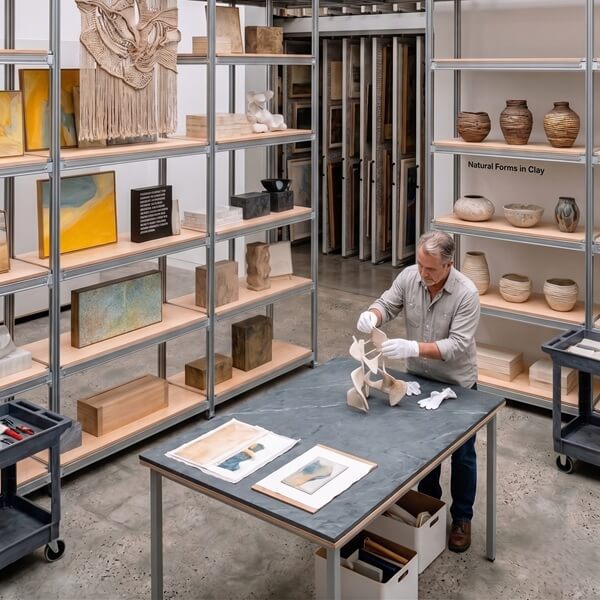
A functional inventory is the heartbeat of art inventory management. It must do more than just list names and titles. A robust digital system captures “tombstone data”—the artist, title, year, medium, and dimensions—but it also links that data to active, living records. Every entry should act as a full dossier, housing condition reports, acquisition history, and high-resolution photos that show every angle of the work.
In a professional setting, consistency is everything. When multiple people—from curators to facilities managers—access the system, they must use standardized naming conventions so everything remains searchable. An effective system eliminates fragmented silos. It automatically updates an artwork’s profile the moment its status changes. This prevents the “data rot” that ruins manual spreadsheets, where information becomes obsolete the moment you type it. By centralizing this data, you ensure the collection’s history stays with the organization, even when staff members move on.
Effective management turns a collection from a static expense into a dynamic, liquid asset. Discover how Onward’s Inventory Management simplifies this process.
For large-scale organizations and global family offices, assets are rarely stationary. Art is constantly in flux, moving between regional headquarters, private residences, climate-controlled storage facilities, and international temporary exhibitions. Tracking art collections across these diverse touchpoints requires a sophisticated system that provides total multi-location visibility at a glance. Without a centralized view, assets can easily become “invisible,” leading to missed maintenance schedules or, worse, physical loss during transit.
Professional movement tracking involves more than just knowing a piece’s current address; it requires maintaining a rigorous, unalterable audit trail. This history tracks where a piece has been, how long it stayed there, and who was responsible for its care at every stage of the journey. This level of detail is especially critical for loan management. When a piece is entrusted to a museum or a partner institution, the system must meticulously track external placement, specific return dates, and the specialized insurance riders required for transit and stay. This real-time oversight ensures that no asset is ever “lost” in the complex shuffle of global operations, providing peace of mind for stakeholders and underwriters alike.
Mitigating Liability Through Active Documentation and Condition Monitoring
Protection is about risk mitigation. Protecting art assets starts with digital preservation: storing high-resolution images and essential documents in a secure, cloud-based environment. This ensures that even if physical files are destroyed, the legal and visual record of the asset remains intact.
Condition tracking is equally vital. Regular condition assessments should be logged to catch environmental damage—such as light exposure or humidity issues—before they require expensive restoration. By linking these condition reports directly to insurance policies, collectors can ensure they are fully prepared for claims and can demonstrate the “due care” required by underwriters.
How organizations and collectors manage art as a strategic asset
Sophisticated collectors and corporations view art through a strategic lens. From a financial perspective, this means tracking the performance of the collection against other asset classes and making informed “buy, hold, or sell” decisions based on data-driven analytics. Culturally, art asset management allows organizations to leverage their collections for brand building, public relations, and employee engagement.
By having a clear view of their holdings, organizations can strategically place works where they will have the most impact or identify pieces that can be loaned out to enhance the institution’s prestige. This shift from a passive “ownership” mindset to an active “management” mindset is what separates professional collections from hobbyist ones.
Why modern art asset management requires digital tools
The days of the local server or the physical ledger are over. Modern art management demands cloud-based art management tools. Spreadsheets are prone to human error, lack version control, and cannot handle the rich media (4K images, PDF certificates) necessary for high-value art.
Digital platforms allow for real-time updates that are accessible across cities and continents. They enable global teams to collaborate without sending insecure emails with sensitive financial data. Furthermore, purpose-built software provides the analytics and reporting capabilities that general-purpose tools simply cannot match, providing instant answers to complex questions about total portfolio value or regional tax exposure.
How does Onward support art asset management at scale?
Onward is specifically designed to meet the needs of organizations and family offices managing collections valued at $10M and above. It provides a sophisticated yet intuitive interface that requires no technical training, allowing executives and art managers alike to access critical data instantly.
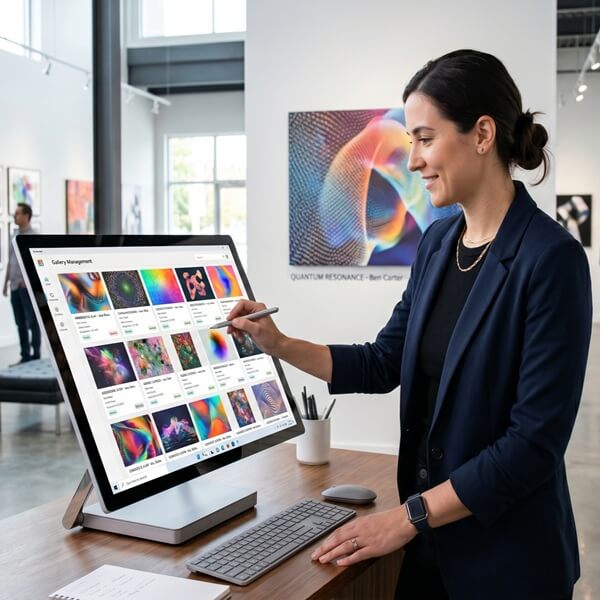
Onward’s core capabilities include:
- Multi-Location Tracking: Full visibility across continents, whether art is in an office, home, or warehouse.
- Private Rooms: Securely share specific selections of the collection with advisors or potential buyers without compromising the entire database.
- Integrated Analytics: Robust reporting for financial oversight and strategic planning.
- Centralized Documentation: All valuations, invoices, and condition reports are connected directly to the artwork record.
By connecting artworks, locations, and tasks in one secure environment, Onward ensures that managing valuable artworks is efficient, secure, and transparent.
Getting started with art asset management using Onward
Transitioning to a professionalized management system is a straightforward process when you have the right partner. The journey begins with a comprehensive inventory audit—bringing all disparate data into the Onward platform. From there, you can map locations, upload vital documentation, and invite key stakeholders into the system.
Once your data is centralized, you can begin leveraging Onward’s Analytics & Reporting to gain insights into your collection’s value and distribution. Whether you are preparing for an annual audit or planning a multi-city exhibition, Onward provides the tools to manage your assets with confidence.
Government agencies and public institutions managing large art holdings increasingly depend on dedicated asset management platforms to meet transparency and accountability requirements.
Universities managing teaching collections and research archives also depend on robust asset management platforms to maintain accurate records and facilitate academic access.
Ready to protect your collection? Experience how Onward can transform your collection management. Request a guided tour today and see the future of art asset management.