Table of Contents:
Why Hospital Art Collections Need Serious Collection Management
The Current State and Unique Challenges of Art Collections in Healthcare
Core Components of Effective Art Collection Management in Hospitals
How Onward Supports Art Collection Management for Healthcare Systems
Best Practices for Implementing Art Collection Management in a Health System
FAQs on Art Collection Management for Healthcare Systems
Why Choose Onward for Your Hospital or Health System
Why Hospital Art Collections Need Serious Collection Management
Picture a 900-bed academic medical center with 3,000-plus artworks spread across a main campus, cancer center, and three satellite clinics. Art transforms sterile areas into welcoming and comfortable spaces, improves workplace satisfaction, and contributes to staff well-being in healthcare environments. It supports patient experience, philanthropy, community engagement, and ESG commitments.
Yet most hospital art programs still run on spreadsheets, shared drives, and paper binders. The risks are real: lost artwork during renovations, outdated insurance valuations, missing provenance documents during audits, and donor-relations problems when a gifted piece can’t be located.
Organized inventory management using digital tools is essential for art collections in healthcare. Moving from spreadsheets and shared drives to digital art collection management creates a more reliable and accessible system for tracking artwork, documents, and locations. Art collection management software centralizes inventory and documentation-cataloging, room-level location tracking, reporting, and secure records in one system, with benefits for hospital art programs that include better visibility, more efficient collection tracking, and simpler documentation. Onward is a cloud based corporate art management platform designed for exactly this kind of complex, distributed organizational collection, including hospitals and health systems.
The Current State and Unique Challenges of Art Collections in Healthcare
Hospital art collections typically grow over decades through donation, commission, grants, and community partnerships-often without a unified system. Cleveland Clinic, for example, manages over 6,300 works across ten hospitals and nearly twenty family health centers. Effective management of art collections within healthcare systems involves strategic curation based on evidence-based design, yet most institutions lack the infrastructure to do this consistently.
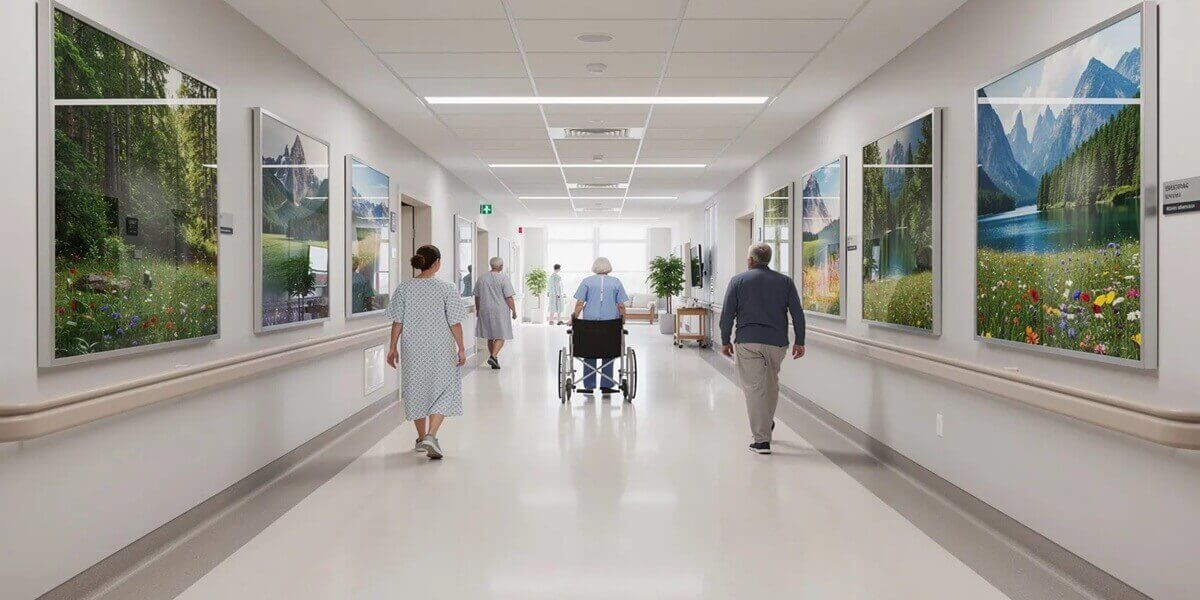
Healthcare art collections can enhance the patient experience by reducing stress and providing positive distractions. Research shows calming art can lower patient heart rates and reduce stress hormone levels, and viewing curated art can result in better moods and reduced anxiety for patients. Evidence-based selection of art focuses on nature-inspired themes and calming landscapes; calming nature imagery and soft color palettes are effective in acute care settings to lower patient anxiety. Patients selecting art for their rooms can increase feelings of autonomy and satisfaction, and regular rotation of artworks keeps environments engaging and therapeutic in healthcare settings.
Art can also serve as landmarks to aid navigation in complex hospital environments-utilizing art as wayfinding reduces anxiety and helps with navigation in healthcare facilities. Collecting patient satisfaction data helps understand the impact of art collections in healthcare and supports program justification.
But the operational complexity is significant. Object details live in Excel, provenance documents sit on a facilities share drive, images remain on a curator’s desktop, loan agreements stay in Legal’s email, and insurance schedules reside in Risk Management’s system. Artwork locations span main hospitals, specialty centers, medical office buildings, and off-site storage-from patient rooms to procedural suites.
Healthcare artworks must meet operational requirements such as cleanable surfaces and secure mounting systems. Joint Commission environment-of-care standards, infection prevention requirements, and life-safety renovations all intersect with collection management. A strong collection management policy addresses mission, scope, selection criteria, and risk management. Consider a cardiac floor renovation where 200 artworks are decanted to storage: without precise location tracking and move histories, pieces vanish. From 2019–2025, many health systems expanded arts-in-health programs, but collection management practices did not keep pace, creating a 2026 modernization gap.
Core Components of Effective Art Collection Management in Hospitals
Any hospital or health system evaluating art collection management software should expect these non-negotiable capabilities:
Inventory and cataloging. Capture artist, title, medium, dimensions, acquisition date, credit line, commissioning program, donor restrictions, and DEI metadata for each artwork. Art management software centralizes inventory records in one system, creating reliable collection records and object records across your entire collection.
Location tracking. Location tracking helps know where each artwork is located-building, floor, department, unit, corridor, and room. Centralized tracking allows monitoring of artwork across multiple locations, and organizations can track artwork locations in real time. Art collection management software tracks movements with effective dates, so move histories are always current. Remote monitoring provides oversight without physical inspections.
Provenance and document storage. It tracks the ownership history of artworks, helps verify authenticity and legal ownership, and is essential for insurance audits. Provenance records can include invoices and certificates of authenticity. Your system must attach and securely store provenance documents, appraisals, deeds of gift, conservation reports, and loan agreements to each object record.
Condition reporting. Staff and conservators log condition assessments with images, note maintenance tasks, and flag urgent conservation needs-annually for high-value works, on schedule for outdoor sculpture or fragile media.
Loan and exhibition tracking. Art collection management software supports loan and exhibition tracking: internal rotations between campuses, external loans to museums or community clinics, art carts for patient rooms, and pop-up exhibits-all with start and end dates and condition check-in/out workflows. Online viewing rooms can extend visibility for galleries and families connected to donated works.
Financial and insurance management. Track acquisition costs, current valuations, funding sources, and generate insurance schedules filtered by location, medium, or value thresholds, supported by professional art evaluation and valuation practices. Maintaining accurate records also makes it easier to respond quickly and file a fine art insurance claim if an artwork is damaged, lost, or stolen.
Analytics and reporting. Digital management improves searchability and reporting speed. Dashboards show insured value by campus, collection growth by year, artists by demographics, and conservation backlog for leadership and board reports, powered by Onward’s art management features.
How Onward Supports Art Collection Management for Healthcare Systems
Onward is art collection management software purpose-built for complex, multi-site organizations-including integrated delivery networks and academic health systems.
Centralized, configurable inventory. Onward offers standardized but configurable fields for artworks, signage, commissions, donor walls, and site-specific installations. Collection managers can create categories like “healing garden sculpture” or “behavioral health safe artwork.” Details such as artist identity, country of origin, exhibition history, and research context are all captured.
Precise location tracking. Track artwork locations from campus down to room and wall: “Main Hospital → South Tower → 4 Oncology → Family Waiting → South Wall,” or across sites such as a main campus in New York and an outpatient facility in another city. Software helps track artwork locations and movement history effectively, including temporary storage crates with barcodes or QR codes. This is critical during renovations when art collectors, facilities teams, and family members of donors all need to know where pieces are.
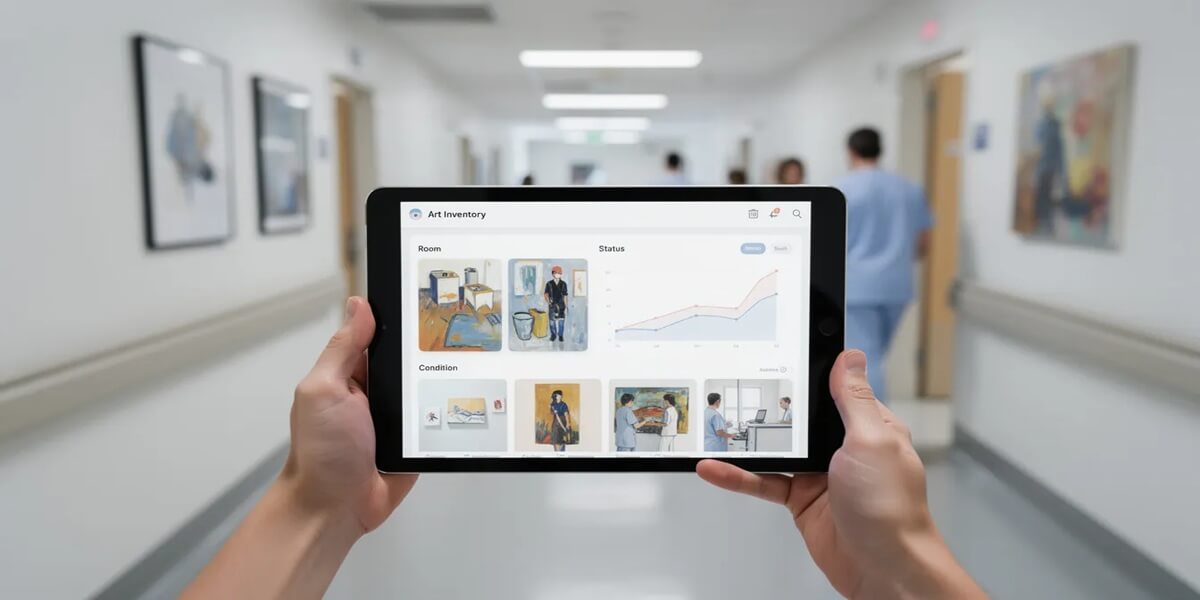
Provenance and documents. Upload provenance documents, deeds of gift, contracts with artists, commissioning agreements, infection prevention approvals, and risk assessments directly into each object record with version history. Files, images, export options, and certificates are all centralized and accessible.
Loan, rotation, and exhibition tools. Templates for external loan agreements, automatic reminders for mid-loan condition checks, and rotation schedules across facilities keep your display program running without spreadsheets.
Maintenance and conservation. Task assignments tied to specific artworks-“reframe to safety glass by 2026-11-30”-with maintenance history logs and recurring reminders for annual inspection of outdoor sculptures support ongoing conservation.
Cloud access and collaboration. Cloud-based systems allow access from multiple locations simultaneously and provide real-time updates and secure access. Users can access collection data from anywhere with cloud-based software, and selected records or collection highlights can sync to a website when public-facing visibility is needed. Data is protected with regular backups and secure servers, and role-based permissions enhance data security in cloud systems, maintaining security across departments. Facilities managers, art program staff, philanthropy, legal, and the executive director of your arts program can all work from current records with full audit trails.
Data migration. Onward’s team imports legacy spreadsheets, FileMaker databases, or older system exports-handling data cleaning and field-mapping so institutions don’t lose historical information. Art management software improves operational efficiency for organizations, and organizations report closing quarterly reporting cycles two days faster after consolidation.
Best Practices for Implementing Art Collection Management in a Health System
Implementation matters as much as software choice. Here is a practical, stepwise approach for hospitals:
- Form a cross-functional team. Include arts-in-health staff, facilities, risk management, legal, philanthropy, capital projects, IT, and a satellite site representative.
- Prioritize your inventory. Start with high-value, high-traffic areas-main entrances, surgical waiting rooms, cancer centers-in year one. Expand to outpatient clinics, administrative offices, and storage spaces in subsequent phases.
- Design your data model first. Define required fields (artist, title, location, accession ID, acquisition date) and optional fields (themes, DEI tags, project codes) before large-scale data entry or data migration.
- Digitize images and documents. Set standards for photography resolution, file naming, and scanning of legacy provenance documents and appraisals. Centralize everything rather than leaving files on personal desktop machines or unsecured network drives.
- Train by role. Short, role-specific sessions for front-desk staff who log moves, facilities teams who update locations during renovations, and leadership who run reports, drawing on best practices for strategic art collection management. Quick wins-like inventorying lobby art first-build organizational buy-in.
- Establish governance. Assign ownership for updating record entries when art is moved, deaccessioned, or conserved. Schedule regular audits. Ensure new commissions enter the system at project turnover.
- Secure your data. Use role-based permissions so only certain users see valuations or donor agreements. Encrypted cloud document storage is safer than paper binders. Artwork Archive and similar platforms use enterprise-level security and encryption; Onward provides comparable protections with a healthcare-ready approach.
- Integrate with existing processes. Reference art location IDs in move/add/change requests during construction. Include Onward reports in annual risk reviews and insurance renewal cycles.
FAQs on Art Collection Management for Healthcare Systems
What is art collection management software in a healthcare setting?
It is a centralized system for cataloging inventory, tracking artwork locations, managing provenance documentation, condition reports, loan agreements, and insurance data-purpose-built with features like room-level location tracking and compliance-friendly document storage that generic inventory tools lack.
How can we prevent losing artworks during renovations?
Precise location histories, move logs, and simple mobile updates in Onward let your team track every piece through decanting, storage, and reinstallation. Art collection management software tracks movements with effective dates, so nothing disappears in a construction zone.
Can multiple hospitals and clinics share one system?
Yes. Onward serves as a single source of truth across campuses, with campus-level permissions so each site manages its own collection while leadership sees the full picture.
How does art collection management support donor relations?
Quick access to artwork history, donor credit lines, display records, and high-resolution images enables credible stewardship reports and philanthropy campaigns-without scrambling through old files.
What about legacy data and physical files?
Onward’s onboarding team handles data migration from spreadsheets, older databases, and scanned provenance documents, rationalizing duplicate or incomplete collection records during the process.
Is cloud-based software secure enough for a hospital?
Cloud-based systems provide real-time updates and secure access with encryption, role-based permissions, audit logs, and regular backups on secure servers. While art data isn’t PHI, it still requires maintaining security standards-and Onward meets internal IT requirements without the complexity of clinical systems.
How long does implementation take?
Expect a phased rollout of 60–120 days for a medium-sized system, depending on collection size and data quality. Onward’s onboarding support guides you through each step.
How do we know if it’s time to modernize?
If your organization faces lost artworks, inconsistent insurance schedules, slow audit responses, or an upcoming campus expansion, it is time to move beyond spreadsheets.
Why Choose Onward for Your Hospital or Health System
Hospitals are stewards of significant cultural assets alongside clinical infrastructure. Modern collection management protects both value and mission. Healthcare organizations choose Onward for its healthcare-ready data structures, intuitive interface for non-museum staff, robust provenance and document storage, precise location tracking, and reporting that satisfies facilities, risk, philanthropy, and your board all at once.
Onward sits in the space between traditional museum systems-too complex and costly-and simple collector tools that lack enterprise features. It is designed to work across corporate, university, and healthcare environments without compromise.
Getting started is straightforward:
- Request a demo
- Share a sample of your current inventory and documents
- Define priority campuses or buildings
- Co-design an onboarding plan around upcoming renovations or capital projects
Ready to centralize your healthcare art collection management and reduce risk before your next audit or expansion? Request a demo and get started with Onward.