Introduction: What an Art Gallery Manager Actually Does Day to Day
If your organization manages corporate art, you’ve likely faced the complexity of tracking hundreds of works across multiple locations, coordinating loans with outside institutions, and producing accurate reports for leadership—all while ensuring exhibitions run smoothly. Coordinating those moves safely is exactly where professional art handling services earn their keep. The art gallery manager role sits at the intersection of curatorial vision and operational discipline, requiring you to manage daily gallery operations while maintaining provenance documentation, insurance records, and exhibition schedules. Effective gallery management ties those threads together, turning scattered tasks into one repeatable system.
Table of Contents
Introduction: What an Art Gallery Manager Actually Does Day to Day
Key Skills and Qualifications for Art Gallery Managers
Collection and Inventory Management in the Gallery Manager Role
How Onward Supports Art Gallery Managers in Practice
Best Practices for Art Gallery Managers in 2026
Career Outlook and How to Get Started as an Art Gallery Manager
Getting Started with Onward as an Art Gallery Manager
Next Steps and Call to Action
Art Gallery Manager FAQ
In 2026, hybrid visitor models dominate. Audiences expect both in-person experiences and digital access through virtual tours and online catalogs. This shift has intensified demands on gallery managers, who must now balance physical programming with digital resilience.
The role differs significantly by context. A gallery manager at Brooklyn College Art Gallery focuses on community engagement, MFA spring thesis shows, and educational programs in a dedicated 7,000 sq. ft. space. A corporate art collection manager at a bank or law firm, by contrast, tracks dispersed works across 12 floors of headquarters, manages rotating lobby exhibitions, and prepares ESG reports for stakeholders. Onward serves as an enterprise tool that centralizes inventory, provenance, loans, and reporting for organizations navigating these complexities.
Core Responsibilities of an Art Gallery Manager
Responsibilities vary by setting—university galleries prioritize educational tie-ins, commercial galleries drive sales, and corporate collections focus on asset stewardship—but common operational and curatorial tasks bind the role together.
Exhibition planning involves developing a one- to two-year prospective schedule, confirming loans 9–12 months ahead, and coordinating with curators or faculty. Operations oversight covers opening hours, front-of-house supervision, and security protocols. Staff coordination includes scheduling interns for installs and managing volunteers. Financial stewardship means monitoring monthly expenses and adjusting for grant shortfalls. Stakeholder engagement requires tailored reports for art department meetings, gallery committee updates, and executive briefings.
In many organizations, the gallery manager also maintains collection records, loan files, insurance documents, and digital image archives—work that becomes central when preparing for audits or insurance renewals.
Exhibition and Program Management
Exhibition management involves developing schedules that account for practical timelines. A major exhibition in 2027 requires confirming loans by early 2026, coordinating shipping bids six months out, and finalizing installation during the week before opening.
Curatorial coordination means working with faculty or artists to define themes, select artworks, and commission interpretive texts and wall labels. You prepare detailed exhibition checklists, manage artwork intake, complete condition reports, and ensure catalogues ensure artworks arrive exhibition-ready.
Public programming orbits exhibitions—artist talks, panel discussions, and student events support gallery programming and community outreach. Marketing coordination with Brooklyn College Communications or corporate teams produces press releases, web pages, and email campaigns that distribute gallery newsletter content and maintain gallery mailing list engagement.
Operational and Administrative Management
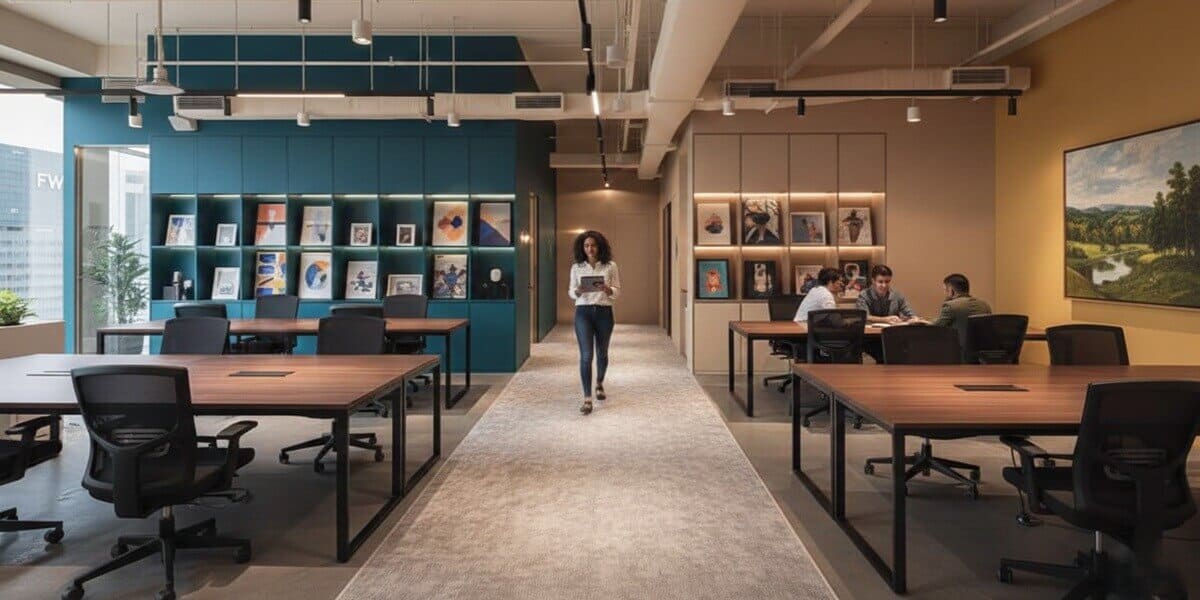
Daily gallery operations encompass staff scheduling, front desk procedures, visitor services, and ticketing when relevant. Administrative work includes writing monthly activity reports, preparing board updates, and keeping internal stakeholders informed through regular art department meetings. The right gallery management software ties all of these routines into one system.
Committee structures vary: you might report to a monthly gallery committee, an art department chair, or a corporate art steering group reviewing ESG alignment. Facilities coordination involves working with campus IT, corporate real estate, or building management on lighting (CRI 90+ LEDs), climate control (70°F/50% RH), and CCTV systems.
Records management is pivotal: maintaining inventory lists with accession numbers, loan agreements outlining indemnity, and insurance certificates—ideally in a centralized system like Onward rather than scattered spreadsheets.
Financial Oversight and Funding
Budget responsibilities vary by scale. Small university galleries operate on $50,000–$150,000 annually for exhibitions, shipping, and insurance. Mid-size commercial galleries run $200,000–$500,000 including marketing.
Managers prepare annual budget proposals, monitor expenses monthly, and adjust plans based on funding changes. Revenue sources include NEA grants ($10,000–$50,000 awards), corporate sponsorships, and sales commissions in commercial settings.
Contract negotiation covers vendor agreements for shipping, crating ($200–$500/piece), installation labor ($50–$100/hour), and insurance coverage. Onward can surface valuation data and loan fee exposure to inform more accurate budgeting and reduce over- or under-insuring risks.
Modern gallery managers increasingly depend on gallery management software to streamline day-to-day operations. Choosing art gallery software built for corporate collections, not retail storefronts, is what makes that dependable at scale.
Key Skills and Qualifications for Art Gallery Managers
Essential knowledge areas span art history, curatorial practices, collections management, basic conservation awareness, and marketing communications. Management competencies include staff supervision, vendor negotiations, and cross-department collaboration with facilities, finance, and IT teams. For more context, see the professional museum standards.
A manager of a campus museum in New York might hold an MA in Curatorial Practice plus 5–7 years in university galleries or nonprofits. Digital fluency is non-negotiable: proficiency with collection management software, CRM tools, and analytics dashboards. For corporate collections, familiarity with governance, risk management, and reporting expectations is increasingly important.
Educational Background and Professional Experience
Common degrees include a bachelor’s degree in art history or fine arts as baseline, with many roles preferring MFA, MA in Curatorial Studies, or museum studies. Job postings in 2024–2026 typically require 3–6 years of progressively responsible experience in galleries, museums, or arts nonprofits.
Internships and assistant roles build toward management: registrar’s assistant logging condition reports, curatorial fellowships curating thesis shows, gallery assistant handling daily operations. In smaller organizations, a strong operations background combined with art knowledge can substitute for advanced degrees.
Soft Skills and Leadership Capabilities
Key interpersonal skills include diplomacy with artists and lenders, and the ability to explain art concepts to non-specialist stakeholders like explaining $500K painting risks to executives. Leadership entails supervising interns, giving constructive feedback, and delegating installation tasks.
Organizational mastery means prioritizing overlapping deadlines for exhibitions, catalogs, and facilities work orders. Resolving a last-minute shipping delay or handling a damaged artwork incident requires both flexibility and systematic processes. Comfort with change management and new technology is crucial as galleries move to cloud-based systems like Onward.
Collection and Inventory Management in the Gallery Manager Role
Many art gallery managers act as de facto collection managers or registrars, especially in corporate or university environments lacking dedicated registrar staff.
Inventory responsibilities include assigning accession numbers (e.g., “2026.001”), cataloging works with artist, title, date, medium, dimensions, acquisition details, and current location. Loan management covers drafting outgoing and incoming agreements, tracking due dates, transport details, and insurance coverage.
Provenance documentation records ownership history, exhibition history, and publication references. Condition tracking involves completing reports before and after transport and monitoring environmental risks. Onward serves as a centralized platform storing this information, supporting search and reporting, and replacing scattered spreadsheets.
Art Inventory Essentials
Core data points include: artist (verified via askArt), title, year, medium (using AAMG standards), dimensions (H x W x D), high-resolution images, acquisition date and source, purchase price, current valuation, location (building/floor/room/wall), and status (display/loan/storage).
Multi-site organizations—offices in New York, Chicago, and London—need real-time visibility into where works are installed, in storage, or on loan. Common pitfalls include inconsistent naming conventions, missing dimensions, and undocumented moves that cause issues during audits or insurance claims. Onward enforces required fields and provides consolidated views of your entire collection.
Loan Tracking, Insurance, and Risk
Outgoing loans require approving terms, verifying insurance, and coordinating logistics. Typical arrangements specify borrower obligations, wall-to-nail coverage with dollar limits, and armed couriers for works valued over $100K.
Incoming loans for temporary exhibitions require loan agreements, condition checks, and clear borrower obligations. Insurance documentation must detail policy limits, scheduled items, coverage types, and deductibles.
Coordinating art logistics is one of the most operationally demanding parts of the role.
A concrete scenario: a corporate gallery in New York lending a painting to a Los Angeles museum in 2026 tracks movement, condition, and insurance certificates. Onward provides automated reminders for loan end dates, stores PDF agreements, and connects loan records to valuation data.
Digital Archives, Images, and Documentation
High-quality images, installation views, and scanned documents are central to modern arts management for marketing, insurance, and historical records. Best practices include standardized file naming (artistlastnametitle_year), photographer credits, and release form storage.
Digitizing decades of exhibition catalogs from 1995–2020 enables searchable curatorial research. Data security and access control matter when storing sensitive appraisal reports. Onward provides secure cloud storage with role-based permissions, version history, and centralized search across images and documents.
Challenges Art Gallery Managers Face (and How Tools Like Onward Help)
Here’s the challenge: many gallery managers still rely on Excel, shared drives, and email threads to manage critical information scattered across departments.
Fragmented Information and Manual Workflows
Preparing a complete exhibition history for a key artwork before a 2027 deaccession review means hunting through old catalogs, emails, and paper binders. Risks include double-booked works, missed loan return dates, incomplete insurance schedules, and inconsistent valuations.
Onward consolidates data: a single record per artwork with connected locations, loans, documents, and valuations updated in real time—less time hunting for files, more time on programming.
Reporting to Leadership and Stakeholders
Leadership expects clear metrics: number of visitors, value of collection, exhibition costs, active loans. Manual reporting means pulling numbers from separate systems, reconciling inconsistencies, and formatting for executive audiences.
Organizations using Onward report generating up-to-date summaries of collection value, distribution by location, and active loans in minutes instead of days.
Security, Compliance, and Continuity
Concerns about data loss, staff turnover, and security breaches arise when information is stored locally or controlled by a single employee. A retirement in 2025 might leave behind undocumented processes; a hard-drive failure could erase years of image files.
Cloud-based systems like Onward provide automatic backups, time-stamped updates, and controlled access supporting internal policies and external audits.
How Onward Supports Art Gallery Managers in Practice
Onward is a B2B SaaS platform built for organizations managing corporate and institutional art collections, designed for the daily workflows of gallery managers, registrars, and facilities teams.
Centralized Cataloging and Location Tracking
Onward maintains structured records for each artwork including metadata, images, documents, and valuation history. Location tracking operates at multiple levels—building, floor, room, wall—useful for corporate campuses and universities managing works across dispersed sites.
Accurate provenance research is also essential for any works entering or leaving the gallery.
Loan, Exhibition, and Document Management
Store loan agreements, exhibition records, and condition reports directly connected to relevant artworks. Set up exhibition records with included works, dates, installation notes, budgets, and marketing files. Automated reminders for loan returns and insurance renewals reduce missed deadlines.
Analytics, Reporting, and Executive Visibility
Dashboards answer questions like “What’s the total insured value in our New York offices?” or “Which loans are due back in Q3 2026?” Configurable exports serve finance, insurance brokers, or auditors with CSV and PDF outputs.
Best Practices for Art Gallery Managers in 2026
Standardizing Data and Documentation
Adopt consistent cataloging standards with controlled vocabularies for medium, location, and status. Create templates for condition reports, loan agreements, and exhibition checklists. Regular data quality reviews catch missing fields and outdated locations.
Building Strong Relationships Across Your Organization
Work closely with facilities, security, IT, finance, and communications. A 2026 lobby exhibition might require after-hours access approvals, extra security coverage, and coordinated press releases. Shared access to Onward gives teams a common source of truth.

Future-Proofing Your Gallery Operations
Plan for hybrid audiences, virtual exhibitions, and ESG reporting pressures. Scalable systems handle more works and richer media over time. Regular training keeps teams comfortable with both physical and digital collection care. Consistent digital tracking underpins that confidence, giving staff one current record to trust.
Career Outlook and How to Get Started as an Art Gallery Manager
Job postings in 2024–2026 often combine curatorial, registrar, and operations responsibilities under a single title. Major cities like New York offer roles across university galleries, corporate collections, and commercial spaces.
Developing Relevant Experience and Networks
Assist with thesis exhibitions, volunteer at local galleries, or work in art handling. Participate in professional organizations and conferences. Learning tools like Onward early demonstrates digital collection management competency in interviews.
Compensation, Work Environment, and Growth
Salary bands for 2026: mid-$70,000s for university positions in New York, $90,000+ in commercial settings. Work patterns include evening events, installation periods with longer hours, and quieter planning cycles. Advancement paths lead to Director of Exhibitions or Collections Manager roles over 10–15 years.
Getting Started with Onward as an Art Gallery Manager
Onward is not traditional gallery management software. It is built for organizations managing large, distributed art collections across offices, campuses, storage spaces, and other locations. That makes it a different kind of art gallery management software than gallery-storefront tools.
Start by reviewing your current tools and identifying where collection records, documents, and location details are stored. Then pilot Onward with a smaller group of works, such as one building, office, gallery space, or collection segment.
From there, migrate legacy data, organize key documents, set up location hierarchies, and train the core team. Once the workflow is stable, expand Onward across more locations and collection areas.
For organizations managing art beyond the traditional gallery model, Onward helps centralize inventory, locations, documents, loans, tasks, reporting, and secure sharing.
What to Prepare Before You Implement Onward
Gather existing inventories, image folders, loan agreements, insurance schedules, and cataloging guidelines. Identify a small working group—gallery manager, registrar, facilities representative, IT contact. Set success metrics: generate a complete inventory by location for 2026 audit within 30 minutes.
Next Steps and Call to Action
The art gallery manager role spans curating, operations, and data management. Modern tools make the job sustainable and allow you to focus on what matters—high quality curated exhibitions and community engagement.
Bring a recent challenge—a complex loan or audit request—to a demo to see how Onward handles it.
Art Gallery Manager FAQ
What are the main responsibilities of an art gallery manager?
An art gallery manager oversees inventory control, exhibition logistics, stakeholder relationships, financial administration, and facility operations. They ensure artworks are properly documented, safely stored, and displayed according to the gallery’s curatorial vision and operational standards.
How does software support an art gallery manager’s workflow?
Gallery management software centralizes inventory records, automates loan tracking, generates condition reports, and provides dashboards for financial oversight. This frees the gallery manager to focus on strategic priorities like exhibitions and client relationships instead of manual data entry.
What is the salary range for an art gallery manager?
Salaries vary by region and institution size. In the United States, art gallery managers typically earn between $45,000 and $85,000 annually. Senior roles at major institutions or corporate programs can exceed six figures, especially when the position includes collection strategy responsibilities.
What challenges do art gallery managers face?
Common challenges include managing artwork logistics across multiple locations, maintaining accurate records as collections grow, coordinating with external vendors for shipping and conservation, and balancing limited budgets against preservation and exhibition goals.
Do art gallery managers need a degree in art?
A degree in art history, museum studies, or arts administration is common but not always required. Many successful gallery managers come from operations, project management, or business backgrounds and develop art-specific knowledge on the job. Hands-on experience often matters more than formal credentials.
How do art gallery managers handle insurance and valuations?
Gallery managers maintain up-to-date appraisal records and work with insurers to ensure adequate coverage. They schedule periodic valuations, document condition changes that affect value, and coordinate with brokers when pieces are loaned or transported.