If your organization manages a corporate art collection, you’ve likely faced the question of whether to buy or lease. Acquiring art outright ties up capital, adds insurance complexity, and locks you into pieces that may not age well with your brand. Art leasing offers an alternative: access to valuable pieces without the full commitment of ownership, with potential financial and operational benefits that make it increasingly attractive for enterprise organizations.
Table of Contents
Art Leasing: Quick Overview for Corporate Art Managers
How Art Leasing Works for Enterprise Organizations
Financial Logic and Tax Advantages of Leasing Art
Key Components of an Art Leasing Agreement
How Onward Supports Leasing Art Within Corporate Collections
Best Practices for Integrating Art Leasing Into Your Collection Strategy
Getting Started With Art Leasing and Centralized Management
Art Leasing FAQ
This guide walks you through how art leasing works, why it makes financial sense, what to include in your agreements, and how to manage leased artwork at scale using Art Onward (Onward). (see IRS Publication 561 on determining fair market value)
Art Leasing: Quick Overview for Corporate Art Managers
Art leasing for businesses is one of several art financing strategies, differing fundamentally from outright purchase. Instead of committing capital upfront, you finance high-value artworks through structured rental agreements—typically spanning 12 to 60 months—with an embedded option to purchase at the end for a residual value, often symbolic or discounted based on payments made.
Leasing art can significantly enhance the aesthetic appeal of any business environment, creating a sophisticated and inspiring atmosphere that makes a strong impression on clients, partners, and employees. A well-curated selection of art can reflect a company’s brand values and culture, contributing to a positive and professional corporate image.
Core benefits of leasing artwork:
- Lower upfront costs—zero deposits in some programs, preserving liquidity for core operations
- Flexibility to rotate works every 12–24 months to align with rebrands or seasonal themes
- Potential tax advantages where lease payments qualify as deductible business expenses
- Safe entry into the $65 billion global art market without speculative ownership risks
- Simpler budgeting through predictable monthly art rentals
Onward helps you track leased and owned works together in a single platform, so your team maintains visibility across hybrid collections without juggling spreadsheets.
How Art Leasing Works for Enterprise Organizations
Consider a typical scenario: a multinational bank or other financial institution with offices in New York, London, and Singapore wants to install original art in reception areas, executive floors, and client suites. Here’s how the process typically unfolds.
Key steps in the leasing process:
Before signing a lease, request a current art valuation so you know the replacement cost if anything goes wrong.
- Curation and selection: Internal teams or advisors from leasing providers scout galleries for site-specific pieces—abstracts for lobbies, heritage works for executive suites—ensuring alignment with brand guidelines. Art leasing services often include personalized recommendations and guidance from experts to help businesses select artworks that align with their aesthetic and brand identity.
- Contract negotiation: Finance and legal review terms with leasing firms, locking in durations and monthly fees. A portion of rental payments may be creditable toward purchase.
- Delivery and installation: Professional handlers provide insured transit, on-site installation with condition reports, and digital handoff of provenance documentation.
- Monthly payments: Automated via bank transfer, treated as operating expenses.
- End-of-term options: Return the artwork, renew the lease, swap for new works, or exercise a buyout at a predetermined residual value (often 10–20%).
Standard lease structures: common durations are 24, 36, 48, or 60 months; monthly fees typically range from 1–3% of artwork value; and 70–90% of fees may be creditable toward purchase in rent-to-own arrangements.
Cross-border leasing introduces complexity—currency hedging, divergent tax treatments, and customs considerations vary by region. Centralized art inventory management via Onward helps you keep contracts, locations, and values aligned across jurisdictions.

Financial Logic and Tax Advantages of Leasing Art
CFOs and finance teams often prefer leasing artwork because it preserves cash reserves, maintains debt covenants by avoiding balance sheet assets, and smooths expenses versus lumpy capital expenditures. Spreading a $20,000 painting over 36 months at predictable monthly fees is often preferable to a single upfront payment.
| Consideration | Leasing | Buying Outright |
|---|---|---|
| Upfront cost | Minimal or zero | Full purchase price |
| Balance sheet impact | Operating expense | Capital asset |
| Cash flow | Predictable monthly | Lumpy, variable |
| Flexibility | Rotate or return | Permanent commitment |
Key tax treatment considerations for leasing art:
- Leasing art allows businesses to spread the cost over several years (typically 13 to 60 months), helping manage cash flow more effectively.
- Companies preserve capital for other strategic investments, as they are not required to commit a large amount upfront.
- Lease payments for art are typically considered operating expenses, making them tax deductible and improving cash flow.
- In France and Belgium, businesses lease art with payments treated as deductible expenses—specifically, 100% of rent paid for leased artwork is deductible from corporate income tax under article 238 bis AB of the General Tax Code.
- In markets like Germany and Luxembourg, similar structures may apply but depend on national tax codes and corporate status.
Important: Always confirm tax treatment with your tax advisor. Onward provides the documentation—invoices, valuations, locations, insurance certificates—that finance and tax teams need for compliance audits.
Leasing agreements should specify who is responsible for art handling during delivery and installation.
Strategic Reasons to Use Art Rentals in Corporate Spaces
Beyond financial considerations, leasing artwork drives tangible business outcomes. Artwork in offices can differentiate and enhance a company’s profile with partners and customers. Creating a healthy and calm work environment with art can stimulate employees’ creativity and limit stress and depression—studies link art exposure to 15–20% mood improvements in workspaces.
Corporate use cases for art rentals:
- Headquarters and flagship offices: Lobbies, boardrooms, and executive floors using rotating art rentals to signal innovation or heritage. Companies like Google rotate leasing for innovation signals, swapping quarterly.
- Regional office networks: Organizations with 20+ sites across North America use standardized leasing programs to maintain consistent quality while reflecting local culture and emerging artists.
- Healthcare systems and universities: Leasing calming abstracts to reduce patient stress and support wayfinding.
- Law firms and financial institutions: Using curated selections to communicate institutional values and sophistication to clients.
Flexibility and risk management benefits include the ability to test investment-grade pieces, new media like video or sculpture, and various price bands without committing capital to long-term ownership in a volatile art market. Refresh cycles of 18–24 months keep spaces current and aligned with brand campaigns. With Onward’s analytics and reporting, you can track locations, category breakdowns, and collection value and appreciation to inform future leasing decisions.
Key Components of an Art Leasing Agreement
Art leasing is contract-driven, and your legal and risk teams will care about details beyond aesthetics. Key components of an art leasing agreement include title to the artwork, maintenance and alterations, terms of agreement, and insurance details.
Clauses to review in any lease agreement:
Organizations that combine leased and owned works benefit from collection management software that tracks both in one view.
- Parties involved: Your legal entity, the lessor (leasing company or financial institution), and sometimes the gallery or artists directly, with appropriate indemnity provisions.
- Description of the artwork: Title, artist, medium, dimensions, high-resolution images, and valuation at lease start, with reference to provenance documentation.
- Term and payments: Lease length, monthly fee, any indexation or escalation clauses (typically 2–3% annual CPI-linked), and what portion is creditable toward purchase.
- Maintenance and condition: Your responsibilities for environmental controls (50–70°F, 40–55% humidity), condition reporting frequency, and restoration protocols if damage occurs.
- Transportation and installation: Who organizes logistics, site checks, de-installation, and re-installation when moving art between offices—including fee caps.
- Insurance and liability: Who insures what (wall-to-wall coverage vs. transit only), coverage limits, deductibles, claims procedures, and subrogation waivers.
- Usage and reproduction rights: Photography permissions, marketing use, virtual exhibitions, and internal communications featuring the leased art—some agreements require fees for commercial reproduction.
- End-of-term options: Renew (often at +10%), swap for new works, return in cleaned condition, or purchase at a defined residual value percentage within a specified window (e.g., 60 days).
Onward can store each leasing agreement, link it to individual works, and create task reminders for key dates—renewals, option windows, and insurance reviews—so nothing falls through the cracks.
Operational Challenges of Leasing Artwork at Scale
Once you lease more than a handful of pieces across multiple locations, spreadsheets and email threads become unmanageable. The reality of managing art rentals at enterprise scale introduces complexity that compounds quickly.
Typical operational pain points:
Displaying leased works thoughtfully transforms your office into a curated space — our guide to office art ideas explores how to maximize that impact.
- Tracking which artworks are leased vs. owned across dozens or hundreds of locations
- Monitoring lease start dates, end dates, renewal windows, and purchase options—internal estimates suggest organizations miss 20% of renewal deadlines
- Coordinating moves when offices close, floors are reconfigured, or new sites open, ensuring leased works stay within contract terms
- Maintaining accurate condition and location data for each leased piece to satisfy insurers, auditors, and the lessor—claims spike 40% without proper condition reports
- Keeping provenance documentation, valuations, and insurance certificates in sync as pieces rotate between sites or convert from lease to purchase
Compliance expectations: Internal auditors, external auditors, and regulators may require clear documentation of high-value assets, even if they’re leased. SOX and SOC2 frameworks demand accurate asset ledgers. Large enterprises often blend strategies—some works fully owned, others on art rentals—which increases complexity significantly if not centralized. Approximately 60% of enterprise collections mix ownership models.
How Onward Supports Leasing Art Within Corporate Collections
Art Onward (Onward) is a B2B SaaS platform built specifically for corporate art and cultural asset management. Onward is not a leasing provider—it’s the system that helps you manage leased and owned works together, regardless of where they come from.
Consider reviewing your art insurance policy to confirm leased pieces are covered under your existing plan.
Core capabilities relevant to leasing artwork:
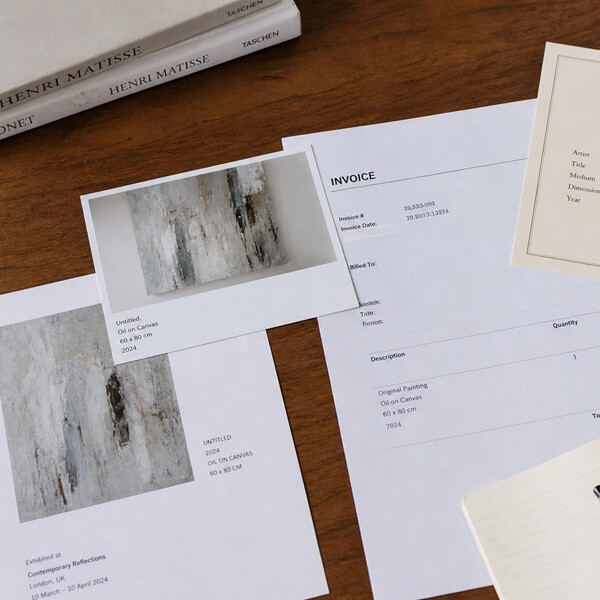
- Art inventory management: Unified catalog for leased and owned works, with images, documents, valuations, and locations in a single view.
- Art loan and lease tracking: Track lease contracts alongside internal loans and external loans, with dedicated fields for term, monthly rent, lessor contact, and purchase option details.
- Provenance and documentation: Upload and secure lease agreements, invoices, certificates of authenticity, appraisal reports, and correspondence—everything finance and legal need in one place.
- Insurance management: Record coverage, limits, and policies tied to each artwork. Run reports to identify gaps for leased assets in specific locations before they become problems.
- Location and condition monitoring: Log moves between offices, capture condition reports before and after transport, and support compliance with lessor requirements through mobile apps and QR-code scanning.
- Virtual exhibitions and internal communication: Curate digital views of leased artworks for leadership approval, employee engagement, or internal brand campaigns.
- Security and access: Role-based permissioning ensures only authorized users—facilities, legal, finance, curators—can adjust lease terms or download sensitive documents.
Organizations using Onward report 40% fewer missed renewal deadlines and 30% better visibility into total spend on art rentals vs. purchases across the enterprise.
Best Practices for Integrating Art Leasing Into Your Collection Strategy
Leasing art allows businesses to experience art without the commitment of ownership, providing financial flexibility and the ability to rotate displays. But leasing works best as one tool within a broader collection strategy, not a standalone activity.
- Define policy: Create written guidelines on when to lease vs. buy. For example, flagship spaces leased for flexibility, heritage pieces purchased for long-term culture.
- Align with brand and HR: Work with marketing and people teams to ensure leased art supports brand narratives, DEI initiatives, and wellness programs.
- Set budget structures: Coordinate with finance to treat art leases as a dedicated line item. Track cost per site and compare to ownership scenarios.
- Standardize due diligence: Evaluate lessors, galleries, and partners using clear criteria—reputation, insurance standards, installation quality, and art market expertise.
- Plan rotation cycles: Decide how often to refresh leased artwork in key areas (e.g., every 18–24 months) and schedule installations to minimize disruption.
- Measure impact: Gather feedback from employees and clients. Use Onward’s analytics to correlate investment in leasing with engagement and space utilization data.
- Reconcile regularly: Compare your leased inventory in Onward with lessor lists quarterly to avoid discrepancies and unbudgeted extensions.
Getting Started With Art Leasing and Centralized Management
Renting art offers a flexible path to participate in the art market, manage money effectively, and enhance your spaces—provided you have the right process and tools. Whether you’re expanding an existing leasing program or exploring this unique opportunity for the future, centralized management makes the difference between control and chaos.
A simple five-step plan to start:
- Map your current situation: List all leased and owned artworks, locations, and contracts—even if data is incomplete. Discover what you have before deciding what to add.
- Identify priority sites: Choose 3–5 flagship locations where leasing artwork could quickly improve brand presence and create a better environment for employees and clients.
- Engage internal stakeholders: Align facilities, HR, legal, and finance around goals—financial, cultural, tax advantages, and risk management.
- Select or review leasing partners: Assess current art rentals or, if starting fresh, contact reputable galleries and leasing providers in your operating regions.
- Centralize data in Onward: Import artworks, contracts, and valuations into Onward so you can manage leasing, ownership, and operations from a single source of truth.
Ready to take control of your leased artwork at scale? Contact us at artonward.com/contact-us to see how Onward can help you manage your collection with clarity and confidence.
Art Leasing FAQ
What is art leasing?
Art leasing allows organizations to display curated artwork in their spaces without purchasing it outright. A leasing provider supplies, installs, and rotates pieces on a recurring schedule, typically for a monthly or quarterly fee that covers the art, framing, and installation.
What are the benefits of leasing art for corporate spaces?
Leasing offers lower upfront costs compared to purchasing, regular rotation that keeps spaces fresh, access to professional curation, and simplified logistics. It also allows companies to test different art styles before committing to permanent acquisitions.
How much does corporate art leasing cost?
Costs vary by collection size, rotation frequency, and the caliber of artwork. Small office programs may start around $500 to $1,000 per month, while large corporate headquarters with hundreds of pieces can run significantly higher. Most providers offer customized quotes based on your specific needs.
Who is responsible for insuring leased artwork?
This depends on the lease agreement. Some providers include insurance in the lease fee, while others require the tenant to add the works to their own policy. Always clarify insurance responsibilities, coverage limits, and deductibles before signing a lease agreement.
Can I purchase artwork that I am currently leasing?
Many leasing providers offer a lease-to-own option where a portion of your monthly payments applies toward the purchase price. This lets you evaluate a piece in your space before committing to a full acquisition, reducing the risk of buyer’s remorse.
How often is leased artwork rotated?
Rotation schedules typically range from quarterly to annually, depending on the provider and your contract. More frequent rotations keep the environment dynamic but require more logistics coordination. Most corporate clients find a semi-annual rotation strikes a good balance between variety and stability.