Table of Contents
Understanding Arts Management in the Cultural Sector
Key Functions of Effective Art Management
Art Management Roles, Skills, and Backgrounds
Challenges in Managing Contemporary Art Collections
How Digital Tools Transform Art Management
Where Onward Fits: Enterprise Art Management for Corporate & Distributed Collections
Frequently Asked Questions
If your organization manages a corporate art collection, you’ve likely faced a version of this scenario: hundreds of works spread across five cities, inventory tracked in disconnected spreadsheets, provenance files buried in a shared drive no one can find, and insurance coverage that hasn’t been reviewed since the last office renovation. A painting goes missing during a headquarters move. No one can confirm whether it was stored, loaned, or lost. The gap between what your collection is worth and what your records can prove becomes a liability.
This is the reality that makes art management essential – not as an academic concept, but as a practical discipline. Art management is the systematic oversight of fine art collections, covering everything from inventory control and provenance documentation to insurance, loans, conservation, and financial reporting. It applies to private collectors, commercial galleries, and the growing number of corporations, universities, healthcare systems, and government agencies that hold significant cultural assets.
Art management overlaps with but is distinct from arts administration (running arts organizations), cultural management (managing heritage and public cultural infrastructure), and arts leadership (setting strategic vision for cultural institutions). Where those disciplines focus on programming, audiences, and organizational governance, art management zeroes in on the physical and financial stewardship of the works themselves.
The core domains include art inventory management, financial management, provenance documentation, loan tracking, insurance management, and community engagement. If you hold a collection of any size, here’s why you should care right now:
- Risk reduction: undocumented works are vulnerable to loss, theft, damage, and disputes
- Financial value: art collections can grow into significant financial portfolios requiring careful administration
- Reputation: a mismanaged collection reflects poorly on your organization and its leadership
- Compliance: auditors, insurers, and boards increasingly expect verifiable records
- Cultural impact: Well-managed collections can serve employees, communities, and public audiences
Onward is a modern, enterprise-grade art management platform built for organizations with distributed collections – the kind of organizations where these risks are highest and traditional tools fall short.
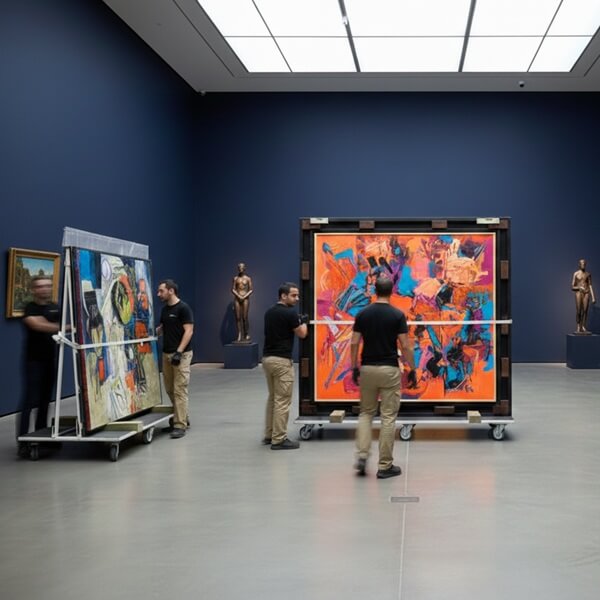
Understanding Arts Management in the Cultural Sector
To navigate this space effectively, you need to understand how art management relates to the broader cultural sector and its terminology.
Art management focuses on the stewardship of physical collections – cataloging, preserving, insuring, and tracking works of art. Arts management (sometimes called arts administration) is broader: it encompasses running arts organizations, from budgets and fundraising to audience development and programming. Cultural management extends further, covering heritage sites, public policy, and cultural infrastructure. Arts leadership sits at the strategic level, emphasizing vision, advocacy, and governance.
These domains overlap constantly. A museum director practices arts leadership while overseeing art management of the permanent collection. A corporate curator handles art management daily but may also shape arts leadership by aligning the collection with company values. Arts managers ensure smooth operations of cultural organizations, whether those organizations are museums, theaters, art galleries, dance companies, opera houses, or corporate offices. They promote financial stability and growth of arts organizations by bridging artistic and business practices in organizations – connecting curatorial decisions with budgets, insurance policies, and strategic goals.
The types of organizations involved span the full spectrum: museums (public and private), commercial galleries, nonprofit arts centers, corporate collections (financial firms, tech companies, law firms), university collections, healthcare systems, family offices, and government agencies. In the visual arts, art management centers on collections and exhibitions. In performing arts – theaters, music venues, dance companies – management focuses more on event management, ticket sales, and programming. But the underlying discipline of aligning artistic mission with operational execution runs through both.
The professionalization of arts management accelerated in the 1970s with the expansion of public funding (notably the NEA in the United States) and the growth of non profit organizations dedicated to the arts. By the 1990s, formal education programs emerged. The 2010s brought cloud-based tools and digital inventories. Today, the field demands fluency in data, analytics, and enterprise software alongside traditional curatorial knowledge.
Arts managers typically carry responsibilities that include:
- Budgeting and financial oversight of collections
- Collections care, conservation, and condition reporting
- Documentation, cataloging, and provenance research
- Insurance and risk management
- Loan and exhibition coordination
- Strategic planning and alignment with organizational mission
- Marketing, public relations, and community engagement
Key Functions of Effective Art Management
Whether you manage a gallery with 200 works or a corporate collection spanning 30,000 pieces across 450 locations (as JPMorgan Chase does), the core functions of art management remain consistent. Arts managers ensure organizations deliver their artistic missions by handling the operational work that makes exhibitions, loans, and responsible stewardship possible. They develop and evaluate cultural programs and organizations to maintain relevance and impact. Arts management includes financial stability and growth of organizations as a central concern, not an afterthought.
Here are the key functions that effective art management covers:
- Strategic planning: Setting long-term direction for the collection in alignment with organizational mission – deciding what to acquire, deaccession, display, or loan, and how those decisions serve brand, culture, or educational goals.
- Financial management: Budgeting for acquisitions, conservation, storage, and insurance. Tracking valuations. Linking collection value to organizational financial reporting. Understanding art valuation methods is critical here.
- Operations and facilities coordination: Managing where works are physically located – which building, floor, room, or storage facility – and coordinating moves during renovations, expansions, or consolidations. Climate control is critical for preserving the physical integrity of artworks, and operations teams must monitor environmental conditions accordingly.
- Collections care and conservation: Baseline condition reports at acquisition, periodic assessments, and restoration when damage occurs. Proper handling, packing, and storage protocols.
- Marketing and community engagement: Communicating the collection’s story internally and externally. Curating exhibitions that reflect organizational values. Supporting audience development through public programs.
- Loans and exhibitions management: Producing loan agreements, coordinating shipping and customs, filing condition reports before and after transit, and tracking return dates. For example, if your law firm sends a painting from its New York lobby to a museum exhibition in 2025, art management must handle the agreement, condition documentation, insurance during transit, and the work’s safe return.
- Provenance documentation: Maintaining complete ownership history for each work – acquisition records, prior sales, exhibition history, and authenticity certificates. Provenance research protects both legal standing and market value.
- Fundraising and resource development: For nonprofit institutions and museums, securing grants, donations, and sponsorships that fund collection growth and care.
Consider a practical scenario: your organization plans a 2026 virtual exhibition showcasing works from multiple offices for remote employees and community audiences. Art management must inventory the available works, verify image rights, upload high-resolution photography, coordinate with internal communications, and track which physical works are on display versus in storage. None of that happens without disciplined management of the underlying data.
Art Management Roles, Skills, and Backgrounds
Arts management merges artistic and business practices, and the roles within it reflect that blend. Arts managers work in museums, galleries, and theaters, but also increasingly in corporations, universities, and healthcare organizations.
A collection manager or registrar handles cataloging, condition monitoring, location tracking, and loan logistics. A gallery director in a commercial setting focuses on sales, artist relationships, and exhibition programming. A corporate art curator balances display aesthetics with branding, facilities constraints, and risk management. An arts administrator or executive director at a nonprofit oversees strategy, fundraising, board relations, and staff management. Consultants are brought in for audits, appraisals, policy development, or tool selection.
Responsibilities vary by context. In a for-profit gallery, the priority is sales, inventory turnover, and artist promotion. In a nonprofit museum, long-term preservation, donor restrictions, and public programming dominate. In corporate and university collections, the emphasis falls on workplace culture, risk and insurance, and internal visibility – many works may never be seen by the public.
The skills required cut across disciplines. Here’s a practical checklist for hiring or professional development:
- Cataloging and metadata management: consistent schemas, controlled vocabularies, high-resolution image handling
- Contract and loan negotiation: drafting and interpreting loan agreements, insurance clauses, and liability terms
- Budget management and financial literacy: valuations, insurance renewals, acquisition budgets, cost projections
- Legal literacy: ownership law, copyright, export/import regulations, donor agreements, deaccessioning policies
- Risk management: environmental hazards, transit protocols, disaster recovery planning
- Digital literacy: fluency with cloud-based collection management tools, analytics dashboards, secure document storage
- Communication and public relations: presenting the collection’s story to internal and external audiences
- Project and event management: coordinating exhibitions, moves, installations, and institutional events
Many arts professionals arrive via nontraditional paths. Artists, designers, lawyers, facilities managers, and operations leaders step into art management roles because the work intersects their existing responsibilities. A facilities director suddenly accountable for 3,000 works across a corporate campus needs practical skills quickly – not a four-year degree.

Challenges in Managing Contemporary Art Collections
Here’s the challenge: most organizations that hold art collections never set out to become art managers. Collections grow organically through acquisitions, donations, and commissions. By the time someone realizes the collection has value and complexity, the management infrastructure is already behind.
Common pain points include:
- Scattered documentation: images in one folder, provenance files in another, insurance records in a filing cabinet, and the “master list” living in a spreadsheet last updated in 2021
- Missing or outdated location records: after a 2023 office renovation, dozens of works moved into temporary storage with no updated tracking – now no one can confirm where they are
- Incomplete provenance: a 2022 acquisition arrived without full ownership history, limiting your ability to insure, loan, or exhibit the work
- Unclear insurance coverage: policies that haven’t been reviewed to reflect current market valuations, leaving high-value works underinsured
- No single source of truth: multiple departments (facilities, legal, executive, curatorial) each holding fragments of collection data
Documentation of provenance is essential for collection management – without it, you can’t verify ownership, comply with ethical sourcing standards, or respond to audit inquiries. Regulatory and compliance risks compound the problem: public companies may need to declare the value of cultural assets on financial statements. Auditors expect verifiable records. Damage or loss without documented condition reports leads to insurance disputes.
Loans and exhibitions add another layer of complexity. Outgoing loans require condition reports, shipping coordination, customs documentation, and tracking due dates for returns. Virtual exhibitions require verified image rights and digital asset management. Each step depends on data that many organizations simply don’t have in one place.
The risks are operational, financial, and reputational. A lost painting isn’t just a financial write-off – it’s a governance failure that erodes trust with boards, donors, and partners.
How Digital Tools Transform Art Management
The shift from paper-based systems to digital art management has accelerated dramatically since the 2010s. Where organizations once relied on photocopied condition reports, local network drives, and handwritten ledgers, modern platforms offer centralized, cloud-based systems accessible from anywhere.
This evolution reflects broader current trends in arts administration: data-driven decision making, demand for real-time reporting, distributed teams managing collections across geographies, and the expectation of transparency from boards and funders.
Core capabilities of modern art management software include:
- Centralized inventory: standardized records for every work, with images, documents, and metadata in one system
- Location tracking: mapping each piece to a building, floor, room, or storage unit, with a history of moves
- Condition monitoring: digital condition reports (baseline, periodic, pre/post loan) with photo documentation
- Loan management: tracking outgoing and incoming loans, agreements, shipping, and due dates
- Insurance and valuation tracking: linking works to policies, coverage limits, and valuation histories
- Provenance documentation: archival storage of ownership records, appraisals, and authenticity certificates
- Analytics and reporting: dashboards showing total insured value, value by location, collection growth, and risk exposure
- Secure cloud storage: role-based access, audit trails, and enterprise-grade data security
The benefits are tangible: transparency across teams, faster production of insurance schedules, fewer lost works, and a reliable foundation for loan or exhibition readiness.
Where Onward Fits: Enterprise Art Management for Corporate & Distributed Collections
Onward is a B2B SaaS platform designed specifically for enterprise art management – the kind that involves large, distributed collections across multiple locations and stakeholder groups. It’s built for organizations where spreadsheets have broken down, and gallery-focused tools don’t fit.
Many existing platforms serve galleries (managing sales and artist inventories) or traditional museums (with deep cataloging but complex, heavy implementations). Onward occupies a different position: it focuses on corporate and institutional collections where the priority is operations, facilities integration, insurance, risk, and financial reporting – not retail sales or ticketed programming.
Onward centralizes art inventory management, locations, images, documents, insurance details, and provenance in a secure cloud environment designed to meet enterprise IT expectations.
The types of organizations and roles that benefit most from Onward include:
- Multi-city corporations with works displayed across offices, lobbies, and conference centers
- Universities managing teaching collections, campus installations, and donor gifts
- Healthcare systems with art programs across hospitals and clinics
- Law firms and financial institutions holding collections as cultural and financial assets
- Government agencies managing public art and institutional collections
- Family offices overseeing private collections across residences and storage facilities
Key stakeholders within these organizations include facilities directors, operations managers, corporate curators, real estate leaders, risk and insurance managers, legal teams, and internal communications professionals.
Core Capabilities of Onward for Art Management
Onward’s feature set is organized around the practical needs of managing a distributed collection. Here’s what each capability area covers:
- Art inventory management: Every work gets a standardized record – artist, title, medium, dimensions, date, acquisition source, acquisition date, current valuation, provenance summary, and attached high-resolution images and documents. Effective art management involves meticulous cataloging and maintenance of collections, and Onward enforces that discipline at scale.
- Location and condition monitoring: Track where each piece lives – building, floor, room, storage unit – with a dated history of every move. Schedule and log condition assessments (baseline, periodic, pre/post loan) with photo documentation attached directly to the work’s record.
- Art loan tracking: Manage outgoing loans to museums, partner institutions, or internal relocations. Store loan agreements, shipping details, and due dates. Automated reminders ensure nothing falls through the cracks.
- Provenance documentation: Store acquisition paperwork, past ownership records, appraisal files, and authenticity certificates in a single, searchable archive linked to each work. This supports both legal compliance and accurate evaluation for insurance and financial reporting.
- Insurance management: Link each work to its insurance policy, coverage limit, and valuation history. Artwork insurance should involve professional appraisals every 3 to 5 years, and Onward’s valuation tracking helps you stay on schedule. Simplify renewals by generating up-to-date insurance schedules on demand.
- Collection analytics: Dashboards display total insured value, value by site, collection growth over time, works on display versus in storage, and risk exposure by location. These metrics give leadership the reporting they need for boards, audits, and strategic decisions.
- Secure cloud storage and governance: Role-based access controls ensure that facilities staff, curators, and executives see only what they need. Audit trails log every change. Enterprise-grade backup and redundancy meet institutional IT requirements.
Best Practices in Art Management for Collectors & Galleries
Whether or not you use a platform like Onward, these practices form the foundation of responsible art management. Adopting them becomes significantly easier with the right tools in place.
- Establish a unified collections policy within 3–6 months. Define your standards for acquisitions, loans, conservation, deaccessioning, and ethical sourcing. Put it in writing and get leadership sign-off.
- Implement a standard cataloging schema. Every work should have: artist, title, date, medium, dimensions, acquisition date and source, current location, condition status, valuation, provenance summary, and at least one high-resolution image. Consistency matters more than perfection.
- Schedule condition reporting. Conduct baseline reports at acquisition, periodic assessments every 12–24 months, and detailed checks before and after any loan or relocation. This is your evidence trail for insurance claims and disputes.
- Integrate art management with facilities and risk processes. Tie art moves to office relocations and renovations. Include the collection in disaster recovery planning (flood, fire, earthquake). Review insurance coverage during annual renewal cycles. Climate control is not optional for works in sensitive media.
- Track valuations systematically. Art markets shift. Professional appraisals should occur on a regular cycle to ensure insurance coverage reflects current market reality, not outdated purchase prices.
- Designate a collection owner. Someone internally must be accountable for the collection’s oversight. Cross-train operations and facilities staff on handling procedures. Review governance and policies annually.
- Document everything digitally. Paper files get lost. Local drives fail. A centralized, cloud-based system of record is the only reliable approach for organizations of any scale.
Arts Management Degree Programs, Education, and Career Development
The rise of formal arts management degree programs and the arts management program model since the 1990s has shaped how professionals enter this field. Today, students can study arts management at institutions ranging from small liberal arts colleges to major research universities. Arts management education combines creativity with business acumen, producing graduates who understand both curatorial practice and financial management.
MCLA offers one of the few undergraduate Arts Management degrees in the United States, and MCLA’s program connects students with local cultural organizations, giving them exposure to real-world collection and program management. Students gain hands-on experience through internships in the Berkshires, working directly with arts and cultural organizations. At the graduate level, SMU offers an M.A. in Arts and Nonprofit Leadership program, and institutions like Boston University, American University, and the University of Michigan-Flint provide master’s degree and certificate program options in arts administration and cultural management. These programs blend finance, marketing, nonprofit management, leadership, and community engagement into cohesive curricula designed to develop the next generation of arts leaders and arts professionals.
But formal education is one piece of a broader pathway. Many effective arts managers come from careers in law, facilities management, operations, or business – professionals who stepped into collection oversight because the work intersected their existing responsibilities. For mid-career development, short courses, online certificates, and industry conferences from organizations like the Association of Art Museum Directors or the American Alliance of Museums offer targeted growth, including for learners with fine arts backgrounds moving into management roles. Regardless of background, hands-on experience with collections, projects, and digital tools like Onward remains the most reliable indicator of readiness for the work.
Community Engagement and the Role of Collections
Art management and arts leadership increasingly emphasize community engagement and cultural impact – not just asset tracking. A well-managed collection isn’t a static portfolio. It’s a resource that can serve employees, patients, students, and the public when the underlying data and logistics are in order.
Consider the range of possibilities: healthcare systems using art for patient and staff well-being, with curated works chosen for specific therapeutic environments. Universities exhibiting student and alumni work as part of the educational mission. Corporations partnering with local artists for lobby exhibitions that reflect the communities where they operate. These programs enhance organizational culture and build professional networks with artistic communities.
When collections are properly managed, they can support community engagement in several concrete ways:
- Loan programs: lending works to cultural organizations, community arts centers, and partner institutions, extending access beyond your walls
- Virtual exhibitions: using digital tools to create exhibitions accessible to remote employees, communities, and global audiences
- Internal programming: rotating displays, artist talks, and curated tours that connect employees with the collection’s story and cultural significance
- Impact reporting: documenting engagement efforts with data for boards, donors, and leadership – demonstrating that the collection generates cultural value, not just financial exposure
Onward supports these activities through curated views for internal communications, records for traveling exhibitions, and infrastructure for virtual exhibitions accessible to dispersed teams and communities.
Getting Started: Building a Modern Art Management Framework
If your collection has outgrown its current systems – or never had formal systems to begin with – here’s a staged approach for moving toward professional art management over the next 12 months.
- Stage 1: Assessment (Months 1–2) – Audit your existing records, storage locations, and policies. Identify gaps in inventory completeness, provenance documentation, condition reporting, and insurance coverage. Interview stakeholders across facilities, legal, risk, and executive teams to understand who holds what information.
- Stage 2: Prioritization (Months 2–3) – Focus first on your highest-value works, any pieces currently on loan, and works in high-traffic or high-risk locations. These carry the greatest financial and reputational exposure.
- Stage 3: System selection (Months 3–5) – Define your requirements. Involve IT and risk stakeholders early. Evaluate platforms like Onward against your specific needs: distributed locations, insurance tracking, provenance storage, reporting, role-based access, and enterprise security.
- Stage 4: Implementation (Months 5–8) – Migrate data from spreadsheets, drives, and filing cabinets into your selected platform. Standardize fields. Upload images and documents. Define user roles and permissions. Run parallel systems briefly if needed to validate data accuracy.
- Stage 5: Ongoing governance (Months 8–12 and beyond) – Schedule regular updates. Conduct annual reviews of valuations and insurance. Establish recurring training for staff and partners. Review collection policies annually. Use analytics to surface trends and inform leadership decisions.
This framework works whether you manage 50 works or 50,000. The scale of the effort changes, but the sequence and discipline don’t.
How Organizations Use Onward in Practice
To illustrate what this looks like in practice, consider three anonymized examples that reflect common Onward use cases.
A regional healthcare system with 1,200 works across 14 facilities had been tracking its collection in a single spreadsheet maintained by one staff member. When that person left, institutional knowledge went with them. After implementing Onward over a four-month period, the system consolidated all records, linked works to locations and insurance policies, and established condition reporting workflows. The time required to produce an annual insurance schedule dropped from three weeks to two days.
A multinational law firm managing 800 works across offices in six cities faced a recurring problem: partners requesting specific pieces for client-facing spaces but no one knowing where those works were. With Onward, the firm established real-time location tracking, digital condition reports, and searchable inventory accessible to facilities teams in every office. Loan requests that once took weeks to fulfill now resolve in days.
A university with a teaching collection of 3,500 objects plus campus installations needed to respond to an audit requesting provenance documentation for donated works. Prior to Onward, documentation was scattered across departmental files and faculty offices. After migration, the university centralized provenance records, flagged gaps for follow-up, and produced audit-ready reports within 48 hours.
Organizations using Onward report measurable improvements: reduced time to generate insurance and valuation reports, fewer works with unknown locations, faster response to loan and exhibition requests, and clearer reporting to leadership and boards.
Conclusion and Next Steps
Art management is now a strategic priority for any organization holding significant cultural assets – whether you’re a collector, a gallery, a corporation, or an institution. The discipline connects artistic quality with financial management, risk control, and community engagement in ways that protect value and create opportunity.
The organizations that treat their collections as managed assets rather than incidental décor are the ones positioned to preserve those assets, leverage them for cultural and business impact, and avoid the operational and reputational risks that come from neglect. Innovation in digital tools has made professional-grade art management accessible to organizations of every size, and the cost of inaction – lost works, insurance gaps, compliance failures – continues to grow.
Onward provides a practical, modern solution for centralizing and simplifying corporate art collection management. If you’re ready to move from spreadsheets to a system built for the scale and complexity of your collection, here are your next steps:
- Learn more about Onward and explore how the platform supports distributed collections
- Request a demo to see how Onward handles inventory, insurance, loans, and reporting for organizations like yours
- Get started with Onward and begin building the art management framework your collection deserves
Frequently Asked Questions
What is art management and how does it differ from arts management?
Art management focuses specifically on the stewardship and operational oversight of physical art collections, including inventory, provenance, insurance, and conservation. Arts management is broader, encompassing the administration of arts organizations, including programming, fundraising, and audience development.
Why is art management important for corporate collections?
Corporate collections often span multiple locations and involve significant financial value. Proper art management reduces risks such as loss or damage, ensures compliance with insurance and audit requirements, and enhances the collection’s cultural and business impact.
What are the key functions of effective art management?
Key functions include strategic planning, financial oversight, location and condition tracking, provenance documentation, loan and exhibition coordination, insurance management, and community engagement.
What skills are needed for a career in art management?
Successful arts managers combine knowledge of curatorial practices with business skills such as budgeting, legal literacy, contract negotiation, risk management, digital proficiency, and communication.
How does Onward help organizations manage their art collections?
Onward provides enterprise-grade software tailored for distributed collections, offering centralized inventory, provenance documentation, loan tracking, insurance management, analytics, and secure cloud storage to streamline art management operations.