Table of Contents
What Corporate Art Consultants Actually Do
Corporate Art Consultants vs. Art Consulting Firms vs. Art Advisors
When Your Organization Should Hire a Corporate Art Consultant
How Corporate Art Consultants Work: From Strategy to Installation
The Operational Side: Inventory Management, Loans, and Compliance
How Onward Supports Corporate Art Consultants and Their Clients
Frequently Asked Questions
Since 2020, corporate art has shifted from background decoration to a strategic priority. Hybrid offices in cities like New York are being redesigned around collaboration and culture, hospital systems in Houston are commissioning hundreds of healing-focused artworks, and organizations across industries are treating contemporary art and fine art as assets that reinforce brand, wellness, and identity. A French survey found that 51% of corporate collections are poorly or not insured, and 44% have no staff member assigned to collection management. These numbers point to a gap that corporate art consultants are uniquely positioned to fill.
In practical terms, corporate art consultants are specialists who plan, source, and manage corporate art collections for offices, campuses, hospitals, banks, law firms, and universities. They bring art consultancy expertise to environments where aesthetic decisions intersect with budgets, compliance, and brand strategy. This article clarifies what art consultants do, how they differ from art consulting firms and art advisors, when your organization should hire one, and how art solutions like Onward support long-term collection management.

What Corporate Art Consultants Actually Do
A corporate art consultant’s day-to-day work goes far beyond choosing a painting for a conference room. Much of their time involves site visits, stakeholder meetings, and collection audits. In a 20-story financial headquarters in Chicago, a consultant might walk every floor with the facilities manager, cataloging existing artwork, noting lighting conditions, wall finishes, and adjacencies before proposing a single new piece.
They assess existing art collections and office space layouts, then develop an art strategy that balances contemporary art, fine art, photography, sculpture, and mixed media to match a company’s vision and culture. With extensive knowledge of the art market, consultants maintain databases of thousands of artists, ranging from established international names to emerging contemporary artists in local communities. Using floor plans and client preferences, they then propose suitable art options and create tailored recommendations.
Art consultants work with architects and designers to curate art collections during new builds or renovations, collaborating with HR, marketing, and the client’s team to ensure the art selection process reflects brand values and style. They manage logistics like shipping, framing, and installation, often drawing on art associates for research, sourcing, and coordination with facilities teams and vendors. They also handle budgets, timelines, insurance guidelines, and contract negotiations. Art consultants facilitate discussions among stakeholders during the selection process, streamlining the art selection process for clients who lack the resources, network, or expertise to do it internally. Many consultants now also consider digital media and virtual exhibitions for distributed or remote teams, extending creativity beyond physical office walls.
Corporate Art Consultants vs. Art Consulting Firms vs. Art Advisors
The terms art consultant, art advisor, and art consulting firm overlap but describe different roles. Understanding these distinctions matters when you’re deciding who to hire for your unique needs.
A corporate art consultant is typically an individual or small team focused on project-based art solutions for a specific site, such as a new office space in Austin or a hospital wing in Boston. They deliver distinctive art programs through hands-on curation, sourcing, and installation. Art consulting firms are larger organizations with multiple art consultants, project managers, and curators. They handle multi-site programs, international projects across regions, and complex commissioning workflows, offering art consulting services at scale. Art advisory services and fine art advisors, by contrast, focus on strategic art acquisition, value preservation, and investment-quality fine art. An art advisor might guide a portfolio of blue-chip works, researching provenance and long-term art market value for private collectors and corporate collectors.
Consider three scenarios. A regional healthcare system consolidating its art collection across 15 clinics needs an art consulting firm with healthcare experience and operational depth. A family office building a 50-piece fine art collection with investment potential benefits from an art advisor with extensive knowledge of the secondary market. A tech company launching an innovation hub that needs contemporary art-inspired branding and strong local representation would hire a corporate art consultant or boutique art consultancy skilled in spatial and narrative work. Many professionals blend these roles, but clarifying whether you need design emphasis, investment diligence, or large-scale project coordination helps you select the right partner.
When Your Organization Should Hire a Corporate Art Consultant
If your organization manages corporate art, you’ve likely faced scattered artworks, outdated pieces, unclear ownership, or a lack of documentation across multiple locations. These pain points signal it’s time to bring in external expertise.
A new headquarters build or major renovation is one of the most common trigger moments. Post-pandemic workplace redesigns in major US cities have driven organizations to rethink how art supports collaboration and culture. A merger or acquisition that suddenly doubles your art inventory and sites is another, introducing complexity that internal teams rarely have the capacity to absorb. Rebranding initiatives, where visual identity needs to extend into physical spaces, require consultants who can help align collections with corporate branding and translate a company’s vision into curated environments. A compliance or insurance review revealing incomplete inventory and condition records is a clear signal. So is the desire to pivot toward contemporary artists or local artists to better reflect community and DEI goals.
At each of these moments, a corporate art consultant helps by aligning stakeholders, defining an art strategy, rationalizing existing collections, commissioning pieces, and planning phased installations. Art consultants help tailor collections to client needs and alleviate complexities in managing art collections for organizations of every size. Even institutions with internal curators often bring in external art consultants for curatorial projects, large commissions, or specialized genres.
How Corporate Art Consultants Work: From Strategy to Installation
Most art consultancy engagements move through recognizable stages, though terminology differs between art consulting firms. Here is what the process typically looks like.
Discovery begins with interviews across leadership, HR, marketing, and facilities. The consultant reviews floor plans, walks each space, and catalogs any existing art collections. Concept and strategy follow: defining themes like innovation, local culture, or sustainability, setting budget bands, and deciding the mix of contemporary art, fine art, photography, and sculpture. Art selection involves understanding the client’s goals and culture at every step. Curation and selection mean building digital mockups, shortlisting artists from the consultant’s network of galleries and art dealers, and conducting internal review sessions. Procurement and commissioning covers negotiating with artists, galleries, and fabricators while managing contracts, copyright, and timelines. Installation and activation involves scheduling around move-in dates, coordinating with building management, and creating wall labels or digital guides. Properly curated art can reflect a company’s brand narrative, and corporate art consultants translate a company’s mission into visual experiences that resonate with employees and visitors.
After installation, many art consultants offer rotating art programs for businesses, providing ongoing curation that keeps art collections dynamic and engaging. Some art consulting firms package these stages as turnkey services while others offer modular engagement.
The Operational Side: Inventory Management, Loans, and Compliance
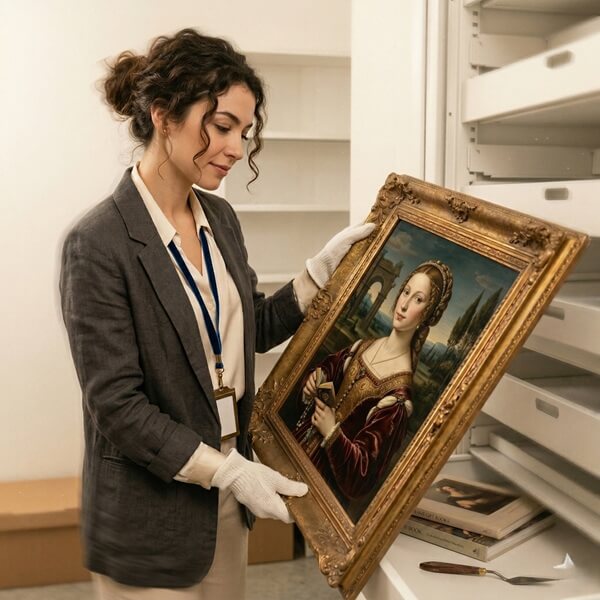
Once artworks are installed, someone must track locations, values, conditions, and movements across years and offices. This is the often-overlooked reality of corporate art. Since 2020, hybrid work has led some organizations to move 30–50% of artworks between offices, floors, or storage, increasing the risk of loss or damage.
Art consultants help manage art collections for various environments by creating or updating a centralized art inventory, documenting provenance, purchase details, and artist information for fine art and commissioned works. They work with legal and risk teams on insurance coverage, appraisal schedules, and loan agreements. Challenges include employees moving artworks between rooms without record, expansion to campuses in different states with different tax rules, and ad hoc loans to museums or universities without standardized documentation.
This is where software like Onward fits. By centralizing art inventory management in a secure cloud platform, Onward enables consultants and internal staff to track locations, loans, condition reports, and supporting documents in one place. Collection analytics help you report value distribution, artist diversity, and location-based exposure to leadership. Organizations using Onward report smoother collaboration with their art consultants because data, images, and documents are no longer scattered in emails and spreadsheets.
How Onward Supports Corporate Art Consultants and Their Clients
Onward is enterprise-grade software built for organizations with large or distributed corporate art collections, from law firms with 20 offices to healthcare systems with 30-plus facilities. It supports corporate art consultants at every stage of their work.
During discovery, consultants import or build an accurate catalog of existing art, including photos, locations, and metadata. As part of curation, they attach proposed works and mockups to upcoming art projects for internal review. Once installation begins, they record final locations, dates, and condition notes.
After handoff, the client receives a live, maintainable system rather than static PDFs. Onward’s features include art inventory management by building, floor, and room, insurance management fields for values and appraisal dates, provenance documentation with attached contracts and artist agreements, art loan tracking with due dates and responsible contacts, and virtual exhibitions to share curated selections with remote employees or global stakeholders.
A corporate art consultant implementing a multi-year art program across offices in New York, London, and Singapore can rely on Onward to keep everything synchronized, giving corporate clients visibility regardless of geography. Onward doesn’t replace art consultants. It makes their work more measurable, auditable, and sustainable for the client after the consulting engagement ends. Art consultants help embed art into professional spaces, and Onward ensures those investments are protected and leveraged over time.
Benefits of Working with a Corporate Art Consultant (Backed by Good Systems)
Here’s the challenge: many organizations underestimate the coordination needed to create and manage corporate art collections at scale. Working with a consultant, supported by strong systems, delivers clear advantages.
Strategic alignment means art that supports brand, culture, and employee experience rather than random decorative choices. A thoughtfully curated collection reinforces a company’s identity. Art consultants enhance the professional image of a company by selecting artwork based on the specific context of the environment. Time and cost efficiency come from streamlined sourcing, negotiation, and vendor management.
Art consultants help tailor collections to client preferences, preventing costly rework. Risk reduction follows from proper documentation, insurance alignment, and condition monitoring. Art in corporate offices boosts employee morale and productivity, and curated art collections enhance workplace environments significantly. In healthcare, art can alleviate stress and support healing. With collection analytics through Onward, you get measurable impact: reporting on asset value, loan activity, and collection diversity to stakeholders. Unique exhibitions, both physical and virtual, future-proof your collection for hybrid work. Art consultants provide ongoing curation for dynamic collections, and many offer distinctive art programs, including rotating shows that keep spaces fresh. Consider a university system consolidating scattered art holdings across 8 campuses, working with an art consulting firm plus Onward to centralize records, this is the kind of research-backed, systematic approach that protects your investment.
Best Practices for Collaborating with Corporate Art Consultants
If you’re a facilities director, operations manager, or internal curator preparing to bring in a consultant, these practices will help you collaborate effectively.
Clarify decision-making early. Define who signs off on budgets, aesthetic direction, and timelines, whether that’s a steering committee or a single executive sponsor. Share your constraints upfront: square footage, installation dates, security protocols, and any restrictions on materials or imagery. Bring data. If you have a partial art inventory, consolidate it into a single source. Starting with an Onward account accelerates discovery and gives your consultant immediate context. Align on success metrics, whether that’s employee feedback, brand consistency, insurance compliance, or asset value protection. Plan for aftercare: decide who will maintain collection records, approve moves, and manage future art acquisition once the engagement ends. Invite your consultant to help define internal workflows for art requests, loans, relocations, and communication around deaccessions.
Getting Started: First Steps and How Onward Fits In
Ready to turn your corporate art from “nice to have” into a managed, strategic asset?
Start with a two-week internal assessment of current artworks, stakeholders, and upcoming projects. In weeks three and four, shortlist and interview potential corporate art consultants or art consulting firms with relevant industry experience, whether that includes someone like Annie Wharton Art Consulting or a larger firm. In weeks five through eight, scope a pilot project for one building or department, and set up an Onward account to capture all artworks and decisions from day one. Onward can be introduced at any stage, whether you’re cataloging a pre-existing collection or launching alongside your consultant’s first project, so there’s a single, long-term home for all art data.
Learn more about Onward for product details. Request a demo to see specific features in action. Or get started with Onward to centralize your corporate art collection management today. Corporate art consultants bring the creative expertise, the aesthetic sensibility, and the art market knowledge your business needs. Onward brings the operational strength to maintain, leverage, and report on your art collections efficiently, long after the last sculpture is installed.
Frequently Asked Questions
What is the role of a corporate art consultant?
A corporate art consultant plans, sources, and manages art collections for offices, campuses, hospitals, and other professional environments. They oversee the entire art selection and installation process, align collections with brand strategy, and manage logistics like shipping and insurance.
How do corporate art consultants differ from art advisors and art consulting firms?
Corporate art consultants typically focus on project-based art curation and installation for specific sites. Art consulting firms operate on a larger scale, managing multi-site and international projects. Art advisors specialize in strategic art acquisition and investment for private and corporate collectors.
When should an organization hire a corporate art consultant?
Organizations should consider hiring a consultant during major renovations, mergers, rebranding efforts, or when managing scattered and undocumented art collections. Consultants help align stakeholders, develop art strategies, and streamline collection management.
How do corporate art consultants support ongoing collection management?
They create centralized art inventories, document provenance and condition, coordinate insurance and loans, and often provide rotating art programs to keep collections dynamic and engaging.
What benefits do corporate art consultants bring to a business?
They ensure art collections reflect brand identity, enhance workplace environments, boost employee morale, and reduce risks related to art management. Their expertise streamlines sourcing, installation, and compliance, saving time and costs.
How does software like Onward complement the work of corporate art consultants?
Onward centralizes art inventory management, tracks locations, loans, and condition reports, and provides collection analytics. This supports consultants and clients by making art management measurable, auditable, and sustainable over time.