If your organization manages a corporate art collection, you’ve likely felt the strain of keeping tabs on every piece. Artwork lives across floors, buildings, and regions. Values shift. Provenance documents drift into scattered email threads. And when a C-suite executive asks what’s on the wall in the boardroom next Tuesday, the answer shouldn’t require half a day of phone calls and file hunting.
The right art collection app replaces that chaos with a single source of truth. Below, you’ll find what a modern art collection app actually does, the challenges it solves for corporate collections, and what to look for when you evaluate your options. You’ll also see how Onward approaches the problem from the perspective of facilities directors, operations leaders, and curators who need to treat art as the strategic asset it is. As an art inventory app, Onward keeps that single source of truth in your pocket, with the full collection searchable from any device.
The Current State of Corporate Art Collection Management
Most corporate collections still live in fragmented systems. A spreadsheet tracks acquisitions. A shared drive holds appraisal PDFs. Photographs sit in a phone camera roll. Loan agreements are buried in legal’s document repository. Insurance riders reference artwork by descriptions rather than stable identifiers.
This patchwork usually grows organically. A collection starts small, an assistant maintains a list, and as the organization expands the list becomes a binder, then a folder, then a drive. Each tool does one thing reasonably well, but nothing connects them. The result is a collection that technically has records but practically lacks visibility.
An art collection app consolidates these records into one platform built for the specific shape of art data. Rather than forcing artwork into a generic asset register, it accounts for the details that matter: medium, dimensions, provenance chain, conservation history, current location, insurance value, and the people responsible for each piece. Corporate collections managed this way become easier to audit, easier to insure, and dramatically easier to hand off when personnel change.
Key Challenges Organizations Face Without a Dedicated App
The problems compound quickly when there’s no central system in place. A few patterns show up in nearly every collection we hear about.

Location drift. A piece moves from one office to another for a renovation, and the only record of the move is a Slack message. Six months later, nobody is sure where it ended up.
Valuation blind spots. Insurance renewals arrive, and your broker needs current values. Without a system that tracks appraisals over time, you either accept outdated numbers or scramble for fresh appraisals on deadline.
Provenance gaps. A donor requests documentation on a specific work, or a legal matter requires chain-of-custody records. Pulling together purchase agreements, previous-owner affidavits, and exhibition history from scattered files is slow and error-prone.
Audit friction. Corporate governance increasingly expects collections to be auditable. Without consolidated records, audits require weeks of manual reconciliation.
Knowledge loss. When the person who maintained the spreadsheet leaves, years of context often leave with them. Notes on condition, artist relationships, and acquisition rationale disappear from institutional memory.
Each of these is solvable individually with enough effort. Together, they represent an ongoing tax on the team responsible for the collection, and the tax grows as the collection grows.
How Onward Addresses Collection Tracking
Onward is an art collection app built specifically for corporate environments. The platform centralizes everything about every piece — acquisition details, current location, valuation history, condition reports, provenance documentation, insurance information, and the stakeholders connected to each work — in a structured record that’s easy to search, filter, and report on.
Onward treats every artwork as a first-class record with its own identity, history, and relationships rather than a row in a generic asset list. You can view an entire collection at a glance, drill into a single piece to see its complete lifecycle, or pull a subset by location, artist, acquisition date, or insured value.
The app handles the documents that travel with art: appraisals, certificates of authenticity, exhibition loan agreements, conservation reports, and purchase invoices all attach to the work itself rather than living in a separate file system. When a question comes up about a specific piece, everything you need is one click away from the artwork’s record.
Onward also accounts for the people and locations that matter. A piece on loan to a regional office shows where it is, who approved the loan, when it’s expected back, and who to contact if plans change. A piece moved for a renovation updates its location when staff log the move, and the historical record of where it has been stays intact.

Benefits You’ll See
The practical outcomes show up quickly once a collection is centralized in an art collection app.
Faster answers to common questions. Where is this piece? What’s its current insured value? When was it last appraised? These become seconds-long lookups instead of morning-long projects.
Cleaner insurance renewals. When your broker asks for current values, you export the schedule from the app rather than rebuilding it from disparate sources. Appraisal histories stay attached to each work, so the reasoning behind every number is visible.
Better audit readiness. Internal audits, donor reports, and governance reviews draw from the same trusted record. You stop reconciling and start reporting.
Smoother personnel transitions. When someone joins or leaves the team, institutional knowledge about the collection lives in the app rather than a specific person’s head. New hires get up to speed in days instead of months.
More confident decisions. With accurate valuation trends, location histories, and condition notes at hand, leadership can make informed decisions about acquisitions, loans, deaccessions, and insurance coverage.
Organizations using Onward report that the real shift isn’t just operational efficiency — it’s confidence. The collection stops feeling like a liability to manage and starts feeling like a strategic asset to steward.
Best Practices for Choosing an Art Collection App
Not every tool that calls itself an art collection app is built for corporate collections. Use this short checklist when you evaluate options.
Look for art-specific data structures. Generic asset management tools force art into fields designed for laptops and office furniture. A purpose-built art collection app captures medium, dimensions, edition details, provenance chain, and conservation history natively.
Prioritize document management. The app should let you attach appraisals, certificates, invoices, and loan agreements to each work. Bonus points for version control on appraisals so historical values remain visible alongside current ones.
Check location tracking. Corporate collections move. Your app should track current location, location history, and any active loans without requiring a separate system.
Confirm reporting flexibility. You’ll need to produce insurance schedules, audit reports, and executive summaries on request. If reporting requires custom development or manual spreadsheet assembly, the tool isn’t ready for corporate use.
Evaluate user roles and permissions. Multiple teams touch a corporate collection. Facilities moves pieces. Finance tracks values. Legal reviews provenance. The app should let each role see what they need without exposing sensitive data unnecessarily.
Test the search. If finding a piece by artist, location, or any other attribute takes more than a few seconds, the app won’t scale with your collection.
Getting Started with a Dedicated Art Collection App
The move from scattered systems to a centralized art collection app is simpler than most teams expect. A few steps make the transition smooth.
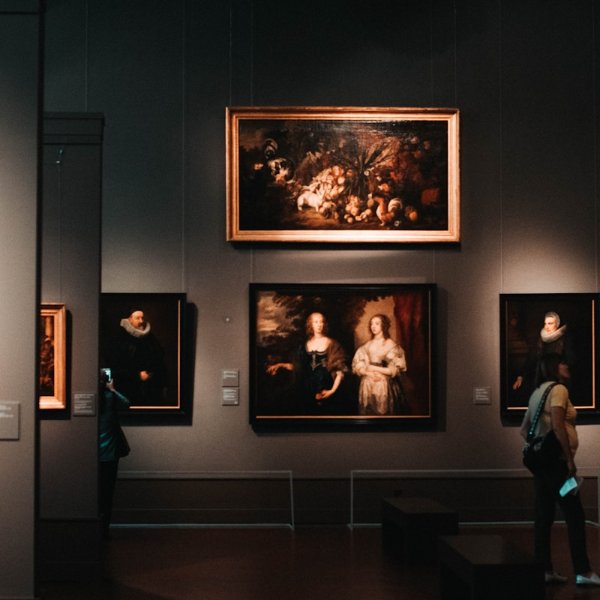
Start by taking inventory. You don’t need a perfect list on day one — you need a current snapshot of what the collection contains and where each piece lives. Existing spreadsheets, insurance schedules, and acquisition records are good starting material.
Decide what data matters most. Every collection has specific requirements driven by insurance, governance, or curatorial priorities. Pick the fields you’ll commit to maintaining and leave optional fields for later enrichment.
Photograph each piece as you add it. Good photography makes every downstream task easier, from insurance renewals to visual identification during moves. You don’t need studio-quality images — a well-lit smartphone photograph is sufficient for tracking.
Set up your location structure to match reality. If your organization has offices in four cities, the app should reflect that. Sub-locations (floors, rooms, specific walls) can be added as you go.
Onboard the people who touch the collection. A few short training sessions prevent the app from becoming another tool that only one person uses. When facilities, finance, and legal all have appropriate access, the collection becomes genuinely shared infrastructure rather than one team’s responsibility.
Take Control of Your Corporate Art Collection
An art collection app isn’t a luxury for corporate collections — it’s the infrastructure that turns a patchwork of records into a reliable, auditable, and strategically useful asset register. Without it, teams spend disproportionate time reconciling information that should already be at their fingertips. With it, they spend their time making the collection work harder for the organization.
Onward was built from the ground up for corporate art collection management. If you’re responsible for a collection that has outgrown its spreadsheet, we’d like to show you how Onward centralizes the records, documents, and relationships that matter so your team can focus on stewardship rather than reconciliation.
The best art collection apps extend beyond simple photography and note-taking to support full collection management workflows including provenance, insurance, loans, and valuations.
For collectors who want to catalog artwork properly from the outset, a dedicated app with structured data fields is far more effective than general-purpose note-taking or spreadsheet tools. New collectors often ask how to catalog artwork before their holdings outgrow memory.
Mobile-first art collection apps increasingly connect to cloud-based art collection management software, giving collectors desktop and mobile access to the same up-to-date records.
Collectors looking for a more comprehensive solution may find that a dedicated asset management platform combines the convenience of an app with the depth of a full asset tracking system.
Ready to simplify how your organization tracks its art collection? Request a demo of Onward and see how a purpose-built art collection app fits your workflow.