Table of Contents:
- Understanding the Art Loss Register
- The importance of the Art Loss Register for collectors and organizations
- Defining provenance and its role in art collection management
- The role of provenance in protecting financial and legal value
- Key moments to check the Art Loss Register
- Essential documentation for buying or selling artwork
- Example of a structured artwork documentation record
- The impact of incomplete provenance records on risk and value
- Managing provenance across large and distributed collections
- How Onward supports provenance tracking and collection risk management
- Getting started with stronger provenance management
The Art Loss Register plays an important role in art collection due diligence, especially when buying, selling, lending, or managing valuable works. Checking whether a piece appears in a stolen art database is often one of the first steps taken by collectors and institutions. However, it is only part of a broader process. Strong provenance records, centralized documentation, and consistent tracking are essential for reducing risk and preserving long-term value in high-value art collections.
For organizations, family offices, and serious collectors, understanding how provenance and databases like the Art Loss Register work together is critical. This guide explains how to approach art risk management in a structured, practical way.
Understanding the Art Loss Register
The Art Loss Register is the world’s largest private database of stolen, missing, and disputed artworks, widely used in art collection due diligence. It helps identify artworks that may have been unlawfully taken, looted, or involved in ownership disputes, making it a critical tool for risk management in the art market.
Collectors, galleries, auction houses, insurers, museums, and law enforcement agencies rely on the Art Loss Register to verify artwork status before transactions. By submitting key details such as the artist name, title, medium, dimensions, and images, users can perform an Art Loss Register search to determine whether a piece has been reported as stolen or missing.
The Art Loss Register database contains millions of records across paintings, sculptures, and cultural objects. During a search, the system compares submitted artwork details against known cases in the stolen art database to identify potential matches, disputes, or red flags.
It is important to recognize that a clear result does not guarantee that an artwork is risk-free. Not all stolen or disputed works are recorded, and some cases may remain undocumented. For this reason, the Art Loss Register should be used as one part of a broader art collection due diligence process that includes provenance verification and art documentation review. Solid art provenance anchors that process, establishing where a work came from before any purchase proceeds.
In practice, the Art Loss Register acts as a powerful early warning system. It helps collectors and organizations identify potential issues before completing a transaction, but it must be combined with strong art provenance research and structured documentation to ensure full protection.
The importance of the Art Loss Register for collectors and organizations
The Art Loss Register plays a critical role in managing risk across high-value art collections. Art is not only a cultural asset but also a financial and legal one, and inadequate due diligence can expose collectors and organizations to significant consequences.
An artwork may appear legitimate, even when sourced from reputable dealers or auction houses, yet still contain gaps in provenance or unresolved ownership claims. These hidden risks can surface later, leading to financial loss, legal disputes, or reputational damage.
This is particularly relevant for law firms managing art assets on behalf of clients, where provenance verification is a critical part of risk management.
By using the Art Loss Register as part of the verification process, collectors and institutions can reduce uncertainty and strengthen their art collection due diligence. A stolen art database check helps identify potential red flags before acquisition, sale, loan, or valuation decisions are made.
For corporations, family offices, and institutions managing distributed collections, this process becomes even more important. Artworks may be located across multiple offices or jurisdictions, often managed by different teams. Without a structured approach to art documentation and verification, risks can accumulate over time.
Using the Art Loss Register demonstrates a proactive approach to risk management. It shows that reasonable steps have been taken to verify an artwork’s status, which is valuable for insurers, auditors, and legal advisors. However, the most effective protection comes from combining external checks like the Art Loss Register with internal systems that support ongoing provenance tracking and centralized art collection management.

Defining provenance and its role in art collection management
Provenance refers to the documented ownership history of an artwork, and it is one of the most critical elements in art collection management. It provides the foundation for trust by showing where a work has been, who has owned it, and how it has changed hands over time.
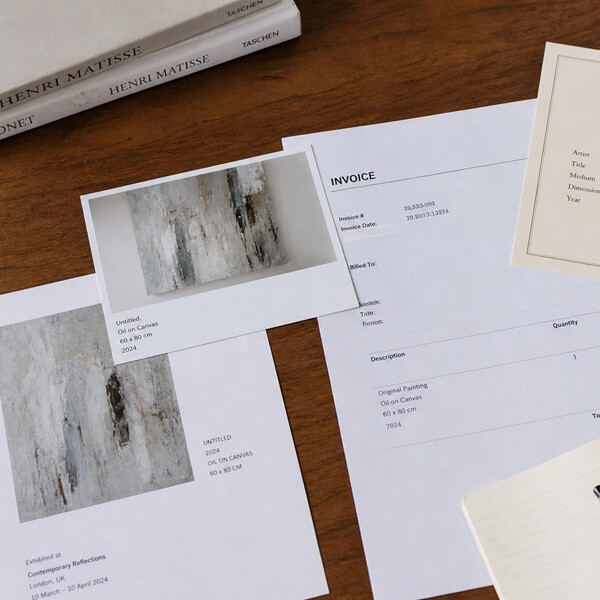
A strong provenance record is built from multiple sources of documentation. These may include invoices, gallery and dealer records, auction results, exhibition history, certificates of authenticity, appraisals, and information about previous owners. Together, these records form a timeline that supports the legitimacy of the artwork.
The importance of provenance lies in its ability to reduce uncertainty. When ownership history is clearly documented, collectors and organizations can feel confident in the authenticity and legality of a piece. This confidence directly impacts how the artwork is valued, insured, and traded.
Conversely, weak or incomplete provenance creates doubt. Missing documentation or unexplained gaps in ownership history can raise concerns about authenticity, legality, or prior claims. These concerns often translate into financial risk and reduced marketability.
In modern art asset management, provenance is not just a historical record. It is an active tool that supports decision making, risk management, and operational efficiency. As collections grow in size and complexity, maintaining accurate and accessible provenance records becomes increasingly important.
Without a centralized approach, provenance information can become fragmented across multiple systems and formats. Over time, this fragmentation can lead to lost records and reduced visibility, making it more difficult to protect and manage the collection effectively.
The role of provenance in protecting financial and legal value
Provenance plays a central role in preserving both the financial and legal value of artworks. It supports the credibility of a piece in the market and provides evidence of lawful ownership, which is essential in both transactions and disputes.
From a financial perspective, well-documented provenance enhances market confidence. Buyers, galleries, and auction houses are more likely to engage with artworks that have clear and verifiable histories. This often results in stronger valuations and smoother transactions.
From a legal standpoint, provenance serves as documentation of ownership rights. In the event of a dispute or claim, a complete provenance record can help demonstrate that an artwork was acquired in good faith and through legitimate channels. This can be critical in avoiding legal complications or resolving them efficiently.
Insurance is another area where provenance is essential. Insurers rely on accurate documentation to assess risk, determine coverage, and process claims. Without sufficient records, obtaining or maintaining coverage for high-value works can become challenging.
Operationally, provenance supports activities such as acquisitions, sales, loans, donations, and appraisals. Each of these processes introduces potential risk if documentation is incomplete or inconsistent. By maintaining strong provenance records, organizations can navigate these activities with greater confidence and control.
For this reason, provenance should be treated as a core component of art collection management. Integrating it into daily workflows helps ensure that documentation remains accurate, accessible, and up to date.
Key moments to check the Art Loss Register
Checking the Art Loss Register should be integrated into multiple stages of the artwork lifecycle rather than treated as a one-time action. The most critical moment is before acquiring an artwork, whether through purchase, auction, or private sale, as this is when the risk of unknowingly obtaining a problematic work is highest.
It is equally important to conduct checks before selling or donating an artwork. Ensuring that there are no unresolved issues helps protect both the seller and the recipient, while also maintaining trust in the transaction.
Additional scenarios include lending artworks to other institutions, accepting art as collateral, or managing estates. In these situations, verifying the status of an artwork can prevent complications and protect all parties involved.
Organizations should also consider incorporating Art Loss Register checks into regular collection audits. This is particularly useful for identifying risks in older holdings or works with incomplete provenance records.
By embedding these checks into structured workflows, collectors and institutions can create a consistent approach to art collection due diligence, reducing reliance on ad hoc decisions and improving overall risk management.
Essential documentation for buying or selling artwork
Thorough documentation is the foundation of effective art collection due diligence. Before buying or selling an artwork, it is essential to gather a complete set of information that accurately describes the piece and its history.
This typically includes core details such as the artist’s name, the title of the work, the date of creation, the medium, and the dimensions, along with high-quality images that support identification and verification.
Ownership history is equally important. Information about current and past owners, supported by records from galleries, dealers, or auction houses, helps establish a clear provenance. Financial documentation such as invoices and appraisals provides additional context for value and legitimacy.
Condition reports and insurance values contribute to risk management and transaction planning, while location and loan history offer insight into how the artwork has been stored, displayed, or transported over time.
All available provenance documents should be collected and organized, as they form the backbone of due diligence. In practice, many organizations rely on centralized systems to maintain this level of detail, ensuring that records remain accessible, consistent, and up to date.
Example of a structured artwork documentation record
| Category | Example Details |
| Artwork Identification | Artist name, title, date, medium, dimensions |
| Visual Records | High-resolution images, installation photos |
| Ownership History | Previous owners, acquisition dates, transfer records |
| Financial Documents | Invoices, purchase agreements, appraisals |
| Authenticity Records | Certificates of authenticity, expert opinions |
| Condition Tracking | Condition reports, conservation records |
| Insurance Information | Insurance values, policy details |
| Location History | Past and current locations, storage facilities |
| Loan Activity | Loan agreements, exhibition history |
| Provenance Archive | All supporting documents related to ownership and history |
This type of structured format makes it significantly easier to manage artworks at scale, especially for organizations dealing with multiple locations and stakeholders.
The impact of incomplete provenance records on risk and value
Incomplete provenance records can introduce a wide range of risks that affect both the financial value and the integrity of an art collection. One of the most immediate consequences is reduced market confidence, which often leads to lower resale value or difficulty finding buyers.
Insurance challenges are another common issue. Without clear documentation, insurers may be reluctant to provide coverage or may impose higher premiums. In the event of a claim, insufficient provenance can complicate or delay the process.
Legal risks are particularly significant. Artworks with unclear ownership history may become subject to disputes, restitution claims, or regulatory scrutiny. These situations can be costly and time consuming, and they may result in the loss of the artwork altogether.
For corporations and institutions, reputational risk is equally important. Displaying or holding artworks with questionable provenance can damage credibility and undermine trust with stakeholders, partners, and the public.
There is also a long-term operational risk associated with poor documentation. When provenance records are not properly maintained, valuable information can be lost over time due to staff turnover, changes in advisors, or simple mismanagement.
Managing provenance across large and distributed collections
Organizations managing large and distributed collections need a structured, proactive approach to provenance. Instead of allowing records to remain scattered, teams should centralize all documentation, images, and data in a single system that acts as the source of truth.
Teams should also standardize how they capture and store information. By defining consistent fields and formats, they make records easier to search, compare, and maintain across the entire collection.
To build a complete picture of each artwork, teams should actively link related data. This includes connecting artworks to artist profiles, locations, loan history, condition reports, and supporting documents. When data is connected in this way, teams gain stronger visibility and context for decision making.
Rather than relying on informal processes, organizations should establish repeatable workflows for acquisitions, artwork movement, appraisals, and audits. These workflows ensure that teams consistently update provenance records and reduce the risk of outdated or missing information.
Access control also requires deliberate management. Teams should assign permissions based on roles so that advisors, insurers, and internal stakeholders can access the information they need without compromising sensitive data.
Features such as Inventory Management, Location Management, Loan Management, Analytics & Reporting, and Task Management support this active approach by helping teams maintain visibility, accountability, and control across the collection.
How Onward supports provenance tracking and collection risk management
Onward provides a centralized solution for managing high-value art collections, helping organizations and family offices maintain control over provenance, documentation, and risk.
Within Onward, each artwork is represented by a structured record that brings together all relevant information in one place. This includes provenance documents, images, appraisals, invoices, and transaction history, reducing fragmentation and improving accessibility.
The platform enables tracking of artwork movement and location history, ensuring that distributed collections remain visible and accountable. This is particularly important for organizations with artworks across multiple offices or storage facilities.
Task Management features support ongoing activities such as audits, appraisals, insurance updates, and documentation follow-ups, ensuring that provenance is actively maintained rather than passively stored.
Private Rooms allow secure sharing of selected records with advisors, insurers, and external partners, enabling collaboration without compromising sensitive information.
Analytics & Reporting tools provide insights into collection status, helping teams identify documentation gaps, monitor value changes, and prepare for audits or insurance reviews.
If your organization is currently relying on fragmented systems, moving to a centralized platform can significantly improve efficiency and reduce risk. You can request a guided tour of Onward to explore how these capabilities support stronger provenance management.
Getting started with stronger provenance management
Strengthening provenance management begins with understanding the current state of your collection. Conducting an inventory audit helps identify what information is available and where gaps exist.
Focusing on high-value or high-risk artworks ensures that efforts are directed where they have the greatest impact. These works often require the most detailed documentation and verification.
Gathering and centralizing all existing documents creates a foundation for ongoing management, while standardizing record formats ensures consistency across the collection.
As new activities take place, such as acquisitions, loans, or appraisals, updating documentation immediately helps maintain accuracy and reduces future risk.
Government collections are particularly vulnerable to provenance disputes, making registration with international loss databases a vital accountability measure.
Using a platform like Onward enables organizations to centralize records, manage workflows, and maintain visibility across their collections. To take the next step, consider requesting a guided tour of Onward and explore how structured provenance tracking can support long-term collection protection.