This guide covers nonprofit and foundation art collection management end-to-end, with a focus on real-world organizational collections rather than individual collectors.
Table of Contents
Introduction: Why It Matters Now
Governance, Mission, and Strategy
Collection Policies: Acquisition, Accession, and Deaccession
Documentation, Provenance, and Cataloging Standards
Storage, Conservation, and Environmental Management
Loans, Exhibitions, and Public Access Strategies
Insurance, Security, and Risk Management
Technology and SaaS Platforms: How Onward Supports Nonprofits
Funding, Grants, and Long-Term Sustainability
Implementation Roadmap and Best Practices
FAQs: Nonprofit and Foundation Art Collection Management
Why Choose Onward
Conclusion and Next Steps
Introduction: Why It Matters Now
U.S. art museums alone report combined assets of roughly $44 billion, and institutions like MoMA hold nearly 200,000 works. Beyond major museums, thousands of foundations, universities, hospitals, and civic organizations steward their own art collections, often comprising paintings, sculpture, photographs, digital assets, and mixed cultural archives spanning American art, emerging artists, and community history.
Here’s the challenge: nonprofit and foundation art collection management is the mission-driven stewardship of those holdings through clear governance, collection policies, documentation, conservation, loan oversight, insurance, funding strategy, and the right technology. Yet many collections still live in fragmented spreadsheets, file cabinets, and the institutional memory of a single staff member. Ad hoc loans go untracked. Provenance gaps go unresearched. Insurance valuations grow stale. The result is legal, financial, and reputational risk that compounds quietly until an audit, a board question, or a donor dispute surfaces it.
Effective management of art collections requires financial compliance, mission-driven programming, and a clear understanding of the nature of a foundation’s grants and programs so collection decisions and strategic planning stay aligned with institutional purpose. Public access can be necessary for maintaining tax-exempt status, and strong stewardship supports mission delivery, regulatory readiness, and long-term preservation of cultural assets. This article is a practical roadmap for foundation staff, board members, curators, and operations managers at cultural institutions, endowed foundations, educational institutions, and other nonprofits that hold art or mixed cultural assets. It walks through governance and mission alignment, acquisition and deaccession policy, provenance and documentation standards, storage and conservation, loans and exhibitions, insurance and risk management, technology platforms such as Onward, funding, and implementation planning. Along the way, we will reference Onward, an enterprise-grade, cloud-based art collection management platform built for organizations rather than individual collectors.
Governance, Mission, and Strategy
Your collection governance starts with your mission statement and your IRS obligations. Private foundations filing Form 990-PF must demonstrate that non-cash charitable-use assets like artworks are used in support of exempt purposes such as education, scholarship, or public exhibitions. Self-dealing practices violate IRS regulations for private foundations, and your legal structure affects tax status and reporting requirements. Your governance structure ensures transparency and accountability across the organization.
Write a concise “collection mission” connecting the art directly to your broader purpose. A foundation dedicated to mid-century American art will define different collecting priorities than a city department preserving civic history or a university supporting students and faculty research.
Establish a Collections Committee or Art Collection Committee with clearly defined responsibilities. The Art Collection Committee manages acquisition and de-accessioning processes. Include trustees, a director, curators, community representatives, and at least one legal or financial professional with nonprofit expertise. Define conflict-of-interest rules so no board member or family members benefit improperly from acquisitions or donations.
Annual strategic planning should embed collection priorities: digitization projects, loans to regional partners, conservation work backlogs, or filling gaps in representation such as works by emerging artists, Indigenous artists, or underrepresented communities. This planning keeps your art collection aligned with your programs rather than drifting into a passive storage problem.
Collection Policies: Acquisition, Accession, and Deaccession
Establishing a formal collections management policy ensures transparency and consistency. Your written Collection Management Policy is the backbone of ethical, professional management for any foundation or nonprofit holding art.
A strong policy defines:
- Scope: geographic, temporal, and media focus (e.g., Latin American visual arts, African American history, digital media)
- Collecting priorities: aligned with mission, research goals, and community needs
- Acceptance criteria: provenance standards, conservation capacity, storage availability
- Refusal criteria: restricted gifts that impede public use, objects exceeding your resources, unclear legal title
Acquisitions may come from gifts, purchases, or commissions. Every acquisition proposal must be reviewed by the Art Collection Committee, with board approval required above defined value thresholds. Accession workflows should include due diligence on provenance, a condition survey, committee vote, and documentation in a system like Onward recording object ID, artist, medium, dimensions, and legal documents.
When to say “no”: if provenance is inadequate, if donor restrictions conflict with your mission, or if conservation and storage costs would strain your budget without supporting funds.
For potential disposition of works, follow AAM and AAMD guidelines. Acceptable reasons include mission misalignment, duplication, or irreparable deterioration. De-accessioned objects can be sold, donated, or exchanged, and de-accessioned objects require a completed De-accession Form. Net proceeds must fund new acquisitions or direct collection care. Publish deaccession lists and record board votes for transparency.
Documentation, Provenance, and Cataloging Standards
Documentation includes provenance records and condition reports for every object. For nonprofits and foundations, thorough record keeping is non-negotiable: it supports legal title, donor reporting, grant compliance, audits, and insurance claims.
Every object record in your collection management system should capture:
- Artist, title, date, medium, dimensions, cultural origin
- Acquisition method (gift, purchase, bequest) and fund or donor
- Restrictions, copyright status, and valuation
- Provenance chain and identification numbers
Provenance research is essential for establishing clear title. For a 1920s European painting, review ownership during the WWII period using spoliation databases. For a 19th-century American landscape, investigate whether it involves displacement of Indigenous objects or colonial-era red flags. Provenance documentation helps identify potential restitution issues before they become legal crises.
Use standardized vocabularies like Getty AAT, ULAN, and TGN for consistency. Adhering to museum cataloging practices future-proofs your database and simplifies sharing with partner institutions and libraries.
Digital cataloging systems enhance collection documentation efficiency, and digital archives enhance collection documentation and accessibility. Platforms like Onward let you attach high-resolution photographs, condition reports, curatorial notes, and exhibition histories in one queryable location. Documentation quality correlates with higher insurance valuations and positions your organization more competitively for grants. Condition documentation supports ongoing conservation planning across your entire holdings.
Storage, Conservation, and Environmental Management
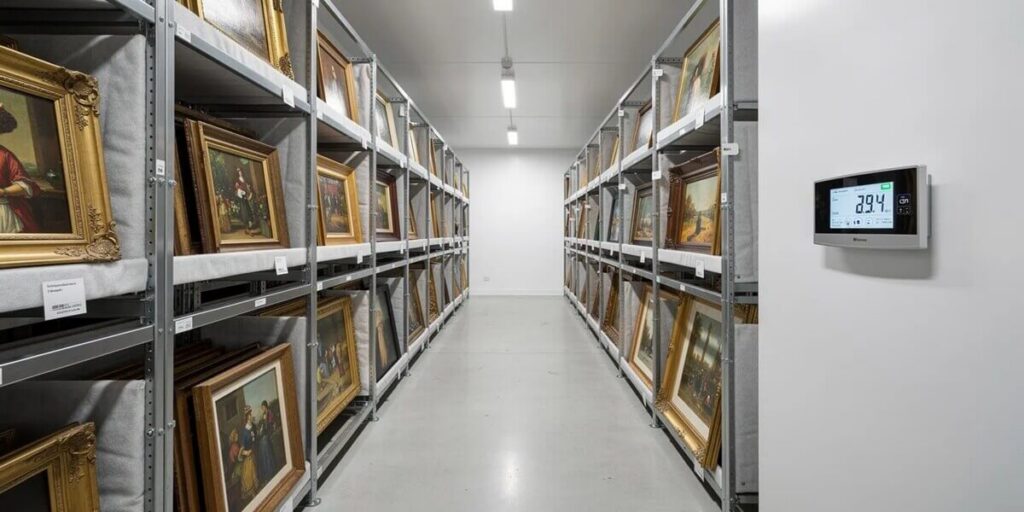
Many nonprofits store artworks in basements, office hallways, or rented spaces with inconsistent climate control. Maintaining environmental controls is crucial for the preservation of art, regardless of your budget.
Baseline targets for most fine art:
Factor | Target Range |
|---|---|
Temperature | 68–72°F (20–22°C) |
Relative Humidity | 45–55% |
Light (works on paper) | ~50 lux, UV-filtered |
Light (oil paintings) | Higher tolerance, still controlled |
Paper, textiles, and organic materials are highly sensitive to humidity fluctuations. Oil paintings tolerate more variability but still degrade under poor conditions. |
Storage options range from on-site vaults to commercial fine-art storage in hubs like New York, Chicago, and Los Angeles. Regional foundations often use hybrid models: climate-controlled rooms for high-risk works, standard spaces for stable objects.
Preventive conservation is more effective and less expensive than restoration. Start with a triage condition survey, prioritizing high-value works and high-risk media such as outdoor sculpture or time-based media. Build a three-to-five-year conservation plan with annual milestones.
Environmental monitoring systems protect collections from damage. Modern collection management relies on technology for documentation and monitoring. A system like Onward tracks location changes, condition notes, conservation treatments, and environmental incidents, making board and insurer reporting faster.
Loans, Exhibitions, and Public Access Strategies
For many foundations and cultural institutions, art collections are underused assets. Loans to museums can alleviate storage costs while increasing public access and advancing your mission.
Internal loans (artworks placed in executive offices, donor rooms, campus buildings) still require signed agreements, insurance verification, and routine condition checks. Even within one organization, treating every placement as a formal loan prevents loss and damage.
Outgoing institutional loans involve facility reports from borrowers, courier requirements, transport insurance, and detailed scheduling. Document every loan event-dates, venues, exhibition titles, shipping vendors-in your collection management system.
Align exhibitions and loans with your mission. A foundation holding American Southwest works might lend to rural museums in New Mexico. A collection strong in African American art might collaborate with HBCUs or community organizations on projects and workshops that enhance understanding of art history and culture across the country.
Digital and virtual access expands reach further. Create searchable online portals or curated virtual exhibitions, while managing image rights, culturally sensitive materials, and privacy. Onward can centralize calendars for loans and exhibitions, auto-generate checklists, and export data for labels and catalogs, saving registrar and curatorial time.
Insurance, Security, and Risk Management for Art Collections
Nonprofit art collections face a unique risk profile: public-facing spaces, rotating exhibitions, volunteers, and staff turnover increase exposure. Insurance coverage protects art collections from natural disasters or theft.
Key insurance types include:
- Fine art blanket policies covering the full collection
- Scheduled coverage for high-value objects
- Nail-to-nail loan insurance for works in transit
- Special event riders for outdoor installations or traveling shows
Reappraise collections every three to five years, or after major market shifts, using qualified appraisers. Update values in your database immediately. Market analysis tools and professional art evaluation for corporate and institutional collections aid in collection performance monitoring and help inform decisions about coverage levels.
Physical security layers include controlled access, alarm systems, cameras, and protocols for vendors and contractors. Digital security is equally critical: protect collections from disasters or theft your cloud-based collection data with role-based permissions, multi-factor authentication, and encrypted backups.
Regular audits help maintain accountability and proper stewardship of art collections. Build disaster-preparedness plans addressing regional risks-wildfires for California foundations, hurricanes for Gulf Coast organizations-and maintain salvage priority lists. Onward’s location data helps generate emergency pull-lists so your most irreplaceable works are identified first.
Technology and SaaS Platforms: How Onward Supports Nonprofit Art Collection Management
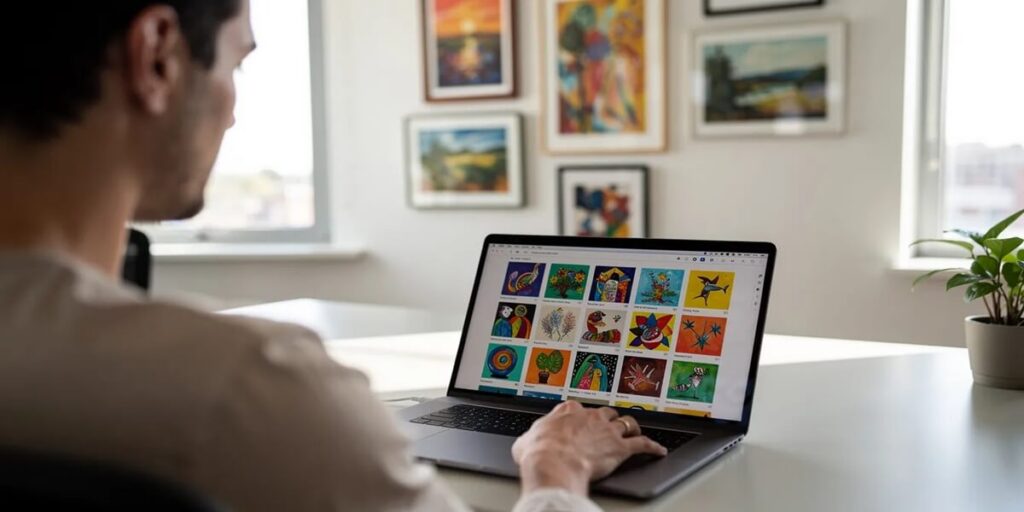
Nonprofits should implement robust, technology-driven cataloging systems. The shift from spreadsheets and legacy desktop databases to cloud-based platforms is well underway, and the benefit for distributed teams and multi-site organizations is substantial.
Core capabilities your platform should deliver:
- Centralized cataloging with authority control
- High-resolution image storage and document attachment
- Location and condition tracking
- Loan and exhibition administration
- Reporting dashboards and analytics
- Role-based permissions and audit trails
Onward is designed for organizations managing institutional art collections: foundations, universities, healthcare systems, municipalities, and civic entities with complex governance and reporting requirements. It combines museum-grade data structures with the dashboards and exports that board members, auditors, and development staff expect.
Automation and analytics use cases include dashboards showing collection value by fund or department, loan activity reports, insurance value summaries, and DEI insights such as artist demographics or geographic representation. Digital archives support long-term preservation of collection information and make research across your holdings far more practical.
Consider a regional charitable foundation consolidating three separate collections-corporate, family, and community loan holdings-into Onward. Standardizing data across those collections enables a new public exhibition program, streamlined operations, and confident board reporting where previously there were gaps and guesswork.
Funding, Grants, and Long-Term Sustainability
Sustainable funding is critical. Conservation backlogs, storage fees, digitization, and staffing all require recurring investment. Professional collection management costs typically range from 3-7% of collection value annually, covering insurance, storage, conservation, and professional services.
Specialized grants can support conservation efforts in nonprofits. Key U.S. funding sources include:
Grant Program | Range |
|---|---|
Inspire! Grants for Small Museums | $5,000–$50,000 |
National Leadership Grants for Museums | $5,000–$1,000,000 |
Museum Grant for African American History and Culture | $5,000–$500,000 |
African American Civil Rights Grant Program | $21.7 million allocated in FY2022 |
The Carl & Marilynn Thoma Foundation accepts applications three times yearly for art-related projects. Internationally, the Heritage Lottery Fund has awarded over £2 billion since 1994. The Collections Assessment for Preservation program helps museums improve care of their holdings. Foundation grants can support various art-related projects, from digitization of “hidden collections” to rehousing historic photography archives. |
Strong documentation and clear project scopes make the application process more competitive. Development, curatorial, and finance teams can collaborate using data from Onward to build budgets, justify matching funds, and demonstrate impact in final reports and proposals.
Endowment strategies include board-designated funds for collection care, planned giving campaigns pairing art donation with cash for conservation, and fellowships or awards that build long term relationships with applicants and scholars. Cost-effective practices such as regional shared storage, phased digitization, and leveraging students under professional supervision keep resources efficient.
Implementation Roadmap and Best Practices
Many nonprofits inherit under-documented collections. Incremental, prioritized progress is realistic and effective. You do not need to solve everything at once.
A practical 6–12 month roadmap that takes advantage of Onward’s core art collection management features:
- Months 1–2: Full inventory-object counts, locations, high-level condition survey
- Months 3–4: Policy review or creation (governance, acquisition, deaccession, loans)
- Months 5–6: Data cleanup and migration into a platform like Onward
- Months 7–9: Staff training, workflow development, procedures documentation
- Months 10–12: Board reporting dashboards, insurance and appraisal schedules, conservation planning
Prioritize highest-value works, frequently exhibited or loaned items, and objects with potential legal or cultural sensitivity. Focus on identifying and preserving works that carry the greatest risk first.
Best practices for implementation include standardizing object IDs, establishing naming conventions, defining staff roles for data entry and review, and scheduling regular cross-department check-ins across curatorial, facilities, finance, and development.
Build internal capacity by creating workshops for staff and volunteers on handling, cataloging, and using the platform. Document procedures so knowledge survives staff turnover. Establish annual review habits: audit a random sample of records, reconcile physical inventory with database locations, review insurance values, and present a “Collection Health” dashboard to the board. Success depends on consistency, not perfection.
FAQs: Nonprofit and Foundation Art Collection Management
These frequently asked questions address common concerns from nonprofit executives, foundation staff, and board members about managing art collections and complement the broader guidance in Onward’s art collection management blog.
What is the difference between collection management and simple inventory tracking?
Inventory tracking answers “what do we have and where is it.” Full art collection management also addresses provenance, condition, legal title, loans, risk, and mission alignment. Nonprofits and foundations typically require this fuller model to satisfy governance, donor, and regulatory expectations.
How often should a nonprofit or foundation re-inventory its art collection?
Conduct a full physical inventory at least every three to five years, with annual spot checks of high-value or frequently moved works. Digital platforms like Onward and its corporate art management capabilities make cycle counts easier by exporting location-based checklists and flagging discrepancies.
Do we need museum-level systems if our art collection is relatively small?
Even a 50–100 object collection can pose legal and financial risk if undocumented. Core tools-a central database, images, documents, loan tracking-are still important. Onward provides enterprise-grade reliability with a lighter, more approachable interface than traditional museum software, making it suitable for modest-size nonprofit collections.
How should we handle artworks with unclear or problematic provenance?
Create a flagged category in your database for works requiring further research. Document all known facts and past correspondence. Consult legal counsel and follow sector guidelines on Nazi-era spoliation, colonial-era concerns, and Indigenous cultural property. Transparency and community engagement matter.
What are realistic annual costs for responsible art collection management?
A common rule of thumb is 3–7% of insured collection value, covering insurance, storage, conservation, and professional services. Smaller collections may budget a fixed annual amount. Using a centralized system reduces manual admin time, freeing staff hours for grants, programs, and community partnerships.
How does Onward differ from generic asset or facilities software?
Generic systems track desks and laptops but rarely support provenance, image rights, exhibitions, loans, or curated narratives. Onward is tailored to art and cultural assets, combining museum-grade data structures with dashboards, user permissions, and exports that institutional stakeholders and collectors expect.
Why Choose Onward for Nonprofit and Foundation Art Collection Management
If your organization manages an art collection, you have likely faced scattered spreadsheets, no single source of truth, and difficulty answering board or auditor questions on short notice. Manual reporting consumes hours that could go toward exhibitions, conservation, or community engagement.
Onward addresses these problems directly. It delivers a centralized catalog, automated loan and exhibition workflows, integrated document storage, and configurable reports tailored to governance and grant needs. Cloud-based access supports multi-site teams, while an intuitive interface means non-registrars-facilities staff, finance, development-can use it without specialized training.
Organizations using Onward report faster board reporting cycles, fewer lost or mis-attributed works, easier grant applications, and more confident decisions about acquisitions, deaccessions, and loans. The platform supports both curatorial depth and executive oversight without the complexity of heavy museum systems.
Onward is a long-term partner in stewardship, helping you protect collections while making them more visible and meaningful to your communities, enhancing the culture of preserving and creating access to important works of art.
Conclusion and Next Steps
Nonprofit and foundation art collection management is about mission-aligned stewardship, not just storage. It requires clear policies, robust documentation, and the right technologies and expertise working together.
Start by asking honest questions: Can you account for every artwork your organization holds? Do you trust your valuations and provenance records? How quickly can you answer a board or auditor query?
Adopting or upgrading a collection management platform is a practical, achievable next step that amplifies staff expertise rather than replacing it. It strengthens your development efforts, deepens your understanding of what you hold, and supports better planning for exhibitions, research, and public benefit.
Ready to simplify your collection workflows? Learn more about Onward, request a demo, or schedule a consultation to review your existing processes and see sample dashboards. Better systems today translate into stronger cultural legacies, fairer representation in your art collections, and greater public benefit tomorrow.