Table of Contents:
- The role of an art handler in modern art operations
- Daily responsibilities and workflow of an art handler
- Core responsibilities within art handling operations
- Essential skills every professional art handler needs
- Industries and environments where art handlers operate
- Distinctions between art handlers, installers, and technicians
- Situations that require professional art handling services
- Effective collaboration with art handlers in practice
- The role of art handlers in modern collection management systems
- Managing art handling workflows with Onward
- Protecting art collections through expertise and systems with Onward
Art handlers play a vital role in protecting and handling valuable artworks, but their duties are often misunderstood. If you’re installing a corporate collection, moving pieces between offices, or prepping works for exhibition, understanding the role of art handlers can help you make better decisions and avoid costly mistakes. Curators with large holdings often rely on dedicated museum collection management software. Day to day, much of this falls to the gallery manager. Scaling past a spreadsheet means adopting real art inventory management software.
For institutions with high-value collections, art handling is not just a logistical matter, it is an art that impacts preservation, safety and long-term value.
The role of an art handler in modern art operations
An art handler is a trained professional responsible for the safe handling, movement, installation, and storage of artworks. Their role sits at the intersection of logistics, conservation awareness, and technical execution, ensuring that artworks are protected at every stage of their lifecycle. Protecting works between moves depends on proper art storage solutions.
At a fundamental level, an art handler’s job description includes physically working with artworks—carefully packing them, transporting them between locations, installing them on walls or display systems, and removing them when needed. However, this role extends far beyond manual labor. Art handlers are trusted with objects that may carry significant financial, cultural, or historical value, and their expertise directly impacts the preservation of these assets.
Art handlers typically work across a variety of environments, including corporate collections, museums, galleries, private collections, and auction houses — in commercial gallery settings, operations often depend on robust gallery inventory software to coordinate these workflows. In each of these contexts, they serve as a critical safeguard against damage, ensuring that artworks are handled with precision and care.
Their importance becomes especially evident in situations where artworks are frequently moved or displayed in different locations. Even small mistakes—such as improper lifting techniques, inadequate packing materials, or incorrect installation methods—can lead to irreversible damage.
In modern collection environments, art handlers also contribute to coordination and documentation processes. They often work closely with gallery managers, curators, registrars, and external vendors to ensure that every artwork movement is properly tracked and recorded.
For organizations managing distributed collections, systems like Inventory Management and Location Management play a key role in supporting handlers with accurate data. Ultimately, an art handler is not just someone who moves art—they are a vital part of preserving its integrity and value.
Daily responsibilities and workflow of an art handler
The daily workflow of art handlers combines physical handling with coordination, planning, and documentation.
A typical day often begins with preparing artworks for movement. Art handlers assess each piece, select appropriate packing materials, and ensure protection against vibration, impact, and environmental risks. In many cases, this includes building custom crates or coordinating with art logistics providers.
Art installation and handling is another major part of daily responsibilities. Art handlers install artworks securely while maintaining precise alignment and presentation standards. This requires technical knowledge of mounting systems, wall structures, and spatial design.
Condition checks are an essential part of the workflow. Art handlers inspect artworks before and after handling, documenting any changes. This process is critical for maintaining accountability and protecting the value of the collection.
Coordination is also a key component of daily work. Art handlers collaborate with facilities teams, art gallery managers, curators, designers, and logistics partners to ensure smooth execution of installations and movements.
Modern art handling services increasingly rely on centralized systems to manage workflows. Using Task Management tools, teams can assign responsibilities, track progress, and ensure that art handlers have clear instructions and visibility across tasks.
Core responsibilities within art handling operations
Art handlers are responsible for managing artworks across multiple stages of their lifecycle, and each responsibility plays a role in reducing risk and maintaining organization.
Packing and crating represent the foundation of safe handling practices. Art handlers must use archival-quality materials and proven techniques to protect artworks during transport or storage. This process requires careful consideration of the artwork’s size, material, and fragility, as well as the conditions it may encounter during movement.
Transportation coordination is another essential responsibility. Art handlers often work with logistics providers to plan and execute the safe movement of artworks, whether within a single building or across international locations. This includes managing timelines, ensuring proper environmental conditions, and addressing any logistical challenges that may arise.
Installation and mounting require a high level of technical precision. Art handlers must ensure that artworks are securely positioned while maintaining their intended visual presentation. This involves working with a variety of mounting systems and adapting to different spatial environments.
Condition reporting is critical for maintaining transparency and accountability. By documenting the state of artworks before and after handling, art handlers help organizations identify potential issues early and maintain accurate records over time.
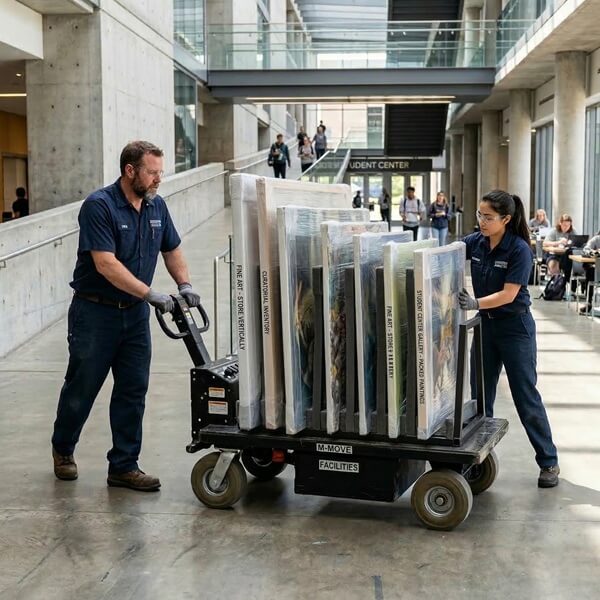
Storage management is also a key aspect of the role. Art handlers organize artworks within storage facilities in a way that ensures proper environmental conditions, accessibility, and long-term preservation.
Finally, documentation connects all of these responsibilities. Maintaining accurate records of movements, installations, and condition reports ensures that the collection remains traceable and well-managed. Systems like Inventory Management and Location Management support this process by centralizing information and reducing the risk of data loss or inconsistency.
Essential skills every professional art handler needs
Art handling requires a combination of physical ability, technical expertise, and attention to detail.
One of the most important skills is technical handling knowledge. Art handlers must understand how to safely move and support artworks of different sizes, weights, and materials. Each type of artwork presents unique challenges, and improper handling techniques can lead to damage.
Attention to detail is equally critical. Even minor oversights—such as incorrect padding or improper alignment—can have serious consequences. Professional art handlers are trained to identify potential risks and address them proactively.
Knowledge of materials and conservation principles also plays a key role. While art handlers are not conservators, they must understand how environmental factors such as temperature, humidity, and light exposure can affect artworks. This knowledge informs how they handle, transport, and install pieces.
Physical capability is necessary due to the demands of the role, which often involves lifting, carrying, and working in challenging environments. However, physical strength alone is not enough—precision and control are equally important.
Communication and teamwork are essential, as art handlers rarely work in isolation. They must coordinate with various stakeholders and ensure that everyone involved in a project is aligned.
In modern environments, familiarity with digital tools is becoming increasingly valuable. Systems like Task Management help streamline workflows, allowing handlers to focus on execution while ensuring that all activities are properly tracked.
Industries and environments where art handlers operate
Art handlers operate across a diverse range of industries, each with its own requirements and expectations.
In museums and galleries, art handlers support exhibitions by installing, rotating, and maintaining artworks. These environments often require strict adherence to institutional standards and conservation practices.
Corporate collections present a different set of challenges. Art handlers in these environments work across multiple offices and locations, installing artworks in professional spaces and managing relocations during renovations or expansions.
Private collectors and family offices rely on art handlers to manage valuable works in homes, private galleries, and storage facilities. In these settings, discretion and precision are particularly important.
Art handlers also work in auction houses, where they prepare artworks for sale, and in logistics companies that specialize in art transportation and storage.
Each environment requires a tailored approach, but all benefit from centralized systems like Location Management, which help maintain visibility across multiple sites and ensure that artworks are tracked accurately.
Distinctions between art handlers, installers, and technicians
Although these roles are closely related, there are important distinctions between them.
An art handler is a generalist who oversees the full process of handling artworks, from packing and transportation to installation and documentation. Their role covers the entire lifecycle of physical interaction with art.
An art installer focuses specifically on the installation process. Their expertise lies in mounting artworks, aligning displays, and ensuring that the presentation meets curatorial or design standards.
An art technician typically handles more complex or technical aspects, such as lighting systems, multimedia installations, or interactive exhibits.
In smaller teams, one individual may take on all these responsibilities. In larger organizations, roles are more specialized, allowing each professional to focus on their area of expertise.
Situations that require professional art handling services
There are several scenarios where hiring an art handler becomes essential.
Organizations often need art handlers when relocating artworks, installing new collections, or preparing exhibitions. These situations require specialized skills that go beyond general facilities or maintenance capabilities.
Art handlers are also crucial when dealing with high-value or fragile pieces. The risk of damage increases significantly without proper expertise, making professional handling a worthwhile investment.
As collections grow and expand across multiple locations, the need for structured handling processes becomes even more important. In such cases, art handlers play a key role in ensuring consistency and safety.
Effective collaboration with art handlers in practice
Hiring the right art handler requires careful evaluation and clear expectations.
Experience is one of the most important factors to consider. Candidates should have a proven track record of working with similar types of artworks and environments. References from previous clients or institutions can provide valuable insight into their reliability and professionalism.
Specialization is another consideration. Some art handlers have expertise in specific materials or types of installations, which may be particularly relevant depending on your collection.
During the hiring process, it is important to ask detailed questions about their methods, experience, and approach to handling artworks. Understanding how they manage condition reporting, packing, and transportation can help you assess their suitability.
Organizations must also decide whether to work with freelancers or agencies. Agencies often provide structured teams and standardized processes, while freelancers may offer flexibility and cost advantages.
Clear communication and well-defined expectations are essential regardless of the approach.
The role of art handlers in modern collection management systems
Successful collaboration with art handlers depends on clear processes and communication.
Providing detailed information about each artwork in advance helps handlers prepare effectively. This includes dimensions, materials, and any specific requirements.
Coordinating schedules is also critical, as art handling often involves multiple stakeholders and tight timelines. Proper planning ensures that installations and movements are executed smoothly.
Documentation should be maintained consistently. Recording condition reports, movement logs, and installation details helps ensure accountability and traceability.
Using centralized systems to manage these processes can significantly improve efficiency and reduce risk.
Managing art handling workflows with Onward
Art handlers are an integral part of broader collection management workflows.
Their work directly supports inventory tracking, location updates, loan management, and maintenance activities. Without proper integration, important information can be lost or miscommunicated.
Modern collection management systems ensure that all handling activities are recorded and connected to the broader dataset. This allows organizations to maintain full visibility over their collections.
For distributed collections, this integration is especially important, as it enables teams to coordinate across locations and maintain consistent standards.
Protecting art collections through expertise and systems with Onward
Onward provides a centralized platform designed to support art handling workflows and operations at scale.
With Onward, teams can assign handling tasks through structured workflows, ensuring that responsibilities are clearly defined and tracked. Artwork movements can be monitored in real time across multiple locations, providing full visibility into where each piece is and what actions are being taken.
The platform also allows teams to store important documentation, such as condition reports and images, directly within each artwork record. This ensures that all relevant information is accessible in one place.
Collaboration is another key benefit. Onward enables internal teams and external vendors, including art handlers, to work together seamlessly within a shared system.
By combining Inventory Management, Location Management, and Task Management, Onward creates a unified environment that reduces risk, improves coordination, and supports efficient art handling operations.
If you’re managing a growing collection, exploring a centralized platform can significantly improve how your team works.